Government Accountability
In Alabama, too many decisions and deals are made behind closed doors, especially when it comes to the prison system. We aim to fix that.

People should know more about their government than the government knows about its people. Yet weak open records and secretive contracts, the lack of transparency around the Alabama Department of Corrections, and the pursuit of profit over the fair administration of justice in government systems have undermined this basic principle of democracy.
Appleseed’s research and advocacy is dedicated to shining a light on harmful government policy and practices, especially when they impact vulnerable communities.
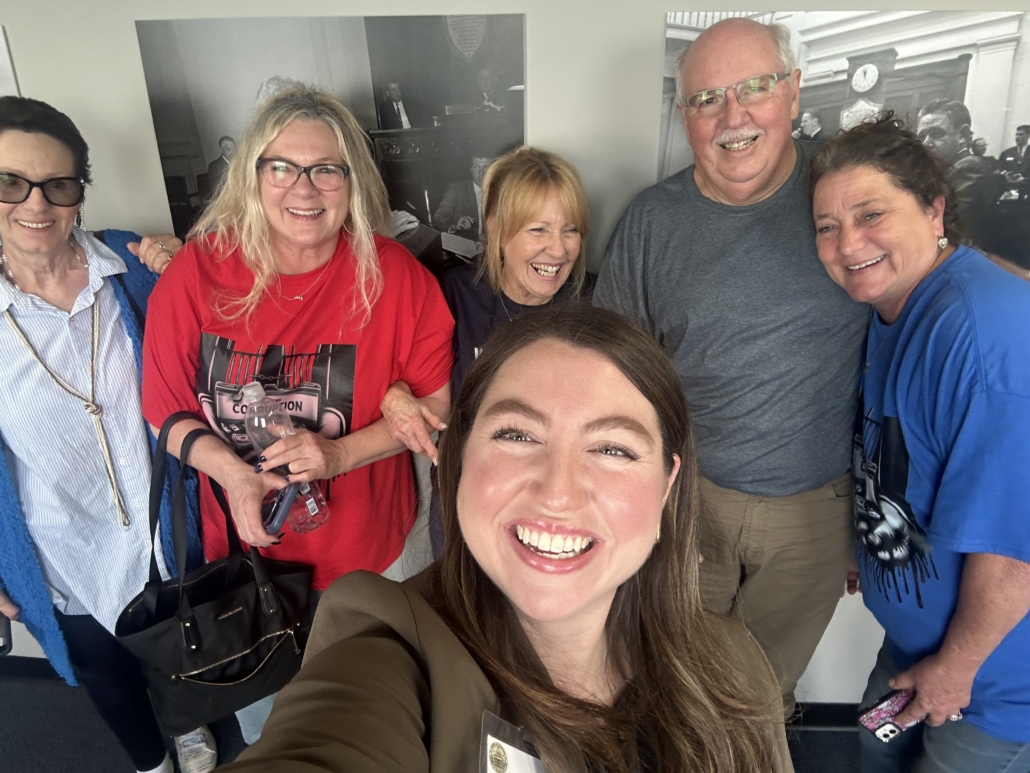
Appleseed’s Elaine Burdeshaw and advocates for prison oversight celebrate at the Alabama Statehouse.
Families of incarcerated Alabamians have been tracking mistreatment, corruption, and violence across the prison system and demanding accountability. In 2026, Appleseed partnered with these experts and demanded independent prison oversight, creating a pilot program.
Already we are seeing results. The Alabama Department of Examiners of Public Accounts conducted a review of ADOC Central Office and Kilby Correctional Facility, releasing a 357-page report calling for a major overhaul in culture, leadership, programming, staffing, record-keeping, security, reentry planning, and more. Of note, during their visit, the staff member responsible for monitoring security cameras was in another room folding uniforms.
Here’s what we know: the corruption, fraud, and abuse at the Alabama Department of Corrections is well known and undeniable. It has been documented by the United States Department of Justice since 2019, revealed in numerous legislative hearings, and shown to the world in the Oscar-nominated documentary, the Alabama Solution.
Alabama taxpayers have been forced to foot the bill for this fiasco, with $1.25 billion swallowed by a megaprison in Elmore County that is behind schedule, another $900 million devoted to a second new prison in Escambia County, nearly $100 million in legal fees to private lawyers to defend the indefensible conditions, and more than $12 million gone to a bankrupt medical contractor, YesCare, that failed to pay employees.
And don’t forget the $860 million annual General Fund allocation to ADOC, a number that rises every year and could soon swallow more than 25% of the entire General Fund.
Fines and Fees
Each year, Alabama’s municipal, district, and circuit courts assess millions of dollars in court costs, fines, fees, and restitution. Most of this money is sent to the state General Fund, government agencies, county and municipal funds, and used to fund pet projects.
This hidden tax is the perfect setup for conflicts of interest, as courts and law enforcement agencies weigh the fair administration of justice against their own financial viability, which hinges on collecting fines, fees, court costs, and other debt connected to the criminal justice system. This system recasts courts and prosecutors as revenue collectors. They impose and collect the debt that finances their daily activities and supplements the state’s perennially underfilled coffers.
Astonishingly little information is available about this punishment mechanism, despite the fact that it is a crucial source of funding for state functions. Alabama does not mandate public disclosure of data necessary to fully answer basic questions like:
Using the criminal legal system as a debt collector erodes public trust. It prompts people to fear interactions with police and courts. A recent national study found that police departments in cities that relied heavily on court debt as a revenue source solved violent crime at a lower rate than those that rely on more equitable sources of revenue.
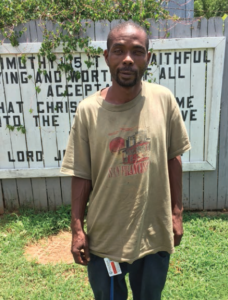
Terrance Truitt, 38, of Montgomery, owes fines and fees on a range of low-level offense including things like simple possession of marijuana and fishing without permission. He has repeatedly spent months at a time in county jail “sitting out” fines after missing court dates. But he’s afraid to go to court because in the past, he has shown up with as much money as he could muster and still been arrested on the spot for additional outstanding debt.
“I don’t have the money to pay,” Truitt told Appleseed. “They’re gonna lock me up, so I just don’t go. Every time I get some money, I send it down though – by mail.”
Diversion Programs
Diversion programs permit justice-involved people to avoid either conviction or incarceration. Pre-adjudication diversion, like drug court and pretrial diversion, permits people who are accused of certain offenses to admit guilt but avoid a criminal record if they abide by the terms of supervision, usually including regular check-ins and random drug tests. Post-adjudications diversion programs like court referral (CRO) and community corrections allow people who have been convicted of certain crimes to avoid prison time as long as they comply with terms that are often roughly similar to those required by pre-adjudication programs.
These programs are difficult to complete. They are costly. But they can mean the difference between a clean record and a conviction; relative freedom or incarceration. And in a state with a mass incarceration crisis and prisons that are bursting at the seams, they are a safety valve. Yet the state maintains almost no data on their workings, efficacy, or cost – and it makes public even less.
Alabama does not maintain information about demographics, cost to participants, criminal charges, recidivism rates, length of time in drug court before graduation or termination, or any other data that would permit researchers, legislators, judges or anyone else to assess the efficacy of its drug courts.
Pretrial diversion programs run by district attorneys’ offices are even more problematic. They were sold as a way for the state to save money, help overburdened courts and relieve packed prisons. In reality, they create a revenue stream for district attorneys’ offices and have been permitted to operate without providing evidence that they fulfill the legislature’s original intent. There is little oversight or transparency as to how participant fees are spent, what happens to people in diversion programs, or whether people who can’t afford to pay get access. The statute authorizing these programs also provides enormous discretion as to how the fees are spent, including “but not limited to” salaries, rent, travel, vehicles and clothing for staff.
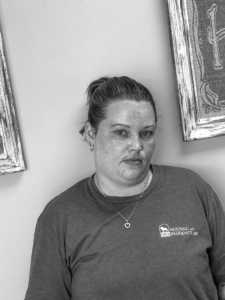
Kim Armstead, 35, entered the Lawrence County pretrial diversion program after being charged with possession of marijuana. Her enrollment began with a $537 payment which she understood to be a startup fee. “It doesn’t go toward nothing because I still have to pay $100 a month for 12 months,” she told Appleseed. In addition, she paid $50 per month for mandatory drug testing and supervision, and before being released, was required to pay $633 in court fines and fees. In total, she’ll hand over at least $2,970 before being released from her obligations, all because she had a small amount of marijuana.
Ballot Access
In 2017, Alabama updated its felony disenfranchisement laws, creating uniform rules across the state and restoring the right to vote to thousands of disenfranchised Alabamians. But the state did almost nothing to tell people about the change in law. Ballot access is elemental to participatory democracy: it is one of the primary means by which we hold the government to account. Alabama’s refusal to take active steps to spread the good news about opportunities for voting rights restoration is a shameful reminder of how far those in power will go to maintain control.
Open Records & Data Collection
Alabama’s toothless open records and open meetings laws, coupled with its failure to collect data on many basic government programs, make it difficult to demonstrate inefficiencies and corruption or push for evidence-based policies. Alabamians deserve transparency and rigor from the officials and state and local agencies who make policy and decide how money and resources are allocated.

Alabama Appleseed Center for Law & Justice
400 South Union Street, Suite 355
Montgomery, Alabama 36104
2 Office Park Circle, Suite 10
Birmingham, AL 35223
Phone: (205) 963-7999
admin@alabamaappleseed.org