
By Eddie Burkhalter, Appleseed Researcher
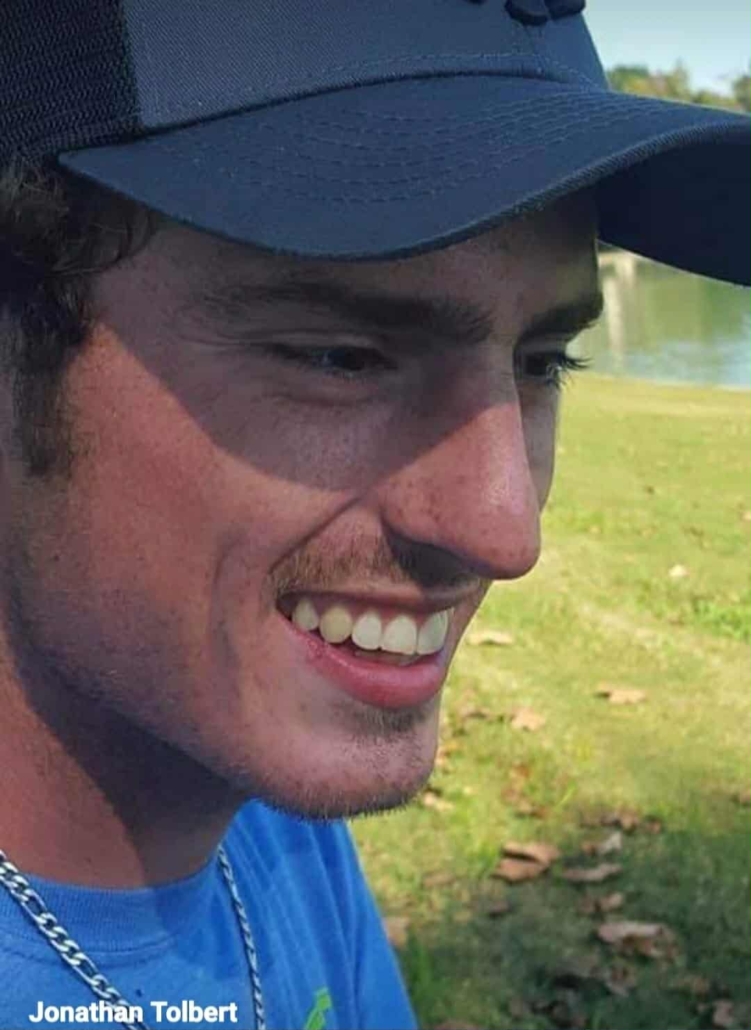
Deborah Tolbert found her son slumped over on her garage floor. After Jonathan Tolbert survived an Alabama prison, where he was raped by several men, beaten and stabbed, the physical and psychological wounds persisted. He died at the age of 27.
Jonathan Tolbert was only 18 when he tried heroin with a friend and was soon addicted. In 2014, they began breaking into cars in St. Clair County in order to support their drug habit. Both were arrested and charged with those crimes. His friend bonded out of jail and died of an overdose just after his release, Ms. Tolbert said.
Jonathan was sentenced to 10 years, split to serve three in prison and ordered to participate in the prison system’s Substance Abuse Program, known as SAP, but there were roadblocks in a prison system where even a judge’s orders are virtually meaningless. “You’re on a waiting list forever to even get into the class,” Ms. Tolbert said, and there were other problems. “They have other inmates that are like monitors. They extort people. They want a pack of cigarettes or whatever to be able to go into the class, and if you don’t have it or can’t give it, then they write you up, and then you wind up not being able to go to the class.”
Deborah Tolbert is one of countless Alabama parents who have struggled mightily to undo the damage that incarceration in the Alabama prison system did to their children. Appleseed communicates with dozens of these families, attempting to connect them with resources or with other families for support. Though their specific circumstances vary, there are common threads and we share their stories to help similar families feel less alone.
Ms. Tolbert knew she was not alone after learning of the death of Daniel Williams, 22, at Staton Correctional Facility. He was kidnapped and held for days by an incarcerated man with a long history of sexual violence then raped and tortured before being killed on Nov. 9, 2023. The suspect in that death has not been charged in connection with the homicide because prosecutors say there was not enough evidence for an indictment.
“Everything that happened to him, happened to Jonathan, except Jonathan didn’t die,” Ms. Tolbert said of her son’s 2019 attack inside prison. During his incarceration Jonathan was jumped by a group of other men, stabbed and nearly lost an ear, she said. Her son also witnessed the stabbing death of 56-year-old Ray Anthony Little at Bibb County Correctional Facility in March 2019.
“Jonathan said that the older man never bothered anybody. All he ever did was sit on his bunk and read. He said he was standing in a hallway or whatever, leaned against the wall and he was reading, and this guy came running past him and cut his throat,” Ms. Tolbert said. Her son said the man who killed Mr. Little was “wigging out” on a synthetic drug called Flaka. “It bothered him. He was upset,” she said of her son witnessing the killing. “He was a big-hearted person.”
In August 2019, just weeks before his expected release, Jonathan’s life was threatened by another incarcerated man who demanded money from his mother, but Jonathan refused to ask his mother for the money or to let her know of the demand at the time. She kept meticulous notes, written down after every call from her son. He called her just after getting back to his dorm that day.
“He said that he was going to find a razor and cut his wrist. He would rather take his own life than someone take it for him. John choked up and was about to cry, which he never did,” she said. He also agreed to let his mother call a neighbor who was a local sheriff’s deputy and a U.S. Marshall, which was a sign to her that her son was in serious trouble, because in the past he wouldn’t allow her to ask for help for fear that doing so would only invite more violence upon him.
Ms. Tolbert called her neighbor who called Bibb prison and talked to an officer who told him that if Jonathan qualified to be placed into segregation – often used to keep people safe from others – he’d be placed there, but that did not happen. The neighbor then called another officer at Bibb prison who told him that both Jonathan and the man who had been threatening him were brought to the office and were talked to and sent back to the dorm and that everything was fine. “So you just threw him back out there to the wolves?” the neighbor asked the officer, Ms. Tolbert said. “Then, of course, that night it happened to Jonathan. He was hogtied. He was raped by several men.”
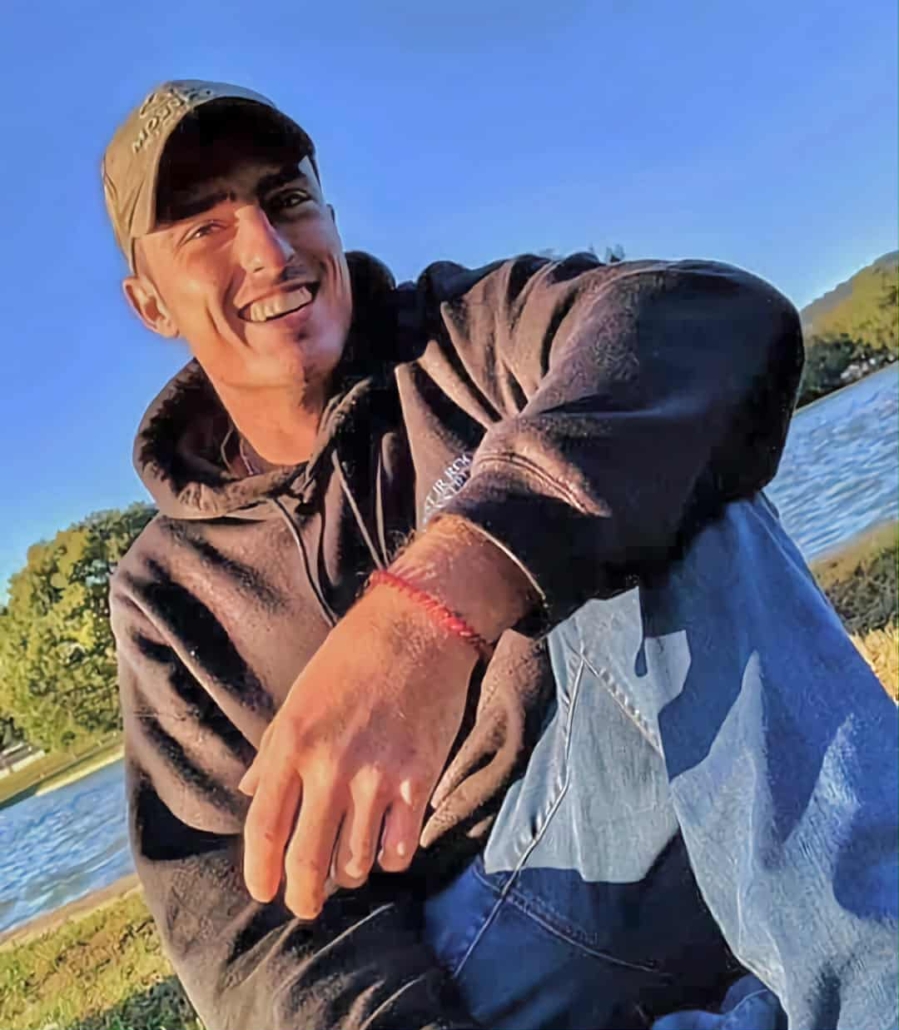
Jonathan Tolbert in happier days, working to adjust to life following years of abuse in prison.
Ms. Tolbert was also extorted by other men inside Bibb prison who were threatening her son. She paid them via Cash app and in Walmart-to-Walmart payment transfers, she said. Those extortion attempts continued after his release in October 2019, with one of the men calling Ms. Tolbert’s home phone and cell phone and threatening to have someone “reach out and touch you.” The Tolberts’ tortured experiences play out over and over again among families of incarcerated Alabamians.
Following his release, Jonathan struggled to deal with the violence that he lived through while incarcerated. He saw a therapist a few times but was always asked to talk about his rape, and it became to much to discuss. “He couldn’t sleep at night. If he did finally fall asleep, he would start screaming, like night terrors,” Ms. Tolbert said. Because of the continued threats even after his release, he became paranoid and would watch from the home’s windows for hours, thinking he saw someone outside. He was eventually diagnosed with recurrent major depressive episodes, chronic post traumatic stress center syndrome, generalized anxiety disorder and schizophrenia and was placed on several medications, but he continued to suffer.
“I tried so hard for a couple of years getting him in with doctors and trying to get help from somebody,” Ms. Tolbert said, but he continued to spiral, often jumping out of moving cars and attempting suicide. He could no longer be in crowds or shop in Walmart with his mother.
“One time he stood out there behind my car and took a whole bottle of pills and held a knife to the side of his neck and told me that if I called 911, that he would shove the knife into his neck, so I stood there and waited for him to start passing out and when his head went down on to the trunk of my car I called 911 immediately,” she said.
On March 22, 2023, he was severely injured in a fall from the rock wall of a dam while fishing and was airlifted to UAB with head and severe left arm injuries. He was released from the hospital and spent the month of April seeing a surgeon each week and had an appointment set for May 15 at a pain management clinic. But on May 11, 2023 he was visited by a friend at her home for about half an hour. Jonathan came inside from the garage and asked to borrow a cigarette from his mother, and walked back to the garage.
“I found him crouched down on the ground, and I thought that he had had a seizure from the head injury. I’ve seen him in a lot of situations, and at first I just thought it was another situation and I’d be able to beat on his back and get him to open his eyes and look at me, but he didn’t,” she said.
She found the unsmoked cigarette on the ground near where he was laying. His toxicology report showed he had Para-fluorofentanyl, a powerful synthetic version of fentanyl, in his system. Although he did not die in prison, neither did he survive prison as the demons he brought home from those tortuous years never left him.
“He never had an opportunity to live. He was a teenager when he went in, and then there were so many issues for a couple of years when he was out,” Ms. Tolbert said of his prison sentence.
She tries to remember his childhood, back when he was an energetic child, afraid of nothing and always on the go. Her son had the “prettiest eyes in the world and a one-in-a-million smile.” She raised Jonathan and his two brothers on her own.
Now, Deborah Tolbert is active in groups that raise awareness about the deadly drug fentanyl, and is asking for changes to Alabama’s broken prison system. She thinks correctional officers need to be checked for contraband more often, paid more and trained better, and she worries that the new mega-prison under construction won’t come close to solving the crisis.
“If my son hadn’t suffered so much trauma and violence in the Alabama prison system, he may still be with us today. Jonathan was an adventurer and had dreams. Jonathan really tried for so long when he came home, but his mind just wouldn’t let him move forward,” Ms. Tolbert said.
“They just need to tear it down and rebuild, and I’m not talking about any prison, but the whole system,” she said. “I don’t feel like Alabama cares.”



Leave a Reply
Want to join the discussion?Feel free to contribute!