Positive Programs
Safer prisons are within reach

Violence, understaffing, and overcrowded dorms are pushing Alabama’s prison system past a breaking point, and the state’s reliance on new prisons alone will not be enough to resolve the deep-seated problems that are resulting in record deaths and creating a less safe Alabama.
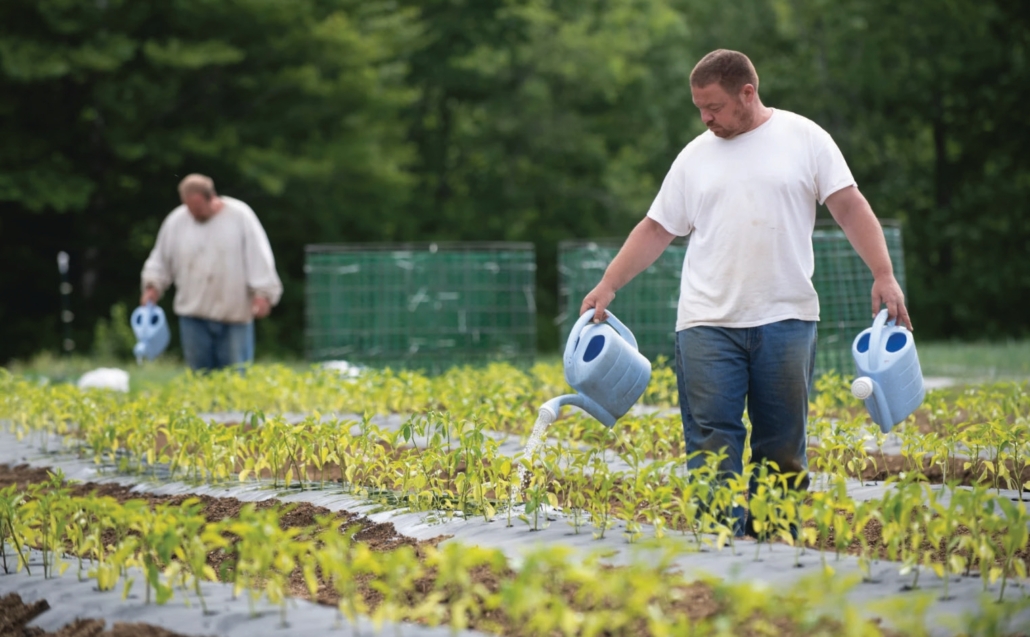
Resident Darren McKenzie (right) and Jesse Mackin water tomato plants on the grounds of the Mountain View Correctional Facility’s garden in Charleston in June 2021. Photo by Kevin Bennett for Maine Public.
This report highlights programs in other states, many led by incarcerated people themselves, that are reducing violence in prisons, reducing recidivism and creating safer working environments for prison staff.
This briefing lays out five real-world examples of prison reforms from other states. They’re not theories. These are programs already in place that are reducing violence, cutting recidivism and helping staff do their jobs more safely and effectively.
Take California’s GRIP program, where men serving long sentences learn how to manage anger and take responsibility for past harm. Graduates almost never come back to prison. In South Carolina, a pilot program for young adults has cut the use of solitary confinement and assaults on staff. And in Maine, an “earned living unit” features higher education opportunities, a garden, and increased time outdoors. Missouri, Maine and Oregon are trying models that focus on rehabilitation and basic human dignity—with results that speak for themselves.
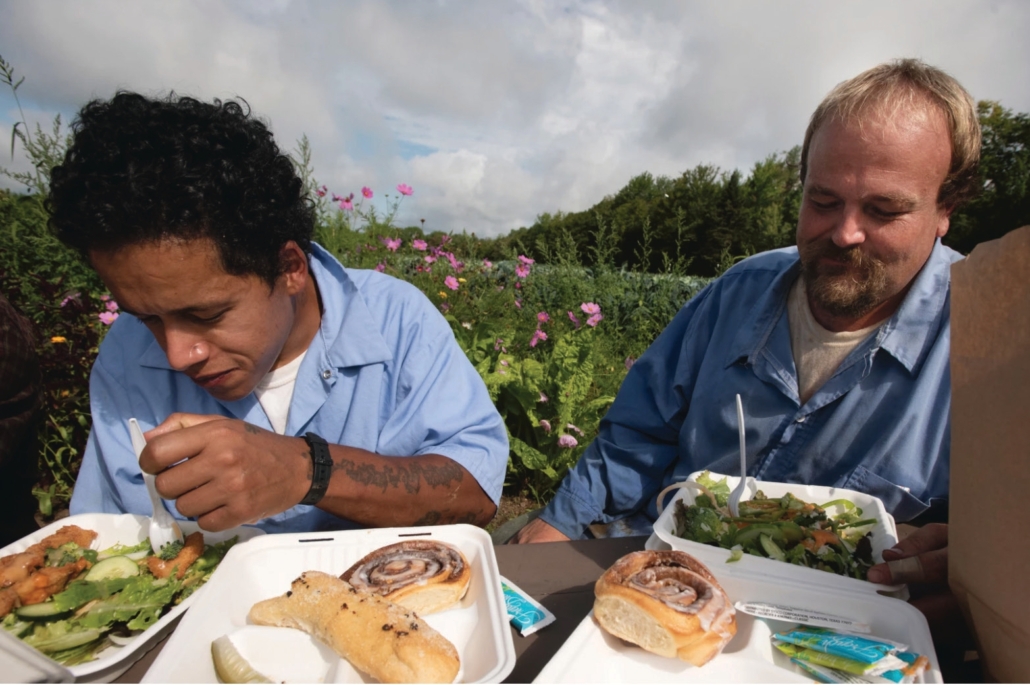
Residents Julio Orsini (left) and Jesse Mackin share a meal together with staff during lunch break in the garden at the Mountain View Correctional Facility in Charleston in Aug. 2021. Photos by Bennett for Maine Public.


Alabama Appleseed Center for Law & Justice
400 South Union Street, Suite 355
Montgomery, Alabama 36104
2 Office Park Circle, Suite 10
Birmingham, AL 35223
Phone: (205) 963-7999
admin@alabamaappleseed.org