
Alabama mother fights for better quality of life for son who returned from prison with severe brain injury
By Eddie Burkhalter, Appleseed Researcher
William Thomas was found hanging inside his segregation cell at St. Clair Correctional Facility on Aug. 7, 2023. Although he lived, he’s still fighting to get his life back from the severe brain injury that has robbed him of his speech and mobility.
Though William eventually was released from the hospital through a medical furlough and returned to his parents’ Huntsville home, he needs constant care and is unable to stand or fully communicate. His condition has thrust the Thomases into an ever-expanding community of families across Alabama with loved ones who emerged from state prison custody in previously unimaginable conditions: debilitating injuries, post-traumatic stress disorder, even coma.
It was another incarcerated person, not prison staff, who called Tanisha Thomas, William’s mother, and told her that her son had been found hanging from a light fixture in his cell. He had requested to be placed in a segregation cell to be safe from the physical abuse he was suffering, and to get away from the drug addictions fueled by the narcotics inside the prison, his mother said. The family believes that his hanging was either the result of hallucinations he may have been experiencing due to drug withdrawals or someone else may have tried to kill him.
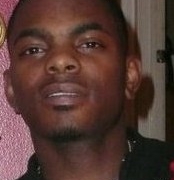
William Thomas before incarceration
At the time, the family drove to UAB Hospital in Birmingham and eventually was able to visit with William, who had been placed in a medically-induced coma. He was hooked to a ventilator. The family received very little information about her son from hospital staff, who were limited in what they could say by prison officials, she said.
“Palliative care came out to me a few days later and tried to convince me to just make him comfortable, that he’s not going to be the same person. It’s not going to be a good ending. Don’t let him suffer, and all that, and my religious belief is the complete opposite,” Mrs. Thomas said. “I’m not the giver, nor the taker, of life, so I wasn’t going to make that decision.”
As her son began to improve, he was eventually taken off of the ventilator and breathing on his own. “He opened his eyes on command. I told him, ‘Son, if you hear me, let me know you hear me. Just open your eyes.’ He opened his eyes,” she said.
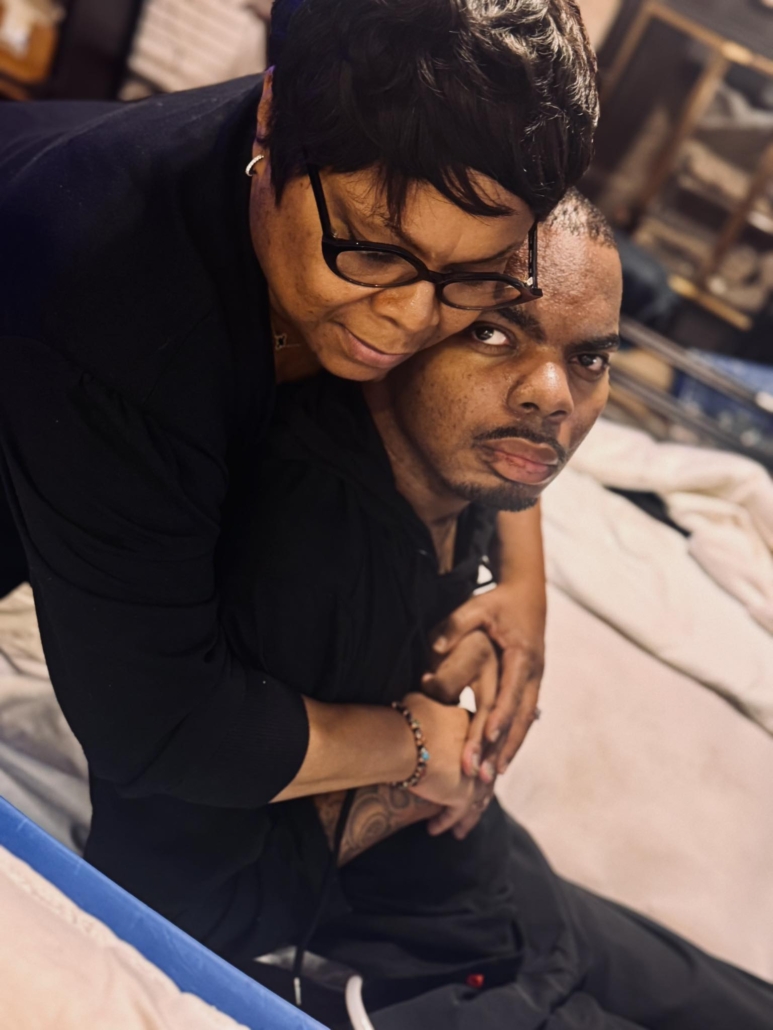
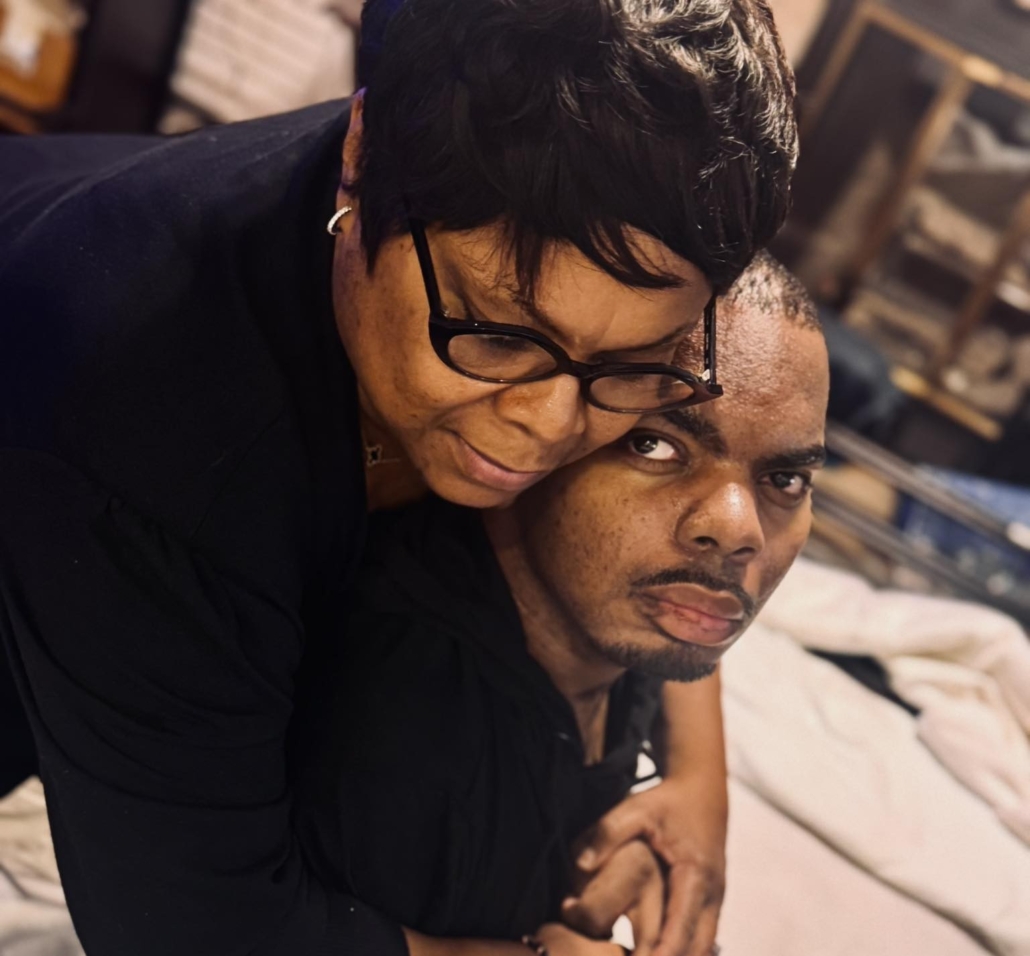
Tanisha Thomas comforts her son, William Thomas, who suffered severe injuries after being found hanging in his cell at St. Clair prison.
About a month after his injury, the family got a call at their Huntsville home from the hospital asking what they wanted done with his belongings. It was a confusing call, then they learned William was being sent back to the prison system where he nearly died. “Unbelievable. It was unbelievable,” Mrs. Thomas said.
His condition deteriorated once back in St. Clair prison’s infirmary. They’d visit him every Saturday that visitations were held. “Every time we saw him, he was getting worse and worse. His arms were contracting. He started losing his fingernails. He was losing his hair. He wasn’t even 100 pounds,” Mrs. Thomas said.
A social worker with YesCare, the medical provider under contract with the Alabama Department of Corrections, began the process of getting William released on a medical furlough, but that process was dragging. A correctional officer who knew someone connected to the nonprofit Redemption Earned suggested William might be a good candidate for release, and Redemption Earned reached out and took him on as a client. He was paroled in April 2024 and was sent to a Birmingham nursing home in May of that year.
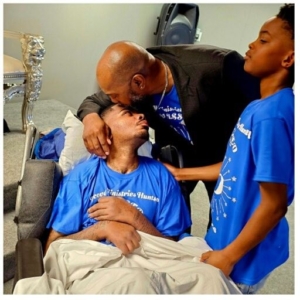
William Thomas with his father and his son. Multiple generations of the Thomas family provide support to William.
William just recently began receiving Medicaid, which only pays for some medical costs incurred up to three months prior, so Mrs. Thomas is still dealing with his medical bills, and because she has to care for him day and night, she’s unable to work. Her retired husband went back to work but has only been able to find a part-time job. It’s been difficult getting her son the kind of therapy she hopes will help him get more of his life back.
The TIRR Memorial Hermann Hospital in Houston, Texas specializes in providing therapy for patients with catastrophic brain and spinal cord injuries. The family is raising funds to get him flown to the Texas hospital.
“We know he won’t be the same, but we hope he gets a better quality of life,” Mrs. Thomas said. He is improving since he’s been home, she said. The two have worked out a way to communicate, and he’s able to move his arms and legs on command.
“I try to ask him yes and no questions. So we’ve developed a process of where he blinks several times for yes and he doesn’t blink at all, or maybe once, for no. I’m a drill sergeant, and I told him, you know, I’m not gonna give up. We’re gonna keep going. We’re gonna keep going,” Mrs. Thomas said. She had advice for others who have loved ones inside an Alabama prison.
“If they have a loved one in the prison system, no matter what their demons are, do not abandon them. I know most of the time the demons are drugs, and there is a major expense with that,” Mrs. Thomas said. “But don’t abandon them. They need a voice. They need an advocate to fight for them.”
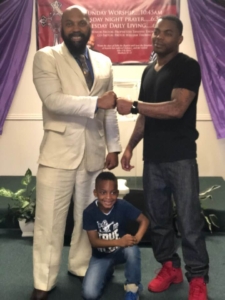
William Thomas, pictured during healthier times, with his father and son.
William was incarcerated after a 2019 parole violation. His original conviction was for first degree-robbery in 2013, for which he was sentenced to 15 years. He would have been eligible for parole consideration in June 2025, a year and nine months after he was found in his cell.
There were times while her son was incarcerated that she’d call the prison seeking a welfare check on William, only to later learn the officers who did the check mistreated him for having to conduct the check, she said. Today, the struggle for her is to try and care for him as best she can. Once a gifted athlete who played football and baseball, he’s now fighting to regain basic functions. “I just wake up every day and I know my son needs me. I’m learning how to do all of this feeding tubes and catheter cleaning. I’m learning how to provide medication. Love is driving me,” she said.



Leave a Reply
Want to join the discussion?Feel free to contribute!