By Alabama Appleseed Staff

The 2021 Alabama Regular Session will begin on February 2, 2021.

Below is a summary of key human rights and criminal justice issues we anticipate will be under active, serious deliberation by the legislature in 2021.

To make our communities safer, reduce the burden on taxpayers, and begin to address the staggering racial disparities in Alabama’s criminal justice system, the Alabama legislature should:

Repeal or reform the Habitual Felony Offender Act (HFOA or “three strikes” law)

HB107 and HB24

Legislation will be introduced to repeal Alabama’s draconian Habitual Felony Offender Act which ensnares hundreds of older individuals for life or life without parole sentences for offenses that would result in much shorter sentences under today’s laws.

We support reform or repeal of the current HFOA law for the following reasons:

  • Hundreds of people in Alabama are serving life without parole sentences for crimes that resulted in no physical injury
  • The 1980s-era law has been applied with staggering racial bias as 75% of people sentenced to die in prison under the HFOA are Black
  • This group of prisoners is disproportionately older (50 and above), including many with strong records of rehabilitation, thus low risk for recidivism. It is counterproductive to research and evidence to keep them incarcerated
  • Alabama taxpayers continue to spend exhaustive amounts of money on housing incarcerated individuals who have been rehabilitated for decades

Stop Civil Asset Forfeiture

We expect legislation to be introduced that would end civil asset forfeiture (replacing it with the criminal forfeiture process in all instances), require transparency in the criminal asset forfeiture process, and prohibit Alabama law enforcement from receiving proceeds from the federal civil asset forfeiture programs. Alabama Appleseed supports this legislation because civil asset forfeiture:

  • Disproportionately harms Alabama’s most vulnerable;
  • Incentivizes the pursuit of profit over the fair administration of justice;
  • Turns the presumption of innocence on its head by forcing property owners to defend their property’s “innocence.”
  • Builds on the 2019 bill we passed creating a public database on forfeiture cases.

Report: Forfeiting Your Rights: How Alabama’s Profit-Driven Civil Asset Forfeiture Scheme Undercuts Due Process and Property Rights

End Needless Drivers License Suspensions

HB 129

Legislation will be introduced that would stop the practice of driver’s license suspensions for things unrelated to dangerous driving – namely unpaid fines and fees, and failure to appear in court. Alabama Appleseed supports this legislation because our research has found that this practice:

  • Hurts families by making breadwinners forego basic necessities or take out high-interest payday loans to pay what they owe
  • Slows the economy by keeping people out of work
  • Leads people to commit crimes to pay off their tickets, such as theft or sale of drugs

Report: Stalled: How Alabama’s Destructive Practice of Suspending Drivers Licenses for Unpaid Traffic Debt Hurts People and Slows Economic Progress

Create Diversion Program Study Commission

HB 71

Legislation will be introduced that creates a commission to study the use and effectiveness of diversion programs throughout the state. Alabama Appleseed supports this legislation for all of the following reasons:

  • Alabama’s tangle of overlapping, unaccountable, and expensive diversion programs are not equally available to people who most need them
  • Structural obstacles force participants to make unconscionable choices in order to succeed
  • Costs, requirements, and access vary widely among counties and programs, providing opportunities for success only to those with greater resources
  • Without accessibility, transparency, and reforms that account for the lived reality of people across Alabama, diversion will remain one more element of Alabama’s two-tiered system of punishment
Report: In Trouble: How the Promise of Diversion Clashes with the Reality of Poverty, Addiction, and Structural Racism in Alabama’s Justice System


By Appleseed Executive Director Carla Crowder

As I wrap up a whirlwind first year as executive director of Alabama Appleseed, I could not be more excited about the work we have done and the places we are heading. This has been a banner year for Appleseed. We have confronted laws and policies that harm vulnerable Alabamians, celebrated key victories, and cemented our reputation as a leading advocacy organizations in Alabama. It has been my honor to advance the work of this storied institution, and I wanted to share some highlights with you as 2019 comes to a close. 

At the statehouse, we netted three big legislative wins:

  • Our investigation, litigation, and advocacy around sheriffs personally pocketing tax dollars meant to fund food for inmates in their custody, including one sheriff who purchased a $740,000 beach house with jail food funds, led to the passage of legislation that ends this Depression-era practice once and for all.
  • Our groundbreaking 2018 report on civil asset forfeiture abuses in Alabama, Forfeiting Your Rights, led to legislation that requires law enforcement to track and publicize how much money and property they seize from the people they police. We expect this new, comprehensive, public database to corroborate the widespread abuses we discovered during our investigations, and we will use its findings to lead the charge toward ending civil asset forfeiture altogether.                                                                                                   
  • We also changed laws related to filing fees for indigent people in civil courts. It used to be that a victim’s lawsuit could be thrown out if they could not pay hundreds of dollars in filing fees quickly enough. Not anymore. This year, we succeeded in changing the law so that all Alabamians have greater access to our civil courts regardless of whether they can afford to pay the filing fees. 

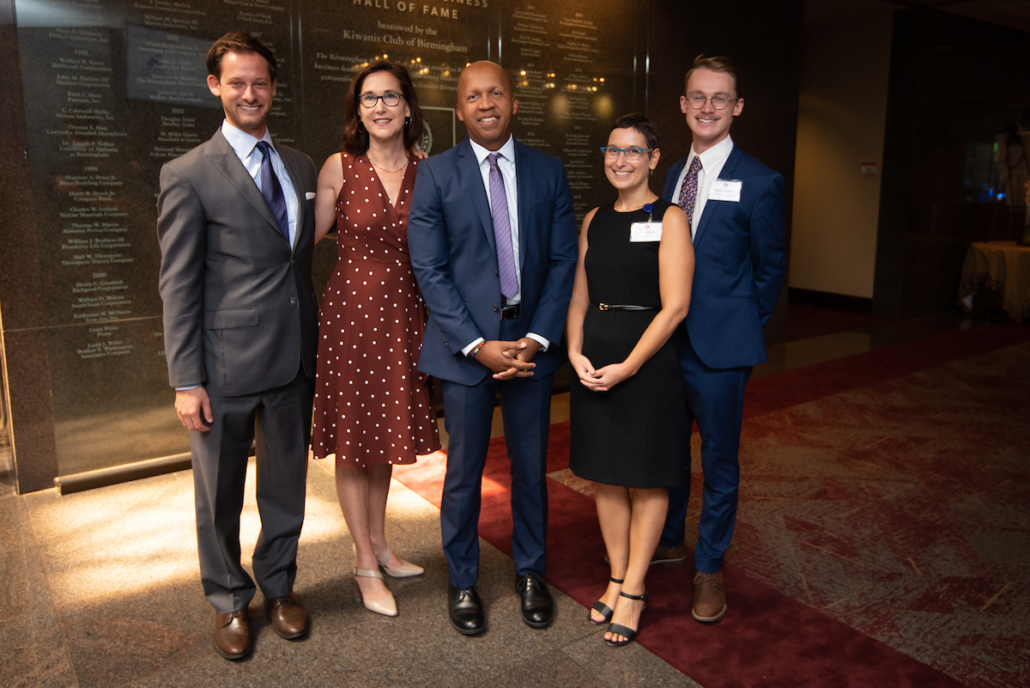
 Appleseed staff with Brewer Torbert honoree Bryan Stevenson

In 2019, we also continued our service as the preeminent, trusted source for trailblazing public policy research and game-changing reports that document the harms of bad laws in Alabama. We published two major reports in 2019: Broke: How Payday Lenders Crush Alabama Communities, and Hall Monitors with Handcuffs: How Alabama’s Unregulated, Unmonitored School Resource Officer Program Threatens the State’s Most Vulnerable Children. We simultaneously completed intensive, statewide research projects that will underpin forthcoming reports in 2020. These reports are the foundation of our approach to advocacy. Our investigative work quantifies, makes visible, and humanizes the issues; it sparks the data-informed, solution-oriented conversations that lead to new ways forward; it is the resource that we take to legislators and to communities across the state as we make the case for change.                                                                                       

And indeed, an essential part of our mission is ensuring that our research does not just live on a bookshelf. That’s why we have led public events, community forums, town halls, and stakeholder meetings all across Alabama in 2019, from Dothan to Florence, from Huntsville to Mobile, from Tuscaloosa to Phenix City, from Andalusia to Birmingham. You can be sure that in 2020, we will be inviting people into our work in a community near you, if not in your hometown. The issues we tackle are statewide in nature, and we are committed to a statewide strategy to win a better Alabama. We need all of us engaged in this work. 

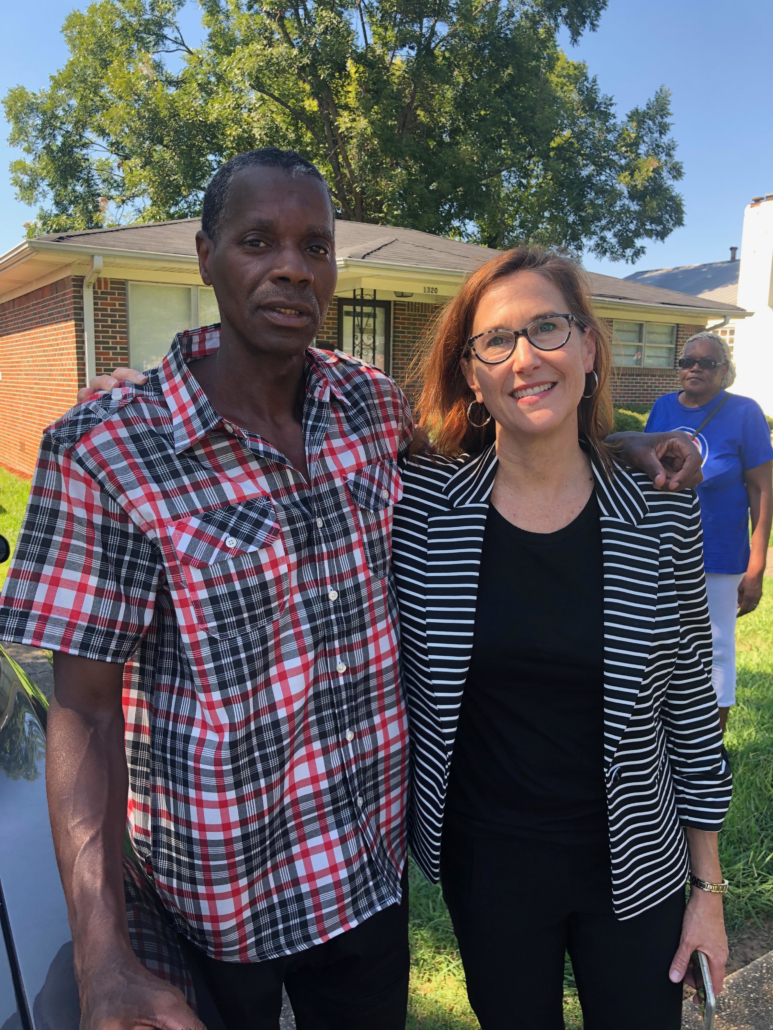
Perhaps our most poignant victory  was our representation of Mr. Alvin Kennard, a remarkable gentleman who spent 36 years in an Alabama prison following a $50 robbery in 1983. Mr. Kennard is one of hundreds of people who were sentenced to life without parole under Alabama’s harsh “Three Strikes” law. Our success in charting a path out of prison for Mr. Kennard someone who poses no threat to society has raised hopes that others may soon return to their families.   

We are exploring options to scale this work up to help other people sentenced to die in prison for offenses with no serious injury. It is just one part of our work to confront Alabama’s dire prison crisis, which was documented this April by a Department of Justice report that declared Alabama’s prison system unconstitutional. Today, only a few months since his release, Mr. Kennard is living with family and gainfully employed at a car dealership.                                                                                                                                                         

We are proud of these accomplishments all the more so because we have achieved them with a small team on a small budget. Our team of four dedicated and inventive staff members at Alabama Appleseed stretches every dollar to tackle the toughest challenges in this state. We have cultivated a statewide network of supporters, allies, and advocates that we bring to bear at the legislature, and our work has garnered national attention and acclaim from voices as varied as The New York Times, NPR, FOX News, The Washington Post, Reason Magazine, the Brookings Institution, and the Aspen Institute.  

Alabama needs Appleseed more than ever, and we are ready. As we reflect on this year of hard-earned victories, I thank you for your financial support and I ask that you stay with us in the coming year. Justice and equity for all Alabamians cannot be won without you. 

I hope that you have a happy holiday season, and that you feel proud of the work you have made possible this year. At Appleseed, we believe in a better Alabama, and we’re fighting for it. We will see you in the new year. 


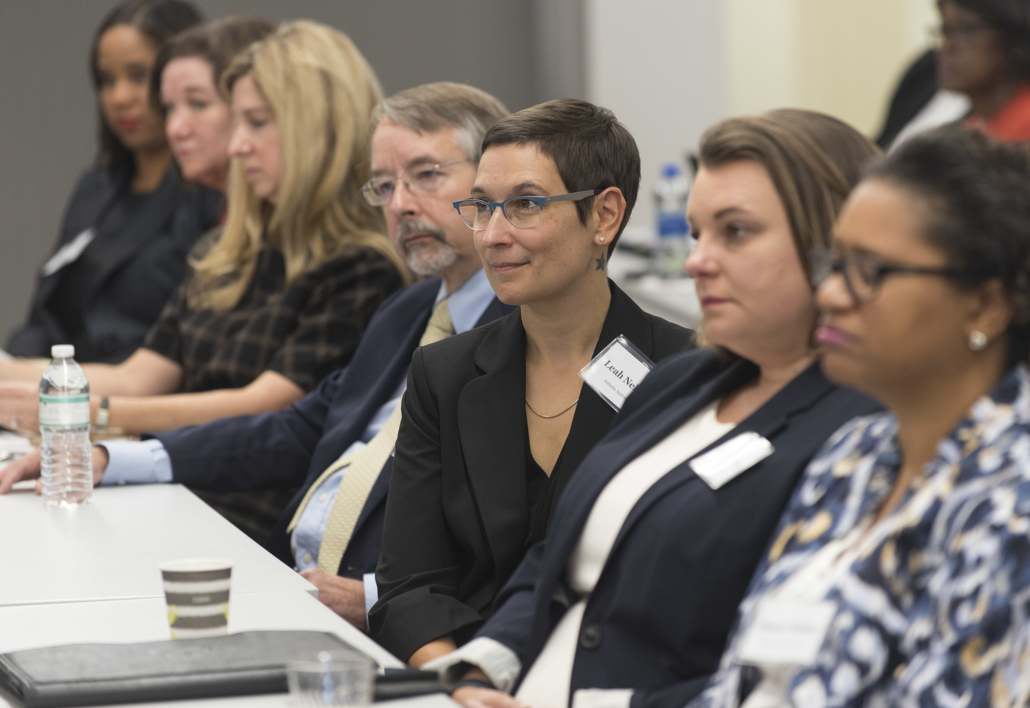
Appleseed Research Director Leah Nelson listens to expert panelists at our Fines and Fees event with the Aspen Institute.