
Alabama Prison Healthcare Faces Spiraling Costs and Grim Uncertainty. A Smarter Way Forward is Within Our Grasp.
By Eddie Burkhalter, Appleseed Researcher
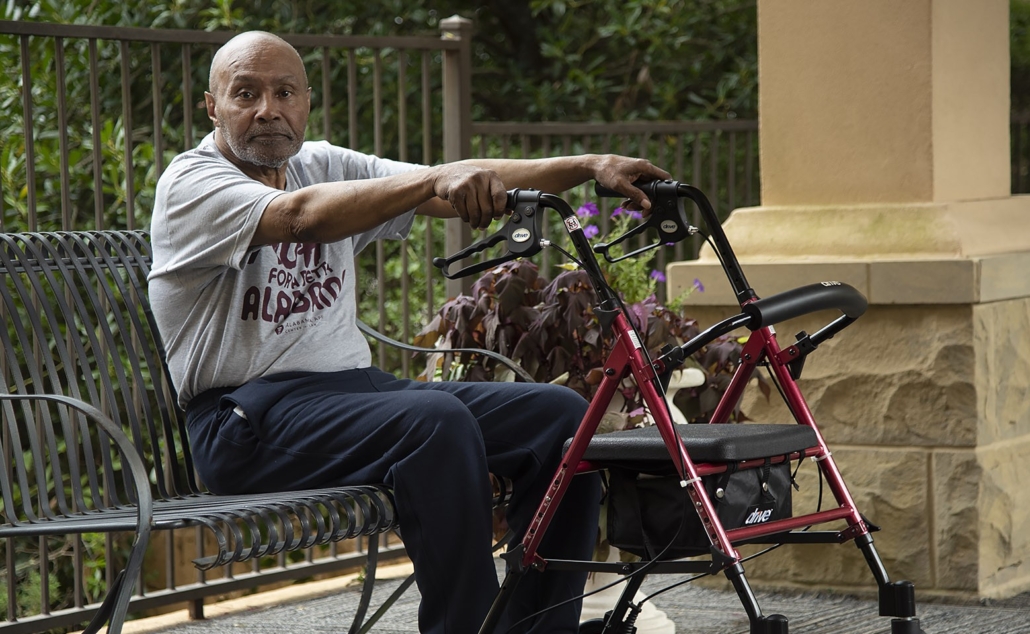
James Jones was hurting long before YesCare, the company contracted to provide medical care for those in Alabama prisons, diagnosed him with prostate cancer.
After Appleseed succeeded in getting Mr. Jones, now 78, released from prison in December 2024 and his treatments began outside of prison fences, his life and health took a turn for the better. He recently moved into his very own apartment, in a HUD-subsidized senior housing complex, and now Medicare covers his healthcare expenses.
James Jones and Appleseed’s reentry team
But there are hundreds of people like him, older and sick and of no danger to the public, who remain imprisoned and unable to access quality healthcare. And their numbers increase every year. Their continued incarceration, at a time when privately-contracted prison healthcare is a struggling industry, creates a costly and uncertain situation, especially for poor states like Alabama.
What our team has found, over more than five years of working with formerly incarcerated older people, is that there are available resources in Alabama communities, especially Jefferson County, to care for many these individuals – people who pose no risk to the public, yet who are costing the state millions while receiving substandard care in prison. At Appleseed, we are creating a cost-effective and compassionate model for relieving some of the pressure on the overwhelmed prison system and its expensive medical provider.

Appleseed Researcher Eddie Burkhalter and James Jones visit during a picnic at Railroad Park.
Given the fragile state of correctional health care and the continued danger and crowding in Alabama prisons, we believe it’s past time to scale this model. Below we offer lessons from our work and solutions to a brewing crisis that impacts more than 21,000 people in Alabama prisons.
Bankruptcy, missed payments, and missed pay checks
From the beginning of YesCare’s relationship with the State of Alabama, there were concerns about costs and viability. YesCare’s more than $1 billion contract with the Alabama Department of Corrections (ADOC) was approved in 2023. The company was born from the demise of Texas-based Corizon Health Inc., which had provided the Alabama Department of Corrections (ADOC) with health care services from 2012 to 2017. Numerous Alabama advocacy groups and incarcerated people sued Corizon over allegations of medical neglect, and facing a slew of lawsuits nationwide alleging the company failed to pay hospitals and insurance providers, Corizon transferred massive amounts of debt to a newly formed Tehum Care Services, which then declared bankruptcy. Critics said the move left Corizon’s creditors with no recourse. Corizon executives then created YesCare and landed the massive ADOC contract.
“Tehum, the bankrupt new company created in the maneuver, owes more than $82 million to over 1,000 creditors, including former patients who were injured or neglected, former employees who were hurt on the job, hospitals, doctors’ offices, cities and states,” The Marshall Project reported in 2023. “Almost all of Corizon’s assets — worth more than $170 million, according to court papers — went to YesCare, which continues to provide healthcare at prisons and jails.”
Then last month, YesCare missed a $2 million settlement payment required under the bankruptcy settlement. As reported March 5 in the Wall Street Journal, “Prison healthcare contractor YesCare didn’t make required payments under a $75 million settlement to resolve the bankruptcy of its former affiliate Tehum Care Services, opening the door again to medical-injury and creditor lawsuits.” Appleseed’s questions to ADOC regarding the YesCare contract and issues with the company’s solvency went unanswered.
YesCare failed to pay its Alabama prison workers on the scheduled payday Friday, April 10, according to statements from several of those workers to Appleseed on Monday, April 13. Appleseed also heard from advocates who monitor Alabama’s prisons that YesCare staff went unpaid Friday and many healthcare workers for the company walked off the job at Kilby Correctional Facility on Monday morning.
“If you are receiving this email, it is because we are aware that some payroll transactions have still not been fully processed as of this afternoon,” reads an email from YesCare Chief Human Resources Officer Dennis Wade to staff on Friday, which a health care worker for the company sent to Appleseed. “We are working with our ownership and our bank to address the situation and hope to have it resolved on Monday. We know this is a hardship and apologize for the inconvenience.”
We learned Tuesday, April 14, that YesCare staff were finally paid, though several days late.
Workers have communicated their frustration in multiple ways. “We most definitely didn’t receive pay on Friday and it’s almost the close of business and I do not see any pending transactions,” one YesCare worker told Appleseed. “YesCare has failed to pay in a timely manner for the last 2 pay periods…but it has never been this late.”
Against this backdrop, the expensive medical needs of incarcerated Alabamians are only increasing with the state keeping so many older people locked up long after they age out of criminality.
The Senseless Costs of an Aging Prison Population
The percentage of incarcerated people who are older has continued to increase in Alabama prisons for decades. As of January 2026 the percentage of people under ADOC’s jurisdiction (This includes those imprisoned and those serving sentences in community corrections settings. ADOC public reporting doesn’t break down the numbers to show just those who are serving in prison.) who were 51 years old or older sat at 28.5 percent, or 8,086 people. That’s higher than the national average of 24 percent aged 51 or older, according to research published in the National Library of Medicine. In 2000, those older people made up just 7 percent of Alabama’s prison population.
As Alabama prisons continue to house a higher percentage of older people, the rising cost of providing physical and mental health places a greater and greater burden on the state’s General Fund. Studies show that the cost of caring for those older incarcerated people is between three and five times the cost of keeping younger people incarcerated.
In 2000, Alabama spent an average of $24.47 to incarcerate someone for a day, or about $9,300 per year. That number stayed relatively the same between 1995 and 2003, but the dramatic rise of
older individuals in prison sent costs soaring. According to ADOC Commissioner John Hamm, speaking in a 2024 budget hearing, he predicted the daily cost for fiscal year 2024 to hit $87 a day, a 255 percent increase from 2000. (ADOC’s annual reports used to include data on the cost of incarcerating people, but the department stopped publishing that data for the 2022 annual report.) But we know it continues to escalate as the FY27 General Fund budget allocation for ADOC was $868 million.
An aging prison population requires longer, more attentive care. As such, ADOC’s healthcare system will continue to be strained, requiring excessive reliance on off-site infirmary admissions. Along with the aging population, which brings its own increased medical costs, there are others who have serious health conditions or terminal illnesses. Medical costs to address the health care needs for people incarcerated continue to increase, going from $120 million in 2012 to $235 million in 2023.
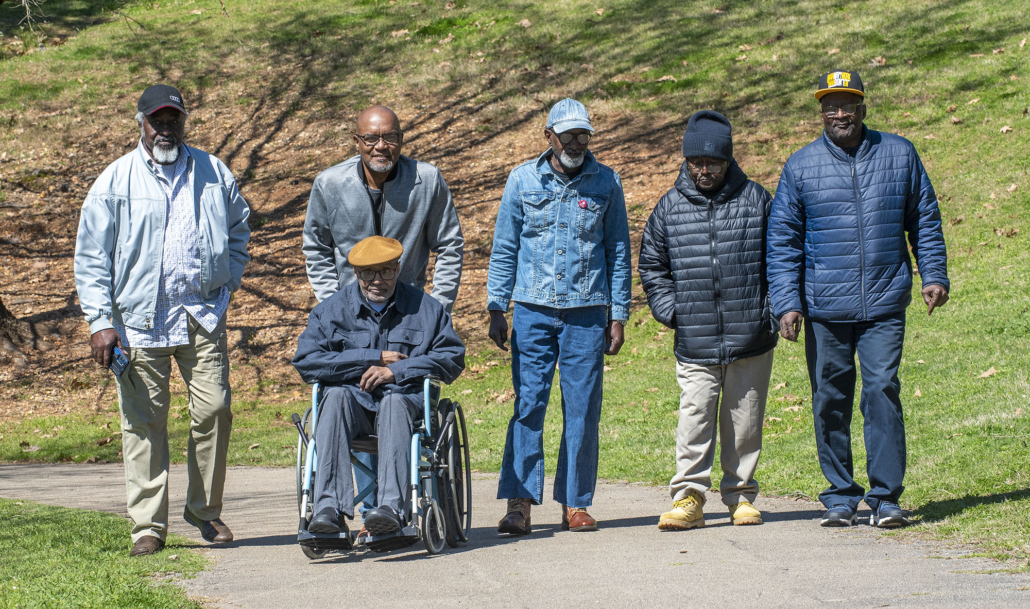
A group of Appleseed’s clients, all of whom served decades in life sentences without parole in Alabama prisons, enjoy a day in a Birmingham, Ala., park following a birthday celebration for John Coleman. From left are Larry Garrett, Ronald McKeithen, Robert Cheeks, Lee Davis, John Coleman, and Willie Ingram. Photo by Bernard Troncale
It becomes even harder to justify spending hundreds of millions to care for aging men and women in prisons when one recognizes the long-settled fact that as people age they commit less crime. Hundreds of incarcerated Alabamians eke out an existence behind bars barely able to walk, much less to commit crimes.
Those aged 60 and older account for only three to four percent of violent crime nationally, and older people return to prison at lower rates as well.
“Older offenders were substantially less likely than younger offenders to recidivate following release. Over an eight-year follow-up period, 13.4 percent of offenders age 65 or older at the time of release were rearrested compared to 67.6 percent of offenders younger than age 21 at the time of release,” according to a U.S. Sentencing Commission report. “The pattern was consistent across age groupings, and recidivism measured by rearrest, reconviction, and reincarceration declined as age increased.”
In short, people over 60 were about five times less likely to be rearrested than people under 21.
Our roadmap for care after long-term incarceration and delayed diagnoses
James Jones was 77 when Appleseed won his freedom from a life without parole sentence, and on December 18, 2024, he walked out of the St. Clair Correctional Facility. Even prison staff celebrated his release as the jovial gentleman known as “Honkytonk” ambled out of the long-troubled prison. Appleseed’s reentry team was already well underway on the plan to help him get the medical care he badly needed.
One of the first people in the state to be sentenced to a mandatory sentence of life without parole under the Habitual Felony Offender Act in 1981, Mr. Jones spent 43 years in prison following a robbery at a North Birmingham shoe store.
Mr. Jones was diagnosed with prostate cancer shortly before his release from prison, but because he wasn’t receiving care earlier on for the pain he was experiencing, his diagnosis was likely late in coming, explained Kathleen Henderson, Appleseed’s re-entry case manager. “If they had given him symptom care they could have picked up on it,” Ms. Henderson said, noting that since his release and because of his cancer treatments, he’s improving. “Now Mr. Jones is living comfortably. He’s doing pretty well.”
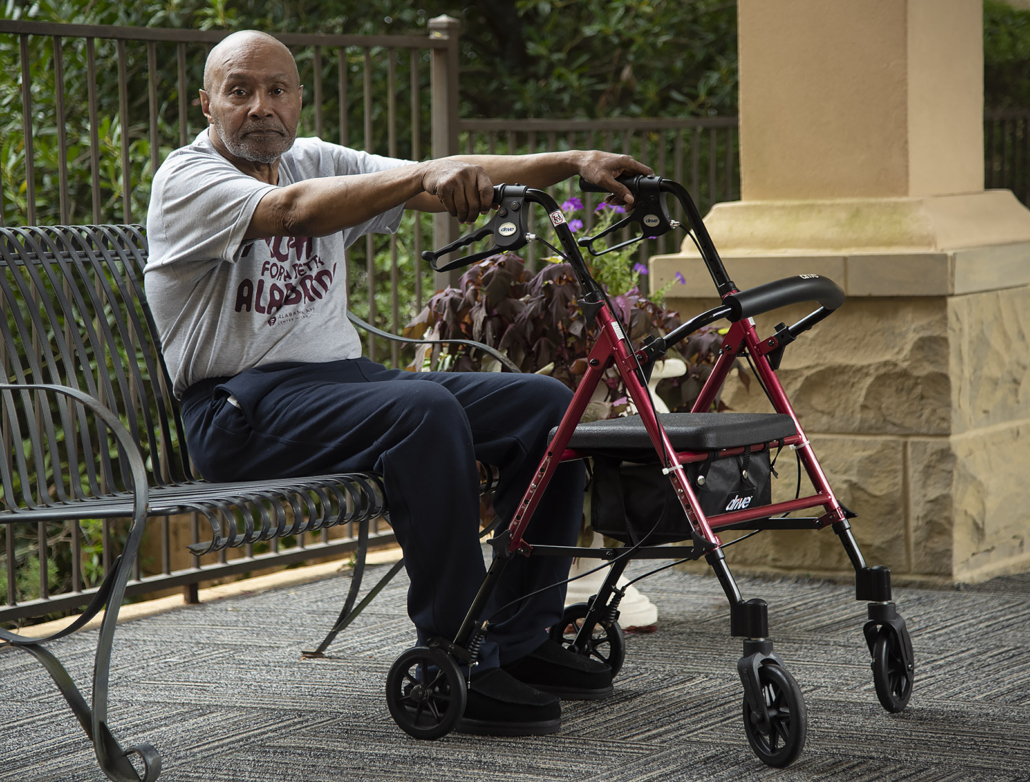
Our client John Coleman, who Appleseed freed from prison in 2023 after he served 34 years of a life sentence, was wheelchair-bound while in prison, but after his release, once Appleseed helped him access physical therapy and medical treatments for the pain in his back and legs, he began walking with a walker.
Clients John Coleman and Robert Cheeks, both who spent most of their adult lives incarcerated.
“He was able to get along fine (with the proper treatment) but while he was in, he had none of that, ” Ms. Henderson said, noting that even among the Appleseed clients who were being treated for medical conditions while incarcerated, the medication they were provided was “one size fits all” and not tailored to their individual needs. There is no rehabilitation care in Alabama prisons either, she said.
Another freed Appleseed client had HIV while incarcerated but records don’t show he was ever treated while in prison. He’s receiving that treatment now, and it was only recently discovered that he also has stomach cancer. “How long had that been going on, for it to get to this point?” Ms. Henderson said of the cancer diagnosis. “Their problems are not met in prison like they should be,” Ms. Henderson said.

John Coleman was sentenced to die in prison and is released after serving 34 years. He recently celebrated his 92nd birthday.
Ingrid Patrick, Appleseed’s social worker who, along with Ms. Henderson, ensures Appleseed’s re-entry clients thrive outside of prison, said she begins the process with new clients by securing housing, either at a transition home like Birmingham’s Shepherd’s Fold or with the client’s family, and then begins the work of getting them medical care and all the documents they need to restart their lives.
Our team has learned that this process can take months, and many clients need extra resources to survive as they wait out the federal bureaucratic delays. “You would be surprised at how many of our guys didn’t have a social security card or birth certificate,” Mrs. Patrick said. But once the necessary documents are secured and federal services start flowing, people can thrive.
Appleseed’s team stresses the importance of blood work and diabetes testing once people are released, because too often clients had no idea they were diabetic while incarcerated. “We had one instance where he knew he was diabetic, but the line (in prison) for getting his medication was just so long, and he has extreme back pain so he can’t stand in that long line, and so he just stopped getting his medication,” Ms. Patrick said. “We got him released and in to see his doctor, and he is doing so much better.”
“A lot of times they aren’t getting the proper care, or the full care, they should be receiving,” Ms. Patrick said. “A lot of the healthcare they get out here has prolonged their lifespan for sure.”
Currently, 16 Appleseed reentry clients are over age 65. Thirteen of these individuals have chronic health problems, such as prostate cancer, kidney disease, high blood pressure or pain related to aging and require assistance from our team for doctors appointments, prescription access and more.
Appleseed’s capable reentry team – a total of three people – have connected dozens of clients to community resources. The key is a case manager, social worker, and peer mentor, Ronald McKeithen, who served 37 years himself, and is now 64 years old, so he understands what these individuals need on many levels. What our clients need most is help with things like getting new identification cards and navigating Social Security, Medicare and Medicaid benefits: tasks that anyone trained in case management can easily help with. “There are people coming out who have health problems who are older, who could live on their own. It absolutely can be done. There are so so so many folks out there that work with health care,” Ms. Henderson said. “There are so many health resources out here.”
On a recent visit to the Birmingham Botanical Gardens for the garden’s cherry blossom festival, three of Appleseed’s clients and Ms. Patrick spent time together. Robert Cheeks, now 83, was pushed in his wheelchair and talked about his memories, but the memories he shared weren’t of life in the free world. He’d served 37 years of a life without the possibility of parole sentence before Appleseed freed him in 2022.
Robert Cheeks shortly after his release from prison in 2022. He remains a vibrant member of our community. Photo by Bernard Troncale
“He’d been in prison for 30-plus years. Those are the memories he has,” Ms. Patrick said. “So why should he not be allowed to come out and make new memories for himself?”
There are laws to help fix this, but obstacles remain
States around the country are grappling with this issue. Various tools and laws are available, often known as compassionate release. Alabama has both a medical furlough and a medical parole law in its state statutes.
The medical furlough statute provides eligibility to incarcerated individuals age 55 or older “who suffer[s] from a chronic life-threatening infirmity, life-threatening illness, or chronic debilitating disease related to aging, who poses a low risk to the community, and who does not constitute a danger to himself or herself or society.” People who are permanently incapacitated or terminally ill are also eligible. Terminally ill is described as having “an incurable condition caused by illness or disease which would, with reasonable medical judgment, produce death within 12 months.”
Alabama prison death data strongly suggest that the furlough statute is being underutilized. Currently, 16 people are in the medical furlough program, which is a little higher than the typical 13 to 15, posted in ADOC statistical reports over the last three years. But Alabama has one of the highest prison mortality rates in the United States, thus the vast majority of people with terminal illnesses or chronic life-threatening infirmities are dying in prison, rather than be released by furlough. A more robust furlough program or additional compassionate release mechanisms would allow more people to die with dignity, surrounded by family rather than in a cold prison infirmary. Plus, it would relieve some of the pressure on prison healthcare providers and reduce costs for the state.
Of the record high 327 deaths inside Alabama prisons in 2023, ADOC classified the cause of death as natural for 153 people, which accounts for 46.7 percent of them. Appleseed is working to learn more about in custody deaths from 2014-2024, and 2023 is the first year for which we have a complete picture of causes and manner of deaths.
Already our findings strongly suggest that people are dying of treatable conditions, calling into question the quality of prison health care. One in six “natural” deaths in Alabama prisons in 2023 occurred among incarcerated people aged 50 or younger. In more than one-fifth of those deaths (22 percent), sepsis, a life-threatening but often treatable condition, was listed as a cause or contributing factor. By comparison, sepsis was involved in only about one in 25 natural deaths across all ages that year.
The average age for natural deaths inside Alabama prisons that year was 59, and in facilities like Ventress and Bibb, the average age of natural death drops into the 40s, ADOC’s own reporting to the federal government collected and reviewed by Appleseed shows.
Among those younger natural deaths at Ventress prison was Ryan S. Allen, who died at the prison on April 3, 2023 at the age of 27 and whose cause of death listed in ADOC’s data submitted to the federal government states “Cause of death: staphylococcus aureus sepsis.” Staph infections are treatable, and sepsis can mean delayed or failed intervention.
James Lynn Johnson, 36, died at Elmore Correctional Facility on July 11, 2023, from “complications of diabetes”, a disease that required constant monitoring and care, and 30-year-old Chad Markum died from “Sepsis due to…pneumonia” on April 1, 2023, at Ventress Correctional Facility.
Smoothing the transition with federal resources
A major obstacle to relieving some of this pressure by moving older and infirm people into the community for care is the inability to start or restart a person’s Medicare or Medicaid benefits until after they are released from prison. ADOC and YesCare are keenly aware of this issue.
In August of 2024, Ms. Henderson at Appleseed was contacted by a YesCare worker regarding a case involving a man named Jamaal Mabry. Mr. Mabry was stabbed in the back while serving his sentence, leaving him quadriplegic with only minimal use of his left arm. By the time the YesCare worker contacted Ms. Henderson she had applied 3 times for Medicaid on behalf of Mr. Mabry and was denied each time due to his incarcerated status. However, because he lacked Medicaid coverage, which he would be eligible for due to his disability, the YesCare worker was unable to place him in a nursing home or care facility. For months, Appleseed attempted to find a placement and figure out a way around these obstacles.
Eventually, Appleseed attorney Scott Fuqua was able to secure Mr. Mabry a placement at a nursing home only after taking extraordinary measures to ensure the cost of caring for his first month’s stay would be paid for. Mr. Mabry was released from prison on April 4, 2026.
“They wouldn’t take him without assurance that that was going to be paid for, one way or the other,” Ms. Henderson said. Because she filed for his benefits as soon as he was released, once the application is processed those benefits will start retroactively and cover costs incurred from the day the application was sent, but providing that payment guarantee to places like nursing homes is a massive obstacle to helping incarcerated people reenter their communities.
“Just trying to get someone into a nursing home is hard enough, but trying to get them in while they’re incarcerated is almost impossible,” Ms. Henderson said.
Despite this difficult reality, there exists a solution that other states are using. Section 1115 Medicaid demonstration waivers can be used in many different ways, including for those who are incarcerated specifically by establishing or reestablishing Medicaid coverage prior to someone’s release from incarceration in order to streamline the reentry process.
The Centers for Medicare and Medicaid Services (CMS) has begun emphasizing the use of the 1115 waiver in reentry, stating, “Section 5032(b) of the SUPPORT Act makes clear that the purpose of this demonstration opportunity is ‘to improve care transitions for certain individuals who are soon-to-be former inmates of a public institution and who are otherwise eligible to receive medical assistance under title XIX.’”
To date, 20 states have been approved to use the 1115 waiver for reentry and five other states have applied. Of the 5 southern states that have applied– Arkansas, Louisiana, West Virginia, North Carolina, and Kentucky– Kentucky, West Virginia, and North Carolina approved so far. The program allows incarcerated people to enroll in Medicaid 90 days before their release. In addition to Medicaid enrollment and reinstatement, the waiver can provide increased access to case management prior to release, as it does in Kentucky, for example. This broadens its usefulness, as use of the waiver can serve even those aging who aren’t headed to a nursing home post release, who simply need better access to resources and care prior to release so they can be more on their way to getting jobs and moving forward. In order to make this happen, Alabama’s State Medicaid Director would need to write and submit a proposal for an 1115 waiver program, outlining what its goals would be. If approved, State Medicaid and the Department of Corrections would need to work closely to ensure the program is being utilized in an effective and efficient way. Other state entities that might benefit from the program include the Department of Mental Health, the Nursing Home Association, Senior Services, and the Department of Rehabilitation Services.
On the other end of the spectrum, several of Appleseed’s older clients are employed well into their 60s and after decades in prison. Milton Hambright, 63, landed a job as a forklift operator at a Cullman manufacturing company less than two weeks after being released on parole. He has a side job as the handyman at the Cullman Reentry Addiction Assistance, his transitional housing placement.

Larry Garrett
Larry Garrett, 71, is employed by Western Express driving tractor trailers and is constantly on the road. Both of these men spent more than three decades behind bars, yet somehow maintained their health and are determined to contribute to the economy and be self-sufficient, despite the state taking so many years of their lives.
Their resilience and vigor prove what’s possible when sensible resentencing is combined with holistic reentry support.
Policy Director Elaine Burdeshaw and Executive Director Carla Crowder contributed to this report.



Leave a Reply
Want to join the discussion?Feel free to contribute!