Appleseed Post-Session Briefing: Two good bills passed, a prison oversight pilot created, and renewed optimism for continued prison reform in Alabama
Highlights:
- Appleseed succeeded in pushing two criminal justice reform bills over the finish line this session.
- We also helped develop a pilot program for independent prison oversight that will launch immediately.
- By working alongside justice-involved people and families of incarcerated Alabamians, Appleseed was able to identify issues that matter to the people most impacted by the criminal justice system.
- Here is a behind-the-scenes look at how it all happened.
By Elaine Burdeshaw, Appleseed Policy and Advocacy Director
I wasn’t sure what to expect this session. Of course I was hopeful, but after hearing from most legislators, lobbyists, and news outlets that “nothing was going to happen this session”, I must say my hopefulness was more… realistic. Nevertheless, we set out to do what we always do: provide the legislature with commonsense solutions to address the myriad of problems we and the directly impacted people we work with run into while dealing with Alabama’s criminal justice system.
At the start of the 2026 session we had two main priorities:
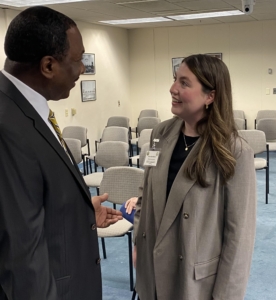
Elaine Burdeshaw discusses legislation with DOC’s Jeff Williams
First, to provide independent oversight of the state Department of Corrections (DOC). After years of monitoring and documenting the conditions inside DOC, Appleseed began working on oversight legislation in 2023. We knew through this documentation and our relationships with incarcerated people and their families that few policies were more important to prioritize than oversight. Alabama’s prisons continue to be the deadliest in the country, with a death rate of almost 3 times the national average. There are high rates of overdose deaths due to the prevalence of drugs inside. Families are extorted for large amounts of money often just to keep their loved ones safe. Facilities remain overcrowded and understaffed. All of this and the state continues to pay exorbitantly– 5 billion dollars in the last 5 years– for a system that offers very little return on investment.
Second, to reform the state’s use of parole revocations, an issue we became aware of after representing clients at parole hearings and hearing more from individuals who had been paroled on life sentences. What we learned was that the parole board has no discretion when it comes to their decisions to revoke– or not revoke– individuals with certain underlying offenses. We also learned that when individuals are revoked due to new charges, they often linger in prison until they’re eventually able to come back up for parole even when those charges are dropped. As with most challenges Appleseed works to address, this seemingly in-the-weeds issue imposed real-life consequences on people who had been doing well on parole for years, who had worked to rebuild their lives after, in some cases, decades of incarceration.
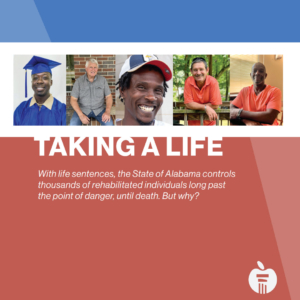
Our report uncovered unnecessary revocations and called for reform.
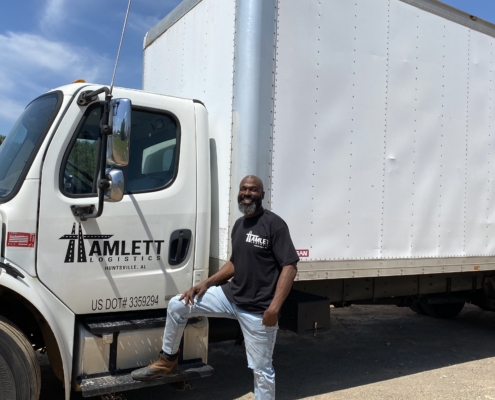
Archie Hamlett’s story, of being revoked back to prison for a minor charge that was later dropped, inspired SB254.
What we experienced on both of these fronts ended up being policy making and advocacy at its best.
Prison Oversight
Our prison oversight bill, SB 316, was filed by Sen. Larry Stutts, R-Tuscumbia after months of working through details of the legislation and what it should include. In its original form, the bill formalized a role within the Department of Examiners of Public Accounts created in 2024, increasing their responsibilities and providing them with the authority to independently monitor DOC. They would be given “golden key access” to all DOC facilities– to go anywhere, look everywhere, talk to anyone– and compile a list of information that would then be reported publicly, including recommendations for improvement. Along with this primary function, the bill also included provisions that would have removed all investigative authority from DOC, placing it with the State Bureau of Investigations, and provided each District Attorney’s office with a major prison in their circuit a special prosecutor for cases coming out of DOC. This seems like a lot, but we believed each piece would be helpful in creating more transparency and accountability within the department.
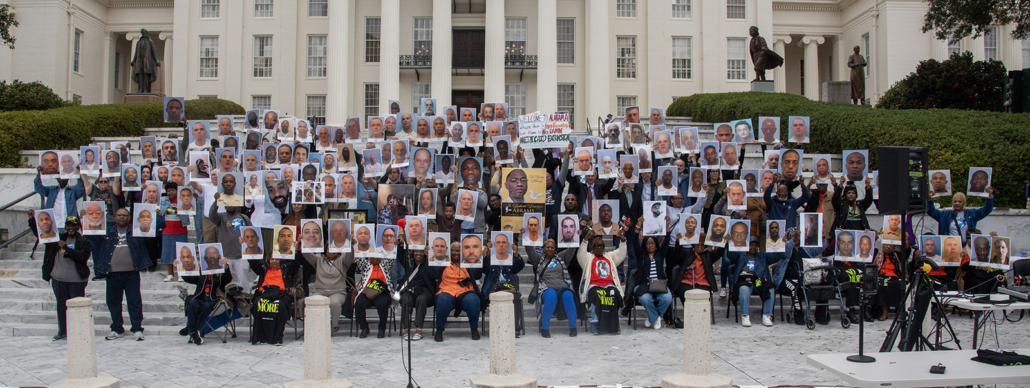
On Ash Wednesday, Alabamians gathered on the Capitol Steps to remember those who died in state prison custody. Photo by Bernard Troncale
After many conversations with legislators, legislative leadership and the state departments involved, and after a bit of a reality check on where we were in this very fast-paced session, we realized we needed to come together to chart a different path. In a couple meetings, we were able to hammer out an agreement that led to Alabama’s first ever state-led prison oversight pilot program. The program covers Tutwiler and two to three men’s prisons, and will be headed by the Department of Examiners of Public Accounts who will carry out most of the monitoring responsibilities laid out for them in SB 316. This pilot program means, rather than dealing with uncertainty of the bill’s passage and concerns about long implementation times, oversight can start now. Our hope, and Sen. Stutts’ stated goal is to come back next year to assess results of the program and move forward with legislation to expand based on its findings.
The day the pilot was announced, Sen. Stutts and Pro Tem Garlan Gudger stood on the Senate floor and shared the plans for oversight with the rest of the body; this alone was a welcome surprise after years of most DOC air time being consumed with how the state will pay for its construction of new prisons. But something else happened that was even more remarkable. Those two members of the state Senate stood and recognized, in front of their colleagues and the watching public, the contributions of the many parents and family members of incarcerated people who have been fighting for change and relief for years. To us, this only made sense. The families, and those currently and formerly incarcerated, are the ones who drove us to this point. In the words of Pro Tem Gudger, “we wouldn’t be where we are now without them.”
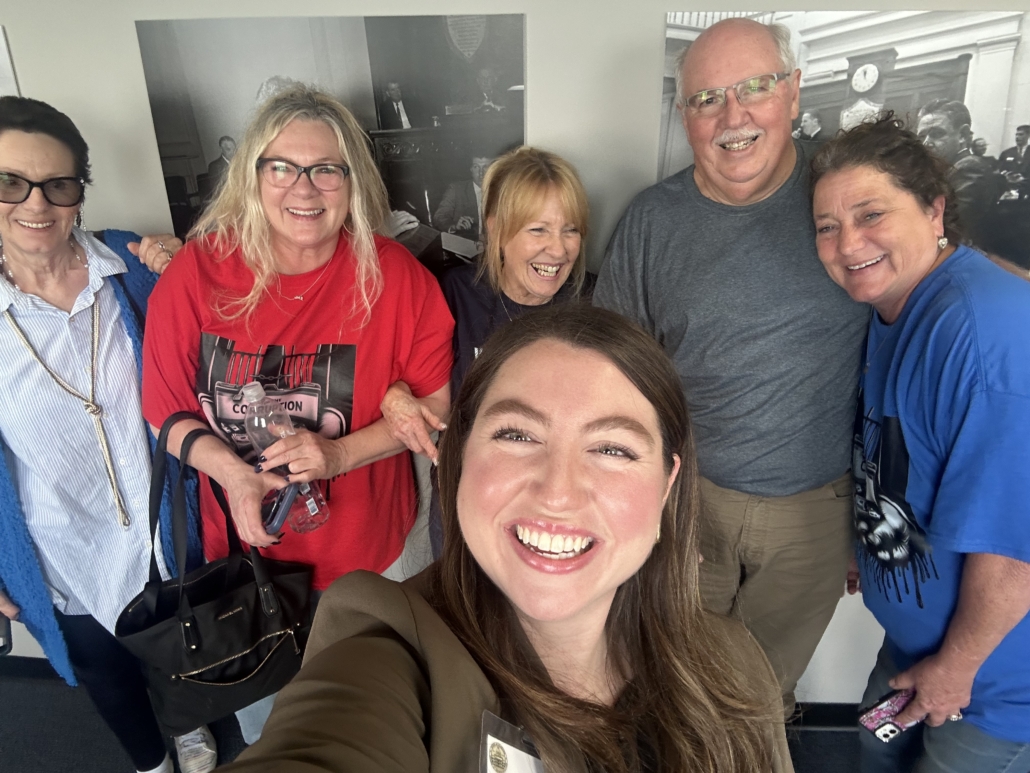
Appleseed’s Elaine Burdeshaw and advocates for prison oversight celebrate at the Alabama Statehouse.
Parole Revocation Reform
Our parole revocation reform bill, SB 254, was filed by Sen. Sam Givhan, R-Huntsville and later filed in the House as HB 437 by Rep. Laura Hall, D-Huntsville. In the beginning, the bill provided the parole board front-end discretion when an individual on parole with certain underlying offenses is up for revocation, and broad back-end discretion when someone is revoked for a new charge and those charges are later dropped or reduced to something more minor. As the process normally goes, the bill went through some changes after conversations with various stakeholders who came to the table.
Through conversations with the Bureau of Pardons and Paroles, Office of Prosecution Services, and District Attorneys Association, we were able to work out a plan to address what seemed to be the most important, pressing need we kept running into. How do we make sure one, the parole court (those who review revocation cases) can consider all the facts of a violation in their decision making, and two, that someone who’s been revoked for a new charge doesn’t linger in prison if those charges are dropped? Now that SB 254 has passed, pathways have been created to do just that.
Support for Crime Survivors
Appleseed recognizes the undeniable connection between those who are victims of crime and those who commit crime, and the need to provide support to both. In 2023, we released a report called Afterward, documenting what happens in Alabama after violence occurs. In a state that often touts prioritization of victims when it comes to public safety and criminal justice, we sought to answer questions like, when violence occurs, do survivors of that violence get what they need and want? Are we considering the voices of all victims, or only the ones that suit our desired outcomes? Of all we learned from that report, one issue kept rising to the top: victims and survivors are not getting the support they need in the wake of violence, specifically when it comes to financial compensation.
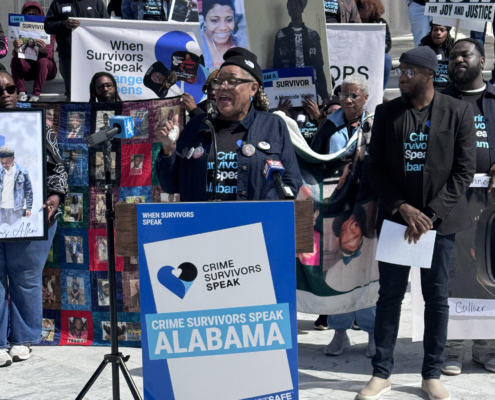
Appleseed’s Callie Greer speaks at the Alabama Survivors Speak rally in February.
It turns out Alabama has a state agency for that– the Alabama Crime Victims Compensation Commission (CVCC). It also turns out that until now, the window of time to apply for compensation after experiencing violent crime was one year. Only one year to learn of the Commission, figure out how to apply, and go through the process of applying to obtain the financial support available. If you’ve ever talked to someone who has experienced this kind of violence, you’ll know wading through all that comes with it to get to a place where someone can even think about anything other than what’s happened to them is a tough, if not impossible, task in that period of time.
Over the last year, Appleseed has been working with Crime Survivors Speak, a national organization focused on centering the voices of survivors and victims of crime. This session we were proud to partner with them on an event, Survivors Speak Alabama, that took place in Montgomery on the Capitol steps. Here, around 200 crime survivors gathered to ask the state for more support, including passage of HB 255 by Rep. Russell Bedsole, R-Alabaster, which expands the application window for victims compensation from one to two years. This bill, filed for the first time in 2025, was an effort primarily led by CVCC and Rep. Bedsole, though Appleseed and CSS were grateful for the opportunity to support passage of HB 255, which has now been signed into law. There is no doubt that the presence of crime survivors in Montgomery that day, calling for support and listening ears, helped prioritize this legislation among lawmakers. As CSS says, “When survivors speak, change happens.”
Appleseed is so grateful to the many who made these wins possible: our bill sponsors – Sen. Stutts, Sen. Givhan, and Rep. Hall–, Pro Tem Gudger and his office, Rep. Bedsole, the Bureau of Pardons and Paroles and Director Cam Ward, the Office of Prosecution Services and District Attorneys Association, the Department of Examiners of Public Accounts, the Department of Corrections, Crime Victims Compensation, Crime Survivors Speak, and finally, all of Appleseed’s clients, the family members we work with, and all those directly impacted by Alabama’s justice system who help Appleseed keep a pulse on current needs. And of course, all you everyday Alabamians out there whose support and engagement keeps us optimistic about what’s possible.
We weren’t sure what to expect this session. Of course we were hopeful. Turns out we had a right to be. See you next session!



Leave a Reply
Want to join the discussion?Feel free to contribute!