By Eddie Burkhalter and Leah Nelson


Public outcry over the arrest of an 82-year-old Valley woman for $77 in unpaid garbage bills was swift, but records show the city has for decades arrested people over unpaid trash bills.  

Martha Menefield’s arrest three days after Thanksgiving, made international headlines. The charge against her was dropped after Menefield, on Dec. 5, paid the $77 and an additional $35 in court costs, records show. But an investigation by Alabama Appleseed and other outlets indicates that Menefield was but one of many victims of Valley’s trash police. 

This pattern of deploying police officers as bill collectors, particularly where the impacted residents are elderly, impoverished or both, does nothing to improve public safety and tarnishes the reputations of the small towns involved.  

Under a 2012 Valley municipal ordinance, nonpayment of garbage fees is a misdemeanor punishable by fine. Appleseed reviewed 26 arrests of Valley residents charged with failing to pay solid waste fees, 11 of which took place this year. Of 26 cases reviewed, 11 people had been arrested more than once over unpaid trash bills. 

Among those who were arrested on trash warrants by Valley police was 77-year-old Dee Kent, who was pulled over and arrested in November of 2021 while on her way to an appointment with her oncologist, CBS 42 first reported. 

Kent, now 79, told the news station she’d received no warning from the city prior to her arrest for failure to pay $141 in trash bills. She described her arrest to Appleseed by phone Thursday as “embarrassing.” 

“It was rough going to jail. Especially when everyone knows you. When you’ve grown up here,” Kent said. 

Nortasha Jackson, 49, was arrested Nov. 26 at her Valley home for $88 in unpaid trash bills, court records show. Her charge is listed as “Failure to Pay Solid Waste Fees” in those records. 

Jackson said she was arrested by two officers, one white and one Black, and described the younger Black officer as “gung ho.” 

“I came here to do my job. You’re going to be arrested,” the younger officer told her, Jackson said. 

Once at the Valley Police Department, she was given 20 minutes to arrange her bail or else be taken to the county jail. Panicked, Jackson said she got help from her adult son who was able to transfer a payment to help secure the bond before she was to be moved.

Jackson’s three children are grown and all have moved on. She receives partial disability benefits and works full time as a cashier, but her health problems prevented her from working during the months of October and November, Jackson said, meaning she had to stretch what little income she had even further. 

“It’s really hard,” she said. “My health is more important.” 

How a law becomes an arrest

With a few exceptions, participation in Valley’s garbage service program is mandatory. Residents are required to pay $18.10 per month for the service, or $15.60 if they are 65 or older and apply for an exemption. People who rely exclusively on Social Security benefits for income can also apply for full exemption.

Penalties for nonpayment include late fees, suspension of services, and civil actions. And pursuant to an ordinance adopted in 2012, people who violate any element of the city’s solid waste code “shall be guilty of a misdemeanor, and upon conviction, shall be fined not less than $50.00 nor more than $200.00.” The ordinance spells out that those fines can be compounded, with each day of noncompliance constituting a separate offense.

Valley has clarified that Menefield was arrested for failure to appear, not strictly for failure to pay her trash bill. But in Valley – along with at least 47 other Alabama cities – failure to pay trash bills alone is technically enough to trigger criminal charges. 

How does enforcement transpire? Every town operates differently, but to get a sense of how cities go about enforcing criminal codes where the offense in question is not something that would result in a call to 911 or a police stop, Alabama Appleseed spoke with two former city clerks who worked for small rural towns in Alabama.

The former clerks, who between them have decades of experience in municipal governance, explained that it is common for cities to contract with outside companies to collect their trash, as Valley does with a company called Amwaste. The cities pay the bill for that service, and city councils have discretion to pass those costs on to residents by passing a local ordinance. Fees collected pursuant to such ordinances have to be used for trash-related purposes and cannot be disbursed to the general fund. 

Generally, the clerks said, cities have an entity – a water or utilities board in some, a solid waste department in others – that oversees garbage collection services and collects fees from residents. In order to keep track of payments, that entity maintains a list of delinquencies, which in a city with an ordinance permitting criminal consequences it could turn over to a magistrate on a periodic basis. Based on that list, the magistrate would issue warrants which police would be tasked with executing. 

“I imagine they don’t even think about it, it’s just automatic. I think it probably stems from a policy set by the council or a directive from the mayor, but the magistrate is just doing what they do,” said Herman Lehman, former city clerk and treasurer for the city of Montevallo who now works as a consultant.

Lehman said that every single step of that process involves discretion. Like Valley, Montevallo contracts with an outside company to collect trash. The city pays the bill each month and collects fees from residents, who are required to participate in the service but can obtain exemptions if they can show they are unable to pay. As in Valley, Montevallo city code makes nonpayment of trash fees a misdemeanor. 

Lehman said he is unaware of the city ever having enforced that provision of its code. Instead, when Montevallo found a resident was struggling to pay, it sought to connect them with assistance through local churches, community-based organizations, or a Shelby County fund that is available to people with certain types of financial difficulties. Montevallo also made sure that eligible individuals knew they could apply for exemptions from the mandatory fee. When people habitually failed to pay or act on their bills, Montevallo used civil and administrative measures to sanction them and attempt to recover the money. 

“The idea that police were there to protect and serve, we sort of felt that serve was the operative word,” Lehman said of Montevallo’s reluctance to deploy police as debt collectors. “It just doesn’t make sense when you’re living in a community, particularly in a small community, to always play the bad guy, particularly in a situation where people may need help.”

Alabama law does not require custodial arrests for all misdemeanor charges. Among myriad unserved warrants for a wide variety of offenses dating back to 2003, Appleseed identified 22 for unpaid trash bills throughout Chambers County, along with one unserved warrant for the offense of “pants below waist.”

It is possible that the city of Valley issues summons initially, telling people who are delinquent on trash fees to come to court on a particular day for a hearing before a judge. What seems to have happened with Menefield is that she missed her initial court date. Typically, failure to appear at a court date prompts the issue of a second warrant, this time for failure to appear. That is the type of warrant that led to  Menefield’s November arrest.

But even failure to appear warrants are subject to discretion, retired Birmingham Police Captain Jerry Wiley explained to Alabama Appleseed. Wiley said that police in Alabama are required to take people into custody for certain misdemeanor charges such as driving under the influence. But alternatives to arrest, including warnings and admonitions to resolve the problem that prompted the warrant, are available for many misdemeanors. In a small town like Valley, Wiley said, expectations about how police should proceed in cases like Menefield’s are set by the police chief, who answers to the mayor and/or city council. Though individual officers legally have the discretion not to arrest for certain offenses, Wiley said that in a small town, they would have little authority to defy such policies without risking their jobs. 

But using police to punish nonpayment comes with a price for public safety. Research shows that when residents perceive police as debt collectors with badges, violent crimes are solved at a lower rate. 

“If the only thing you’re interacting with your police department is for is arbitrary arrests and silly things like that, it becomes an adversarial relationship,” Wiley said. “If the police are out doing this, they’re not fighting the crime they should be fighting.”

The Costs of Debt

 Making failure to pay trash fees a criminal offense doesn’t only make police officers debt collectors. It also results in many of those residents owing much more than their original fees.

Court records show that the average cost of unpaid garbage fees in those cases was $138.79. But as the cases progressed through the court, the average cost of all fees and additional court costs levied ballooned to an average of $402. 

The racial breakdown of the arrests mirrored Valley’s racial demographics fairly closely: 42 percent of the people arrested in the 26 cases reviewed by Appleseed were Black, and the town’s population is about 38 percent Black. 

These arrests could be stopped in a number of ways, but doing so would require action from Valley Mayor Leonard Riley and the seven-member Valley City Council, which could vote to change the language in the ordinance that makes nonpayment a misdemeanor. City officials could also simply stop the process that leads to the referral of those who are behind on payments for prosecution, and instead handle those debts as civil matters. 

Several attempts to reach Valley city officials and its police chief this week were unsuccessful. The only public statement from city officials was from Valley Police Chief Mike Reynolds, who in a press release stated that while officers can use discretion in certain matters “the enforcement of an arrest warrant issued by the court and signed by a magistrate, is not one of them.” 

“City of Valley Code Enforcement Officers issued Menefield a citation in August of 2022 for non-payment for trash services for the months of June, July, and August,” the statement reads. “Prior to issuing the citation, Code Enforcement tried to call Menefield several times and attempted to contact her in person at her residence. When contact could not be made, a door hanger was left at her residence. The hanger contained information on the reason for the visit and a name and contact phone number for her to call. The citation advised Menefield that she was to appear in court on September 7, 2022, in reference to this case. A warrant for Failure to Pay-Trash was issued when she did not appear in court.”

Jackson, the Valley woman arrested at home on Nov. 26, said the city needs to change how it handles unpaid garbage debt. She said that using police officers to collect such small amounts is “really stupid” and is not the sort of work taxpayers want from police departments. 

“It needs to be done better. It stigmatizes people,” she said.


Centuria Olds (left) and Deaundra Leshawn Johnson, Jefferson County jail booking


An Alabama Department of Corrections captain and former ADOC lieutenant each face multiple criminal charges related to smuggling contraband into Alabama prisons, but the small number of prison staff arrests is vastly outpaced by the deaths and violence caused by contraband pouring into Alabama prisons.

There were at least eight likely overdose deaths in five separate Alabama prisons between Nov. 22 and Nov. 27, according to a response from ADOC and sources in several of those prisons, who say that fentanyl overdoses are responsible for the record numbers of deaths across state prisons. 

The victims ranged in age from 20 to 67, with some of the men serving short sentences for nonviolent offenses. Over the Thanksgiving holidays, men died at Staton, Elmore, St. Clair, Bibb, and Ventress correctional facilities. These frequent, preventable deaths impact living conditions across the prisons as dorms are overrun by drug use and rehabilitative opportunities dwindle. Incarcerated people are overdosing in honor dorms, in drug treatment dorms, and in segregation cells. Additionally, ADOC’s unmitigated staffing crisis has led prison officials to close off many of the prisons to positive, educational classes and religious programming, according to multiple reports. 

Meanwhile, law enforcement obtained a search warrant for an apartment shared by two ADOC supervisors, a captain and a lieutenant, an ADOC spokesperson said in a response to inquiries from Appleseed.

Captain Deaundra Johnson at the Childersburg Community Work Center and former ADOC lieutenant Centauria Olds were arrested Monday, each charged with four counts of bribery and using their official position for personal gain, according to Jefferson County Jail records and a response from ADOC. 

Johnson previously worked at Donaldson Correctional Facility, where a record eight men have died by homicide this year, deaths that are often related to the free-flowing contraband.

In 2018, she was recognized by ADOC for “leading by the department’s core values of Professionalism, Integrity and Accountability” according to a tweet by the department that shows Johnson receiving an award from former ADOC Commissioner Jeff Dunn, a tweet that was shared Monday by investigative reporter Beth Shelburne. 

Olds was first arrested on Jan. 25, 2021, on charges of failure of duty or violation of law by a guard and use of position for personal gain, according to court records. Those older charges accuse Olds of engaging in a video message via cell phone with an incarcerated man and accepting money from the man in exchange for bringing in contraband. Those charges were to go before a Bibb County grand jury, according to court records. 

“Additional charges are pending further investigation. Johnson has been placed on Mandatory Leave pending the outcome of the investigation,” the response reads. 

 While there have been a few arrests of ADOC correctional officers charged in connection with smuggling contraband, the arrests this week of two supervising officers, one of whom holds the rank of captain, are rare. 

The Thanksgiving Week deaths have been identified as the following Alabamians:

  • Justin Wade Hopkins, 39, on Nov. 22 was found unresponsive in his dorm at Elmore Correctional Facility and was pronounced dead at a local hospital, ADOC confirmed.
  • Willie McCall, 67, on Nov 23 was discovered unresponsive on the dorm floor at St. Clair Correctional Facility and was pronounced dead.
  • Cameron Holifield, 22, was pronounced dead on Thanksgiving Day, Nov. 24 after being found unresponsive in his dorm at Staton Correctional Facility. He was serving a 2-year sentence for theft.
  • That same day Grady Anthony Lee, 44, was discovered unresponsive in his dorm at Bibb Correctional and was pronounced dead. He was serving a 15-year sentence for a drug conviction.

November 25 was an especially deadly day, when at least three men died. 

  • Barry Christopher Culver, 25, on Nov. 25 was found unresponsive on his bed at St. Clair Correctional Facility and was pronounced dead.
  • That same day Jason Hopkins, 36, was found unresponsive on his bed at Elmore Correctional Facility, where he was pronounced dead.
  • Albert Jackson Sorrells, 57, on Nov. 25 was also found unresponsive in his dorm at Ventress Correctional Facility and was pronounced dead.
  • Joseph Edward Nichols, 46, on Nov. 27  was found unresponsive in his dorm at Ventress Correctional Facility and was pronounced dead.
  • One man, twenty-year-old Eddie Richmond, was found unresponsive at Fountain Correctional Facility and was taken to a local hospital for treatment. Richmond is recovering, ADOC said in the statement.

For years, the State has been on notice that deadly drugs and contraband enter prisons through state employees. The U.S. Department of Justice’s ongoing lawsuit against Alabama and ADOC that alleges unconstitutional violations of incarcerated men’s rights to protections from violence and death also accuses the prison system of failing to control contraband, which results in mounting overdose deaths, even during the many months of suspended visitations during the COVID-19 pandemic. 

“Although ADOC has not allowed visitors into Alabama’s Prisons for Men since March 2020 pursuant to COVID-19 restrictions, prisoners continue to have easy access to drugs and other illegal contraband,” the DOJ’s amended complaint reads.

In previously released reports, the Justice Department detailed systemic problems of abuse from guards, corruption, rampant drug use, violence, overcrowding and understaffing in Alabama’s prisons. Even as a trial date approaches in the federal litigation, ADOC has failed to address the widespread, preventable deaths resulting from unconstitutional conditions identified in page after page of federal court filings.

Alabama Appleseed explores the conditions driving these kinds of preventable deaths in the recently published report, A Bitter Pill: Prisons Have Become the Deadly Epicenter of Alabama’s Addiction Crisis, Even as the State’s Response Begins to Show Signs of Success Elsewhere. How Do We Bridge the Gap?  

The report documents statewide progress against the scourge of opioids, with the exception of the criminal punishment system, and calls for investments in alternatives to incarceration. Our two-year investigation found that, “Alabama’s harshest response to substance use disorder – incarceration in a Department of Corrections prison facility – is not keeping Alabama safer. People are dying because prisons have failed at the basic task of preventing dangerous, illicit drugs from falling into the hands of desperate incarcerated people.”

When we published the report in September, there had been at least 72 suspected drug-related deaths since March 2020, when prisons were closed to visitors because of COVID. Now the death toll is well past 80.

By Eddie Burkhalter, Appleseed Researcher


Alabamians are faced with competing narratives regarding crime and punishment. On one hand, Alabama’s prison system is brutal, broken, and fails to rehabilitate. On the other hand, some believe crime is on the rise and long prison sentences are the only answer. 

Because Appleseed believes that policy decisions must be based on evidence and data, that government must be transparent and accountable, we examined actual crime data from various Alabama cities in order to begin to separate truth from myth.

The Federal Bureau of Investigation earlier this month released its annual crime stats, but changes in how that data are reported, and the large number of law enforcement agencies that failed to report data, make it difficult to draw meaningful conclusions from the numbers. 

Just 52 percent of law enforcement agencies reported their full data to the FBI’s National Incident-Based Reporting System for 2021, which the bureau had used alongside the older Uniform Crime Reporting Program until changing fully over to the new system last year. 

While the FBI has always used the data to make estimates about crime trends, the lack of complete data in this latest report makes those estimates much less useful this year, experts warn

Even so, the FBI estimates that the overall violent crime volume for the nation decreased 1 percent from 2020 to 2021, while murders increased by 4.3 percent, but that’s within the margin of error, so according to the bureau’s estimation murders could be down by seven percent or up by as high as 17 percent. 

Looking elsewhere, the crime data analysis firm AH Datalytics tracked homicides in 200 major U.S. and found a 5.2 percent decline in homicides from 2021 to 2022, year to date. 

The robbery rate nationwide decreased 8.9 percent, according to the FBI’s estimate in the report, which “heavily contributed to the decrease in overall violent crime despite increases in murder and rape rates at the national level.” The national property crime rate decreased by 4.5 percent as well, according to those estimates. 

Trying to glean anything about crime in Alabama by looking at the FBI’s report is difficult. Across the state’s 436 law enforcement agencies, only 44 percent reported a full year’s worth of crime data to the FBI for 2021, and 81 percent of agencies reported partial data to the FBI. 

Even among some large agencies, reporting was scant. The Huntsville Police Department, the Montgomery Police Department and the Madison County Sheriff’s Office didn’t report data to the FBI last year, while the Birmingham Police Department reported 11 months worth of crime data, as did the Jefferson County Sheriff’s Office. 

Because of such low reporting from Alabama, the FBI declined to make comparisons between the state’s 2020 and 2021 crime data. However, a look at longer term trends across multiple years tells an encouraging story. The state’s rate of violent crime offenses by population fell by 14.8 percent in 2020 from a spike in 2016, according to the FBI’s data

Additionally, some law enforcement agencies statewide have published 2021 crime data  and those numbers show a decline across many types of crimes. 

In Anniston, violent crime – homicides, sexual assaults, robberies, and aggravated assaults – decreased by 12.10 percent from 2020 to 2021, according to the Anniston Police Department’s 2021 annual report

Violent crime in the city reached an historic low in 2019,  when 334 violent offenses were reported, the department noted in the report, citing the FBI’s Crime Data Explorer, which stores crime statistics back to 1985. There were 414 violent offenses reported in Anniston 2021, which was the second lowest number recorded since 1985. 

Property crimes, which include burglary, larceny-theft, and motor vehicle theft,  remained relatively flat in Anniston between 2020 and 2021, increasing by 2 percent. 

The Huntsville Police Department’s 2021 crime report shows 25 homicides in 21, down from 29 in 2018. 

In Mobile, total crime in 2021 was down 6.6 percent from 2020, but the department’s annual report notes that violent crime increased by 18.7 percent. There were 51 homicides citywide last year, up by five from 2020. 

Again, looking at longer term trends is encouraging. Mobile’s total crime between 2011 and 2021 declined by 35.7 percent, according to the department’s report. 

The Tuscaloosa Police Department’s annual reports show that across the five crimes the department tracks and publishes data on – vehicle break-ins, burglaries, vehicle theft, robbery and homicides, those crimes in total declined by 32.4 percent between 2019 and 2021. Robberies alone fell by 46.5 percent and burglaries by 43 percent. 

Birmingham has also experienced declines in crime. Total violent crimes, which also include rape, robbery and aggravated assaults, were down 19 percent. Property crimes were down by just less than one percent, according to the Birmingham Police Department’s statistics as of Oct. 13.

The anomaly is homicides. The often-sensational nature of homicides means they dominate local, breaking news coverage, creating fear and outrage. That onslaught of news reports generally lacks context or any meaningful explanation of contributing factors or trends.

By mid-October, there had been 113 homicides in the city this year, up 37 percent. 

Speaking about the tragic rise in homicides this year, Birmingham Police Chief Scott Thurmond told AL.com, that even considering several cases of innocent victims caught in the crossfire, the reality of crime in the city is better than the perception.

“You don’t have a parent going to get gallon of milk or a pack of diapers at 9 p.m. getting murdered,’’ Thurmond told the news outlet. “You do have people, places and behaviors. If you engage with people doing illegal things in places where you shouldn’t be with people who are known for violence or other issues, the likelihood of something happening to you is very high.”

One of the most comprehensive resources to track Alabama crime trends can be found at crime.alabama.gov. This collaboration between the Alabama Law Enforcement Agency (ALEA) and the Culverhouse College of Business Institute of Data and Analytics, provides county-by-county as well as state-level data dating back to 2005. Tools such as these – not sensational headlines or political ads – are critical to making informed decisions about criminal justice policy.

Family members of incarcerated people struggle for answers as violence and death escalate in ADOC prisons

By Eddie Burkhalter, Appleseed Researcher


It was five days after Jason Freeman was found lying in the yard at Ventress Correctional Facility in August – two stab wounds  piercing his heart  – before his mother received a call from a prison official letting her know her son was in the hospital.
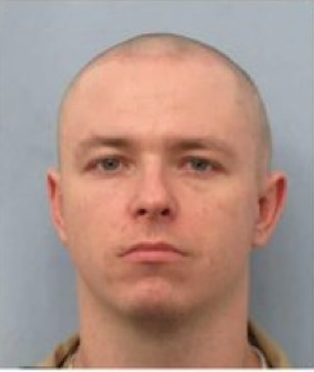

His open-heart surgery would take place in a matter of hours, a prison captain told her, and there wasn’t enough time for her to make arrangements to get to the Montgomery hospital from her home in Dalton, Georgia. 

“Even if I couldn’t have visited him while he was in the hospital, I’d have been there,” Freeman’s mother, Teresa Self said. Lack of information from the Alabama Department of Corrections about loved ones injured or killed in Alabama prisons is common. That same lack of transparency around violence is underscored in the U.S. Department of Justice litigation against the state and the Alabama Department of Corrections.

The 2020 lawsuit, which documents unconstitutional treatment of men in Alabama prisons, is ongoing, yet the death toll in those prisons continues to rise. Families of incarcerated Alabamians face constant worry over their loved ones’ safety and are rarely provided sufficient or accurate information from prison officials. 

 “He could have died. I would have been there,” Self said of the lack of knowledge that her son had received life-threatening wounds until hours before the surgery. 

Self said she got a call from a captain at the prison on Aug. 18 telling her about the pending surgery, but providing no explanation how her son suffered life-threatening injuries while incarcerated for a minor felony. 

An Alabama Department of Corrections spokeswoman in a statement said Freeman, who is serving a four-year sentence for drug possession, was found injured in the prison yard on Aug. 13 and was taken by helicopter to a Montgomery hospital.  

Self said she tried unsuccessfully for five days to reach the prison’s warden by phone to learn what happened to her son. She didn’t learn he’d been stabbed until a doctor from the hospital called the day of the surgery.  She worries for his safety now that he’s back at Ventress. When she finally was able to speak to the warden on August 24, he only told her several other incarcerated men were involved in her son’s attack.

Freeman has since returned to Ventress prison and placed in the prison’s health care unit. “I just hope he gets the right care,” his mother said. “I need to get him moved because if he goes back there they’ll kill him, because they almost did.” 

Self is one of many family members who struggle to get the most basic answers from ADOC at a time of near daily reports of homicides, suicides, and drug overdoses within the state’s chaotic prisons and frequent lockdowns due to insufficient staffing.  Investigative journalist Beth Shelburne, who tracks ADOC deaths, has documented 55 deaths, likely due to violence, drugs, or suicide thus far in 2022. Last year, there were 42 such deaths.

The family of a man serving at Limestone prison couldn’t get a response from the department about injuries the man sustained in an Aug. 7 attack. They had to learn the extent of his life-threatening injuries, which included a skull fracture, collapsed lung and loss of sight in one eye, by working through family friends, WAAY 31 news station reported. 

It wasn’t until after the news station contacted ADOC asking about the attack that the prison’s warden called the family with information, the station reported. WAAY 31 didn’t identify the inmate “due to fears of more targeted violence.”  

Carla Underwood Lewis in 2020 found out her 22-year-old son, Marquell Underwood, died at Easterling Correctional Facility from other incarcerated men, and despite attempts to learn how he died from prison officials, she only learned it was a suspected suicide after reading a news article. 

Underwood was found unresponsive in his cell on Feb. 23, 2020, but the family received no information from the prison about how he died. 

An ADOC spokeswoman told a reporter that it was a suspected suicide, and later said the department “was not made aware that, in this case, the apparent cause of death was not communicated to Marquell Underwood’s mother when the facility’s chaplain contacted her to share this unfortunate news on Sunday evening.” 

The U.S. Department of Justice in the federal government’s 2020 lawsuit over Alabama’s prisons for men wrote that the violence and death inside prisons is spurred by overpopulation and a “dangerously low level of security staffing” and ADOC isn’t transparent about that violence and death. 

“Defendants, through their acts and omissions, have engaged in a pattern of practice that obscures the level of harm from violence in Alabama’s prisons for men,” the complaint reads. 

Meanwhile, ADOC is hemorrhaging security staff. The agency’s most recent quarterly report listed 1879 security officers, less than half of the 3862 required to safely staff the mandatory and essential posts.

A Record Number of Violent, Preventable Deaths in Alabama Prisons, but the Same Responses from the Alabama Department of Corrections

By Eddie Burkhalter


The rising death count inside Alabama’s prisons continues to claim the lives of young Alabamians and devastate families left behind. Last month alone, an estimated 15 incarcerated people died from homicide, suicide, or drug overdose, preventable deaths that federal authorities lift up as evidence of unconstitutionally dangerous conditions across state prisons. 

Sarah Burch knew her son, Chadrick Wade, was having a mental health crisis and she tried to get help for him at Fountain Correctional Facility. But no one took him seriously. On July 4, Chadrick was found unresponsive in his cell and pronounced dead. He was 30 years old and serving time for property offenses.

“They should have treated his mental illness. They should have treated his drug addiction. These things should not have been ignored,” said Burch, who lives in the small Mobile County community of Wilmer, told Appleseed. His death compounds her grief, as last year she lost another son to COVID. 

Adding to the suffering of families left behind is the lack of communication and lack of transparency at the Alabama Department of Corrections. ADOC doesn’t typically publicly release information on a death at the time of the death, and the agency’s reports do not identify the names of those who’ve died. It’s up to journalists and others to receive tips on deaths, speak with other incarcerated people and families and seek confirmation from the department.  

Investigative journalist Beth Shelburne began tracking ADOC deaths in 2018. She reported this week that the total number of deaths due to violence, suicide and drugs from 2018 to now is 151: 61 deaths after assaults, 32 suicides and 58 overdoses or other drug-related deaths. At least 40 of those occurred this year, according to Shelburne’s research.

Among all the deaths so far this year, at least 40 were likely suicides, homicides or drug-related deaths, according to Shelburne. 

The circumstances surrounding the death of Chadrick Wade show that the ADOC is unwilling, or unable to take the necessary steps to save lives. 

Sarah Burch said her son hadn’t been diagnosed with a mental health condition, but that he was showing signs of having a mental health crisis prior to his death, and had asked correctional officers for help.  

While in prison Wade also expressed a desire to kill himself, according to both his mother and another incarcerated man at Fountain, whose cell was near Wade’s cell. That other man showed videos taken by cell phone which he said shows a fire Wade had set just outside his cell in the days prior to his death.  

In another video taken by the man, two officers can be seen standing outside Wade’s cell, then walking away without providing aid to Wade. Wade’s mother said her son told her he’d been asking officers for help, but never got it.  

The other incarcerated man believes Wade may have intentionally overdosed on fentanyl, which he said Wade had been asking for prior to his death and indicating he wished to die by overdose. It’s not yet clear if Wade’s autopsy results have been completed. Attempts to reach the Escambia County coroner were unsuccessful.  

“He said that they didn’t take him seriously. He just said they didn’t do anything,” Burch said her son told her about the officers’ responses to him pleading for help. 

Wade had overdosed inside Fountain prison several times in the eight weeks he was there prior to his death, Burch said, but the family wasn’t notified by prison staff of those overdoses.  

The Alabama Department of Corrections declined to answer questions about Wade’s death, including whether he’d asked officers for help and threatened suicide.  

“ADOC can’t comment on ongoing investigations,” the department said in a response.  

Overcrowding in Alabama’s prisons, coupled with woefully inadequate staffing, is resulting in increased deaths, according to the U.S. Department of Justice’s 2020 lawsuit that alleges unconstitutional conditions in the state’s prisons for men.   

Less than half of Alabama’s correctional officer positions were filled in early 2021, according to the suit. And ADOC has reported a net decrease of 258 officers so far in fiscal 2022, according to the latest quarterly report.  

Fountain prison was at 149 percent capacity in June, the latest month for which ADOC has released a monthly report.  Wade is one of at least four people who have died there since April.

The federal government’s lawsuit followed DOJ reports released in April and July of 2019 that detailed systemic use of excessive force within Alabama’s prisons, and that Alabama’s prisons for men were likely violating inmates’ rights to protection from sexual abuse and physical harm.  

ADOC also hasn’t been able to control contraband, which is resulting in mounting overdose deaths, according to the complaint.  

 ADOC also fails to accurately report overdose deaths as such, sometimes referring to them as “natural causes” in reports, according to the federal government’s lawsuit. The drugs also continued entering prisons despite ADOC’s ban on visitations amid the COVID-19 pandemic.  

ADOC’s latest quarterly report lists the “incident type” as “Accidental/Overdose” of a June 15, 2021 death at Donaldson prison  with the final autopsy result as being “Fentanyl Toxicity” but lists the incident type of an Oct. 12, 2021, death as “Natural Death” yet the final autopsy result being “Fentanyl.”  

Two additional deaths at Staton Correctional Facility in September and November of last year list the incident types as “Natural Death” yet have autopsy reports that indicate drugs were the cause, according to ADOC’s report.  

ADOC’s inability to stem the flow of drugs, rampant violence, death and corruption come even while the department’s budget continues to grow. From 2010 to 2020, the Department of Corrections’ budget nearly doubled. For fiscal year 2022, it is $610 million, nearly a quarter of the State General Fund.   

Despite the systemic problems as described in the DOJ’s lawsuit and increased spending on Alabama’s prisons, the state is moving ahead with a plan to build two new prisons, calling the buildings necessary to address the federal government’s concerns. The new prisons won’t relieve overcrowding, however, as those plans also call for the closure of several existing prisons.  

The DOJ also makes clear in the federal government’s lawsuit that new buildings alone won’t solve Alabama’s prison crisis.  

My name is Eddie Burkhalter and I’m excited to join Alabama Appleseed as a researcher. I’ve long been an admirer of the work done here, and I’m humbled to be a part of this team.

I grew up in Georgia, and lived in the Kennesaw and Marietta area for most of my time there. I moved to Alabama in 2001 and started college later in life, graduating from Jacksonville State University with a bachelor’s degree in integrated studies.

While in college I took an interest in writing, and eventually landed a job at a local weekly newspaper. I quickly fell in love with journalism, and worked my way up to the company’s daily, The Anniston Star, where I spent almost a decade covering nearly every beat, from school boards and county commissions, to homicides, the trials that ensued and the deadly tornadoes that too often tear homes and lives apart. The job connected me to my community in ways that no other job had, and it also meant that I was responsible to that community.

Over the 13 years I spent reporting, later at Alabama Political Reporter, where I covered state politics, COVID-19 and Alabama’s criminal justice system, I strove to get the best information to the public so that people could make better choices. I always aimed to be transparent and accountable to my readers, and tried daily to hold the powerful to account.

It was during my time at Alabama Political Reporter that I took an interest in Alabama’s broken prisons, and what state officials were doing, and weren’t, to address them. I spoke to families who’d lost loved ones to violence and drugs inside our prisons. I poured over records and tried to bring transparency to a system that fought it. When state officials revived a plan to build new prisons, I worked to learn more than was being told.

When COVID hit, it was clear that Alabama’s overpopulated prisons, where many people sleep in dorms an arm’s length from others, would get hit hard, and they were. I covered the death of Colony Wilson, who collapsed in a stairwell at the Birmingham Women’s Community Based Facility and Community Work Center and died while staff delayed giving her aid. She was never tested for COVID, despite having symptoms. 

I also looked closely at Alabama’s harsh sentencing laws, including the state’s Habitual Felony offender Act, which fills the state’s overpopulated prisons and falls hardest on people of color.

In covering prisons, I found the work being done at Alabama Appleseed, which successfully freed six men who would otherwise have died in prison, sentenced under the Habitual Felony Offender Act. Appleseed’s mission of fighting economic injustice, mass incarceration and its work to hold the government accountable are near to my heart, so when the chance came for me to join Appleseed as a researcher, I jumped at it.

I look forward to working with my new colleagues as we all work to positively impact the lives of people who are too often underserved and overlooked in our state.