By Leah Nelson, Appleseed Research Director

MONTGOMERY, Ala. — When police pulled Reunca Lewis over near downtown Montgomery on April 17, the 23-year-old Montgomery resident was baffled. Lewis’s car had been stolen and then involved in a hit-and-run, and she had spent most of the day with police downtown, dealing with the aftermath. Now, the police officer who pulled her over was asking why her new vehicle didn’t have tags.

She showed him her registration and proof of insurance and explained she couldn’t get tags because the office that issues them is closed due to Covid-19. The officer issued a warning, then excused himself and called dispatch.

Suddenly, three more police vehicles swarmed up and parked behind her car. The officer re-approached, told her to exit the vehicle, and arrested her for having outstanding warrants because she had missed a March hearing regarding unpaid traffic tickets. Lewis’ sister-in-law, 20, who happened to be in the car with her, was arrested for the same reason. In the back of the car, Lewis’s six-year-old son wept in fear while Lewis’ mother rushed across town to pick up the car and take the child home. 

Lewis, who has three other children at home including medically fragile 11-month-old twins, wept too.

The officer took Lewis and her sister-in-law to Montgomery City Jail, where they spent three nights locked in a tiny cell with two other women, one of whom was coughing and begging for medical attention.

All of the women were terrified. One was there in connection with an altercation with a neighbor, but, said Lewis, the majority of them there in connection with unpaid traffic tickets.

On a normal Friday, that wouldn’t be surprising. Like all municipal jails in Alabama, Montgomery’s city jail holds people arrested for allegedly violating municipal ordinances or committing misdemeanors. Many people are held in jail after missing hearings in connection with unpaid traffic tickets – Lewis herself has spent time there twice before in connection with tickets she did not have money to pay. Most of the time, the city jail also holds a few dozen individuals awaiting trial in federal court, as well as a handful of people serving sentence of less than a year.

But Friday, April 17 was not a normal Friday. On that Friday, cases of Covid-19, the potentially fatal illness caused by the novel coronavirus, were spiking across the state of Alabama. With less than one percent of the population tested statewide, there were already 206 cases in Montgomery County alone, according to data published by the Alabama Department of Public Health. That same day, the Alabama Department of Corrections announced for the first time that Covid-19 was spreading through its inmate population, with three positive tests at two different facilities. And weeks earlier, the governor had granted municipalities like Montgomery permission to issue summonses instead of arresting people who, like Lewis and her sister-in-law, were accused of nonviolent offenses. According to the proclamation, the reason for this extraordinary action was “[b]ecause the conditions of jails inherently heighten the possibility of COVID-19 transmission.”

Despite these known risks, Lewis and her sister in law were taken to jail. There, she said, none of the women she was with had personal protective equipment like gloves or face masks. There was no hand sanitizer or hot water. The inmates who gave her her jumper, mat, and other supplies when she was booked were without supplies, as were the inmates who worked in the kitchen. She reports that officers checked inmates’ temperatures before booking them in, but that while she was there, a male inmate arrived with a fever and was booked in anyway. Corrections officers made some effort to separate new arrivals from inmates who had been in for a while, but took no meaningful steps to protect the new arrivals from each other, Lewis reported.

When Lewis finally got before a municipal judge on Monday via videoconference, he told her a new date would be set, but declined to provide her with a clearance letter to get her license back after it was suspended for failing to appear in court. Until it is returned to her, Lewis, who is at heightened risk of being pulled over until state offices reopen and she is able to get a tag for her vehicle, risks being ticketed again for driving with a suspended license.

As an African-American woman, she is also at heightened risk of contracting Covid-19: In Alabama, nearly 58 percent of cases have been women and nearly 38 percent have been African American, even though the population overall is about 50 percent female and 27 percent African American.

Lewis is aware of these risks, and she is terrified. “Are our lives or tickets more important to them? Like, this is a fatal virus,” she said. “People are dying. They had us in there for tickets.”

Update: This post was updated on April 30, 2020 to reflect new facts provided by the City of Montgomery regarding the date of the hearing Ms. Lewis missed.


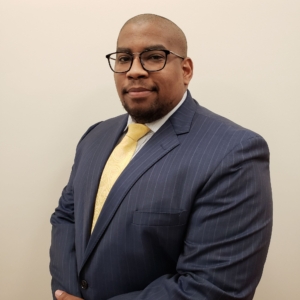
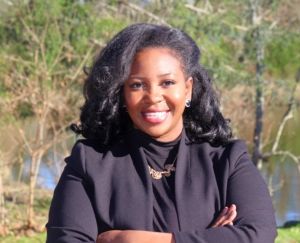
My name is Akiesha Anderson and I am thrilled to join Appleseed! As Policy Director, my role will primarily focus on policy development, legislative advocacy, coalition building, engaging with public officials and assisting with legal projects.

Appleseed Policy Director Akiesha Anderson

As a Montgomery-native, I grew up very aware of the existence of both past and present social inequality and stratification. I received my bachelor’s degree from Alabama State University, where I chose to major in sociology because of my desire to better understand and analyze social problems. This area fascinated me and helped me recognized the continued power of social movements as well as the ways in which policies and laws can create, perpetuate, or dismantle modern-day caste systems. Studying sociology also helped me better understand many of the systemic barriers to social mobility that members of low-income and marginalized communities encounter. I later received a Master’s in Public Administration from AUM and my law degree (along with a Certificate in Government Affairs) from The University of Alabama.

Over the years, my passion for social justice, public service, and working towards effectuating meaningful societal change has taken me to some really amazing places! I’ve worked in Central America, Washington, D.C., and most recently—Los Angeles, CA. I’ve also had the honor of working with some really amazing civil rights organizations, elected officials, a university, and a think tank: the Southern Poverty Law Center (SPLC), National Center for Lesbian Rights (NCLR), Human Rights Campaign (HRC), U.S. Congresswoman Terri A. Sewell (Al-07), the Montgomery County Commission, UCLA School of Law, and the Williams Institute. In addition, I am a member of several service-oriented organizations including the Blackburn Institute and Alpha Kappa Alpha Sorority, Inc.

As I join Appleseed, I look forward to having the opportunity to build upon the legacy of the civil rights heroes and soldiers who came before me, and working towards making Alabama a more just and equitable state for all!

The following report is part of Appleseed’s collaboration with the Aspen Institute’s Financial Security Program and also appears on the Aspen Institute blog.


For many individuals and households, a $200 traffic ticket can devastate savings and finances. The Federal Reserve’s Report on the Economic Well-Being of U.S. Households finds that 40% of Americans wouldn’t be able to pull together $400 in cash without borrowing money or selling possessions, highlighting the impact fines and fees can have on financial security.

Faced with the need to raise revenue, state and municipal criminal justice systems are increasingly turning to government fines and fees to make up budget shortfalls. The practice of imposing fines, fees, court costs, and other debts onto residents has created a “two-tiered justice system” that disproportionately impacts low-income communities and communities of color – specifically African-American communities. Studies show that cities and communities with large African-American populations receive significantly more revenue from fines and exhibit harsher collection tactics than those without similar demographics.

In Alabama, thousands are trying to balance the costs of fines with other expenses and needs. A survey by the Alabama Appleseed Center for Law and Justice found that for those with outstanding court debts:

  • More than 80% cut back on basic needs like rent, food, medical bills, car payments, and child support just to pay down their debt
  • Almost 40% committed a crime to pay off their debt
  • 44% used payday or title loans to pay off their debt
  • Almost 50% shared that they thought they would never be able to pay off their debt

The penalties of an offense vary dramatically from location to location. In some jurisdictions, the consequence of not being able to pay a court fine or fee can be additional late fees – in other jurisdictions, jail time.

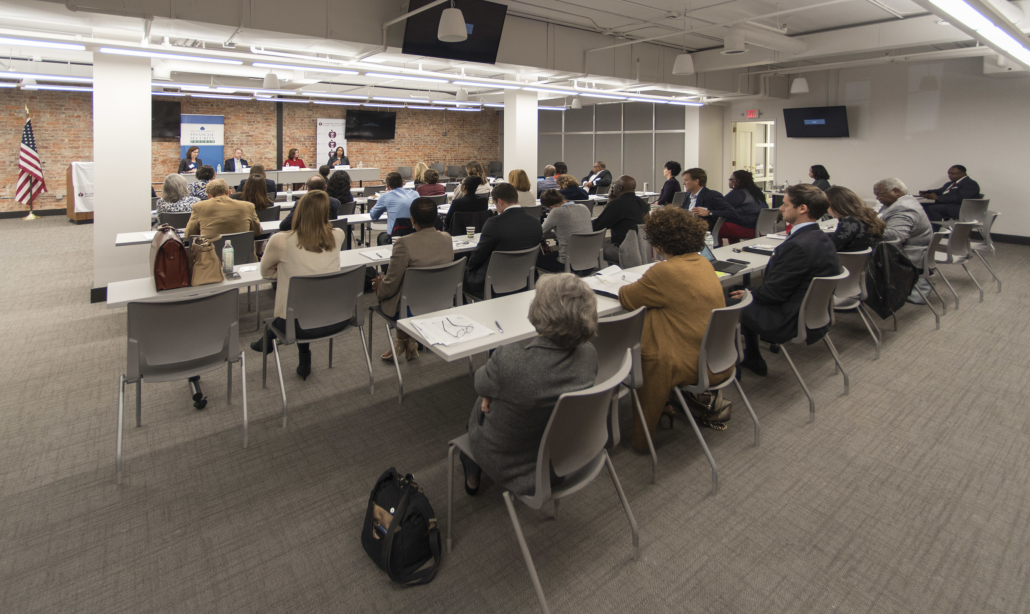
Appleseed and the Aspen Institute convened advocates, the legal community, government leaders, law enforcement, and directly impacted people for a convening on solutions to the fines and fees debt trap.

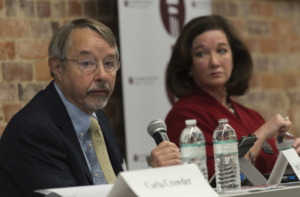
UAB Professor Emeritus Foster Cook and Jefferson County Circuit Judge Teresa Pulliam shared strategies for addressing the harm of fines and fees on low-income Alabamians during an event in October.

What is unfolding in Alabama is not unique to the state. Fines and fees are distressing the financial lives of families across the country. In North Carolina, over one million people have suspended drivers licenses for either a failure to pay traffic fines and fees or failure to appear in court. Forty-three states use driver’s licenses suspensions as punishment for failure to pay.

Suspending a driver’s license can further exacerbate people’s inability to pay.  In rural communities, driving might be the only means to get to work and generate the income required to repay debts.  When faced with the choice of driving on a suspended license or losing one’s job, how do we blame those who do drive? Often, a suspended driver’s license may not deter people from driving due to the importance of work to family income. However, driving without a license puts many at risk for further punishment. In NC, for example, driving without a license is a Class 3 misdemeanor.

recent investigation by the U.S. Department of Justice’s Civil Rights Division found that the conditions of men’s prisons in Alabama is in violation of the 8th Amendment of the Constitution, which protects people from excessive bail, excessive fines, and cruel and unusual punishment. The investigation has created state-wide urgency around the need to develop systemic solutions to instigate comprehensive criminal justice reform. Local stakeholders – government officials, employers, community leaders – are starting to pay attention and designing solutions to end this negative cycle. Restructuring court fines and fees is a necessary first step.

In October 2019, Alabama Appleseed, in partnership with the Aspen Institute Financial Security Program (Aspen FSP), convened a cross-sector group of local leaders to discuss and identify practical, promising solutions. Experts representing workforce development, district attorney’s offices, municipal and state government, the bar, and the judiciary, workshopped strategies for implementing local and state-wide solutions centered on three main goals: curtailing driver’s license suspensions, streamlining municipal court practices and policies, and strengthening data collection.

Alabama Appleseed and Aspen FSP have compiled a list of key recommendations to reduce the negative impacts of fines and fees on households and communities across the country.

  • Reimagine state funding

In Alabama, fines and fees serve as a hidden tax disproportionately borne by poor people and people of color to supplement the state’s low tax rates. The money collected is largely funneled into the state’s General Fund, government agencies, county and municipal funds, and used to finance pet projects. States should identify more equitable ways to fund essential functions and stop forcing the courts to serve as revenue collectors.

  • Share data between jurisdictions

Many Alabamians owe fines and fees in multiple jurisdictions, but when judges are assessing ability to pay and setting payment plans, they typically only know what the individual owes in their own court. As a result, some people are on payment plans of $25 or $50 in multiple jurisdictions. Better data collection and information-sharing between jurisdictions could prevent this type of unintentional burden and help judges more realistically assess the circumstances of the people who come before them. People are more likely to keep up with payment plans when those plans are reasonable, so better coordination may improve compliance as well.

  • Evaluate the broad impact on community

Individuals are not the only ones to suffer from burdensome court debt: the state pays too. When people lose their driver’s licenses, they can’t work. In an era of record low unemployment and a tight labor market, that means jobs cannot be filled despite the existence of eager workers. Everyone benefits from common-sense reforms like ending the practice of suspending driver’s licenses for unpaid debt, and employers, as much as anyone, should be part of the conversation about how debt reduction can improve prosperity.

  • Include law enforcement in policy conversations

No aspiring police officer dreams of taking someone into custody because the person fell behind on their traffic tickets. People become law enforcement agents because they care about their communities and want to keep them safe—and since they are the ones in communities, inviting law enforcement into conversations about policy reform can improve public safety outcomes for everyone.

  • Learn about what’s worked in other states
    Innovation is happening. In North Carolina, the Administrative Office of Courts has been at the forefront of efforts to end the practice of forcing judges to be debt collectors. In California, the city of San Francisco eliminated local “user” fees that charged individuals for being processed through the justice system. Although not every policy can be adopted without considering local differences, smart solutions come from everywhere.

Alabama Appleseed and Aspen FSP are committed to learning more about how to best develop and implement solutions that address the harmful impacts of fines and fees. As our organizations engage in this effort, we will continue to broadcast the best and intend to continue to share our findings. Solving this issue requires cross-sector collaboration and learning.  We hope the takeaways outlined above provide a roadmap for those beginning to do this work and look forward to engaging with all dedicated to ensuring the lives of individuals and families are not derailed by government fines and fees.


By Carla Crowder, Appleseed Executive Director

BESSEMER — Alvin Kennard is a free man, home surrounded by family and friends after 36 years in an Alabama prison for a $50 robbery in 1983.

He couldn’t stop smiling and thanking God for an opportunity too long coming. He says he’s grateful, overjoyed, and not mad.  Mr. Kennard has more patience than I will ever muster concerning Alabama’s draconian laws, excessive sentences for minor crimes, and permanent punishment of the poor.

Bessemer Judge David Carpenter appointed me to represent Mr. Kennard this spring.  Judge Carpenter knew about our work at Alabama Appleseed around poverty and the criminal justice system.  He noticed Mr. Kennard’s unusual sentence — life without parole for $50 from a bakery — through a routine pro se court filing that came across his desk.  With no attorney, Mr. Kennard was trying to get the judge’s attention. 

Turned out, Mr. Kennard lived in Donaldson’s faith dorm. He’d been in no trouble for 15 years.  He had family who still regularly visited him and put money into his prison account so he could have decent shoes. Had he been sentenced today, under Alabama’s Sentencing Guidelines, he would have been eligible for a maximum sentence of about 20 years.

Tuesday, I stood with Mr. Kennard as Judge Carpenter righted this wrong and resentenced this 58-year-old man to time served.  The courtroom erupted with joy from the crowd gathered to support a man who previously had been condemned to die in prison.

While this week’s events have been incredible for Alvin Kennard, there are hundreds more Alvins in Alabama’s prisons, men and women serving life without parole for offenses in which no one was injured.  There are thousands more serving life sentences who are at the whim of an increasingly politicized parole board.

Alabama’s embrace of permanent punishment has contributed to our prison crisis.  Alabama has the most overcrowded, corrupt, and violent prisons in the country, described as unconstitutional by the  U.S. Department of Justice. It extends to our communities, where people in poverty are jailed for inability to pay court fines and fees, and lose drivers licenses and jobs over traffic violations and minor misdemeanors.  It extends into our drug policy, where 1,000 Alabamians per year are saddled with felony convictions for possession of marijuana, a substance that’s legal in states where half of Americans live. 

So while today was for rejoicing with one of the kindest, gentlest clients I have ever had the pleasure to represent, tomorrow we have our work cut out for us here at Appleseed. 

By Carla Crowder, Executive Director

A few weeks ago, a search dog working for Alabama’s Department of Corrections sadly died after exposure to contraband narcotics.  ADOC leadership, including Commissioner Jefferson Dunn, gathered for his funeral complete with 21-gun salute, an American flag presentation, and media coverage. His name was Jake.  

Over the last two years, at least 22 people in state prisons have also died from narcotics overdoses, primarily synthetic cannabinoid, according to a U.S. Department of Justice report, which suggests ADOC staff who are not screened before entry are likely responsible.  Prison incident reports list these deaths as “natural.”

We don’t know their names.

Why? Because Alabama’s 45-year history of incarcerating vast numbers of people cheaply has produced disastrous results. 

We failed in 1975 when U.S. District Judge Frank Johnson found “massive constitutional infirmities which plague Alabama’s prisons.”  And we are failing now with violence, homicide, and drug overdoses so pervasive that the ADOC cannot keep track of who dies in its custody, as the U.S. Justice Department documented in April after its two-year investigation again found our prisons unconstitutional.   A raft of federal cases and investigations in between reached the same conclusion.

All along, Alabama incarceration rates have remained the fifth-highest in the country, prison spending the lowest, yet our violent crime rates are higher than most every other southeastern state.  Our tough-on-crime ideology is not making us safer. And spending too little is costing us too much: in death, in degradation, and in suffering.

Any other public policy that produced such dismal outcomes would surely be scrapped. 

Instead, the state is talking about doubling down.   Its main plan to address this crisis involves continuing to incarcerate vast numbers of people on the cheap. 

Gov. Kay Ivey has proposed a public-private partnership that relies on private corporations to build and own three new megaprisons with the state leasing approximately 9,000 beds. This can be done with no tax increases, state leaders insist, which means Alabama can keep doing what it has always done.

“I am confident that the development of these facilities will be a major step forward,” Governor Ivey said in an announcement June 27 that the state has begun the procurement process for new prisons. 

This proposal is deeply troubling to those of us who have watched the for-profit prison industry overpromise to states and cities for 25 years, create nightmare prisons from Idaho to Mississippi, then rebrand itself as a real estate business. 

As recently as 2012, Federal District Judge Carleton Reeves wrote that the GEO Group-managed Walnut Grove Juvenile Detention Center in Mississippi was “a picture of such horror as should be unrealized anywhere in the civilized world” and “a cesspool of unconstitutional and inhuman acts.”  Will this company be welcomed into Alabama?

In its new role as landlord, CoreCivic, formerly Corrections Corporation of America, failed to repair rusted doors, replace damaged windows, seal cracks in the walls and floors, and patch leaks in the roof, even though maintaining the Hernando County Jail near Tampa, Florida was a requirement in its contract with the county.  The County took over and was hit with $1 million in deferred maintenance costs. Will we lease our largest prisons from them?  

Private construction of just one massive high-tech prison in Pennsylvania, SCI Phoenix, ran nearly three years behind schedule, as the Philadelphia Inquirer reported.. The state was forced to move prisoners into the facility, touted as a creative public-private partnership, before construction was complete.  Lawsuits abound. 

Already, the State of Alabama has proven its inability to house people humanely.  Adding private companies with abysmal human rights records and a mandate to turn a profit into the mix does not bode well.

It is also deeply troubling when contrasted with the smarter approach of other southern states such as Texas and North Carolina, which are closing prisons and increasing rehabilitative community options without sacrificing public safety.  In fact, since 2011, at least 22 states have closed or announced closures for 94 state prisons and juvenile facilities, resulting in the elimination of more than 48,000 state prison beds and an estimated cost savings of over $345 million, primarily in favor of rehabilative options. according to Governing Magazine. 

Alabama has not yet locked down the details of building itself out of this crisis. If we can find the political will, there is a better way.  

The court system touts drug courts, pre-trial diversion, and similar community-based options as alternatives to incarceration, as second chances.  But these programs are an inconsistent patchwork at best, and more importantly, they are not well funded. Instead, poor people are expected to pay thousands in fees — administrative fees, drug-testing fees, treatment fees, evaluation fees, and so on — and spend hours away from work for court appearances.  If they can’t keep up, they don’t graduate, then they become poor people with felony convictions, and usually no drivers licenses. 

Instead of pouring nearly a billion dollars into new prisons, Alabama could shore up these kinds of community alternatives rather than expecting indigent people to pay for them.  Along the way, the State must confront the fact that our bare bones spending on mental health and substance abuse services — 50th in the country — contributes to incarceration.  

Also, we must improve re-entry services for the formerly incarcerated. People usually leave prison with no identification, no job, and thousands of dollars in court fines and fees.  Churches and nonprofits — many ably run by formerly incarcerated people who know the obstacles and solutions better than anyone else — are struggling mightily to bridge the gaps. Again, a fraction of the new-prison money invested into re-entry services would change outcomes.     

Finally, anyone touting new prisons should closely read the Department of Justice report which unsparing makes clear that “new facilities alone will not resolve the contributing factors to the overall unconstitutional condition of ADOC prisons, such as understaffing, culture, management deficiencies, corruption, policies, training, non-existent investigations, violence, illicit drugs, and sexual abuse. And new facilities would quickly fall into a state of disrepair if prisoners are unsupervised and largely left to their own devices, as is currently the case.” 

We cannot build our way out of this problem. Instead, we need to invest in community-based solutions and mental health services that help prevent people from ending up in prisons to begin with, and support them after they come out. Smart investment in criminal justice reform would improve public safety, increase our workforce – something the Governor says is a top priority – and make Alabama more prosperous. Penny-wise, dollar foolish investments like the plan to keep on doing what we’ve always done – lock our neighbors up as cheaply as possible – will most likely result in more of the same horrific results. 

Photograph by Val Downes

The Consumer Financial Protection Bureau (CFPB) recently solicited public comments related to their proposal to weaken protections for payday loan borrowers. An open letter submitted to the CFPB by Alabama Appleseed follows:    


Dear Director Kraninger,

For many years, The Alabama Appleseed Center for Law and Justice (“Alabama Appleseed”) has been documenting the numerous and varied harms caused by high-cost lending in our communities. We have specific concern about the impact that payday loans have on more than 200,000 Alabama borrowers every year, and we were there in Birmingham when former Director Cordray kicked off the payday loan rulemaking process in 2012. That process, begun here in Alabama, produced essential consumer protections for payday loan borrowers after years of careful study. When your agency’s 2017 payday and vehicle title loan rule (“Rule”) was announced, we were particularly grateful for the introduction of ability-to-repay requirements. Today, we understand that those needed protections are potentially at risk of being eliminated, and that Alabama borrowers are thereby at risk as well. We write to you urgently counseling against the Consumer Financial Protection Bureau (“CFPB”) nullifying the Rule.

Here in Alabama, more than 32,000 payday loans are made every single week. These loans often include annual percentage rates (“APRs”) as high as 456 percent, and under current state law, payday lenders may require borrowers to fully repay the loans in as few as ten days. When lenders are not required to make any determination of a borrower’s ability to repay loans — let alone loans with such short terms and such high APRs — it does not take much imagination to predict the fates of many borrowers. In our years of experience working with payday loan borrowers in Alabama, one thing has become abundantly clear: without any ability-to-repay requirements, payday loans are a greater source of long-term debt than short-term credit.

In 2019, Alabama Appleseed published a comprehensive report about the impact of payday lending in our state (“Broke: How Payday Lenders Crush Alabama Communities”). We spent six months driving to every corner of Alabama, from Huntsville to Dothan, from Tuscaloosa to Mobile, from Jasper to Anniston speaking directly with borrowers and charitable service providers. Across geography, race, gender, age, and reason for borrowing, the message we heard was consistent: payday loans hurt more than they helped, and vanishingly few borrowers were able to repay their loans according to the contractual terms. In other words, most borrowers were unable to use the loans as advertised, and without any ability-to-repay requirements on the part of lenders, supposedly short-term loans standardly became long-term debts.

The Alabamians who we interviewed took out their loans to meet necessary living expenses. We spoke to a mother of two disabled children in Dothan, Alabama, who took out a $300 payday loan to bury her father. She was ruined by the debt. Another mother of twin daughters in Dothan took out a $200 payday loan to purchase back-to-school supplies. She ended up having to close her bank account to protect rent and grocery money because payday lenders were making direct withdrawals to service the debt they had trapped her in. We spoke to a disabled veteran in Marshall County, Alabama, who took out payday loans to access medical appointments in Huntsville. The outstanding debt has prevented him from affording medical equipment necessary to his recovery, and it has also kept him from being able to financially support his elementary-aged son. We spoke to a tornado victim in Madison County, Alabama, whose home was completely destroyed in a tornado. She still suffers from the payday loan debt she accrued trying to survive in the aftermath.

Charitable direct service providers across the state regularly encounter similarly untenable debts. In Tuscaloosa, the executive director of the local Habitat for Humanity shared the precipitous number of potential clients who cannot qualify for a Habitat Home because payday loan debt disqualifies them under the organization’s debt-to-income ratio standards. In Anniston, the director of a small direct assistance nonprofit shared that young mothers come through their doors all the time seeking help in the face of payday loan debt. In Jasper, the community action agency spoke of how residents of rural Walker County had lost their homes as a result of payday loan debt. In Huntsville, a legal services attorney explained that a large proportion of their clients come in the door with civil legal needs that, upon exploration, have payday loan debt as a root cause.

Alabamians deserve and need access to credit, but Alabamians do not need — and deserve better than — loans that are designed to fail and become sources of unworkable debt. Ability-to-repay requirements are a foundational business practice in virtually every other realm of consumer lending. It is a baseline, reasonable expectation. The CFPB’s introduction of this standard for payday and title lenders in the 2017 Rule was welcome, necessary, and overdue. The hurried elimination of this Rule being considered, after so long and deliberative a process, is ill-advised and not in keeping with the mission of the CFPB. Alabamians will be hurt if this rule is nullified, and we cannot be silent when our communities are at risk.

We ask that you take the time to familiarize yourself with our comprehensive report, which is freely available online in scrollable PDF format at www.alabamaappleseed.org/broke. We ask that you maintain the ability-to-repay standards introduced in the 2017 Rule. We ask that you go further and expand upon its protections for payday and title loan borrowers.

Alabamians need protections against predatory lenders who make bad faith loans and make hard times even harder for our people. We fight for those protections at the state level every single in Alabama. We ask that you do your part to protect us at the federal level, too.

By Carla Crowder,  Alabama Appleseed Executive Director

Antonio was incarcerated at St. Clair prison a few years ago when another prisoner bit off part of his ear. They were housed in a dorm that supposedly offered rehabilitative services. For Antonio, permanent disfigurement was the outcome.  

Incarcerated people in Alabama are routinely subjected to violence and inhumane conditions in Alabama prisons, according to the U.S. Justice Department.

He did not seek revenge against the man who bit his ear. He redoubled his efforts to engage in what meager positive programming was available at ADOC. He earned his parole.  Supported by a devoted mother and sister, he is safely living back in the community.

Antonio was my client during the time I worked on prison conditions litigation at the Equal Justice Initiative before joining Appleseed. Only through the bravery of incarcerated people like him who share the truth of what’s happening inside with the outside world — often at great risk to their safety — can desperately needed change occur. 

His situation came to mind this week as I read through the U.S. Department of Justice’s 56-page report about its investigation into the Alabama Department of Corrections.  It documents horrific violence and a culture of corruption, mismanagement and indifference.  DOJ found an “enormous breadth of Eighth Amendment violations.” In plain terms, the State of Alabama is breaking the law, knows it’s breaking the law, and has been doing so for a long time.  

St. Clair Correctional Facility, where the Alabama Department of Corrections promised a federal court it would improve security, but did not make good on that promise.

Individuals who break the law hear a lot about reform, about accepting responsibility for their actions. They are told they must change their ways and not recidivate.  If they commit crimes over and over, the penalties increase under Alabama’s Habitual Felony Offender Law.

Antonio understood that.

But the government that incarcerated him in conditions that resulted in permanent harm to his body has not stopped breaking the law, despite decades of harm imposed on the Alabamians in their custody.  The United States Department of Justice Civil Rights Division and all three U.S. Attorney’s Offices in Alabama, working under a Justice Department led by former Alabama Attorney General and Senator Jeff Sessions for much of their investigation, concluded scathingly:  “ADOC has long been aware that conditions within its prisons present an objectively substantial risk to prisoners. Yet little has changed.”

The timeline stretches back to the Wallace era.  As early as 1975, a federal court stopped ADOC from accepting any new prisoners into four of its prisons until the population of each was reduced.  Again in 2002, a court order declared dangerous crowding and understaffing at Tutwiler Prison for Women to be in violation of the Eighth Amendment. In 2011, another federal court found ADOC facilities understaffed and overcrowded. In 2014, DOJ documented rampant sexual abuse by staff of women at Tutwiler. Later in 2014, EJI urged the state to investigate and address homicides at St. Clair prison and filed a lawsuit alleging unconstitutional violence and abuse there.

And now, as documented by a two-and-a-half year federal investigation, so many people die in state prison custody that the ADOC lost count and classified some homicides as natural deaths.  

“Alabama does not have a reliable system for tracking the deaths that occur within its custody,” the DOJ found.  Consider the grim irony of that fact. Our state punishes people who commit acts of violence — and many with convictions for drug use or property crime — through a prison system unable and unwilling to keep track of who dies there and how.

To people numbed to bad news by the steady flow of reports of murders, suicides, and strikes, and violence in our state prisons, this could seem like just another report about the persistent crisis plaguing the Department of Corrections. But it is not. The DOJ laid out five pages of corrective actions expected from the state with strict timelines for implementation.  The report is actually a notice to the state, as required by CRIPA (the Civil Rights of Institutionalized Persons Act), that the federal investigation found numerous constitutional violations and the ADOC has 49 days to begin addressing the problems or be sued by the federal government.

Alabama’s elected leaders have attempted to address this crisis before.  Multiple task forces have tweaked sentencing laws and parole policies, and “the violence has only increased,” the DOJ found.  Meanwhile, Alabama has maintained the country’s fifth-highest incarceration rate for decades. That also means we have the fifth highest incarceration rate in the world, if every U.S. state were a country, according to the Prison Policy Initiative.

Alabama cannot build its way out of this problem, nor can it buy its way out. Our elected leaders must finally acknowledge that Alabama’s people are not worse and more deserving of incarceration than nearly every other population on the planet.  They must stop relying on the politics of fear, on pressure from the victims’ lobby, and on our entrenched system of policing for profit that places the acquisition of funding for law enforcement above evidence-based public safety.

Antonio, even with his damaged body, turned his life around and changed his ways.  Now it’s time for the government that endangered him for a decade to do the same.


Across Alabama, residents lose their jobs, housing, drivers’ licenses, and spend long stretches in jail because they cannot afford to pay court fines and fees. This week, a unanimous United States Supreme Court reminded states that this is not supposed to happen anywhere in America.

The case, Timbs v. Indiana, concerns the questionable practice of civil asset forfeiture, where law enforcement is permitted to seize property of people merely suspected of criminal activity. But the Court devotes the bulk of its opinion to providing states a refresher on the Excessive Fines Clause of the Eighth Amendment, reaching back to the Magna Carta and recalling Southern States’ Black Codes. Fines get special attention because they have been wrongly used to raise revenue, punish political enemies, and subjugate African Americans, in a way that conflicts with “the penal goals of retribution and deterrence.”

Alabama Appleseed has documented how thousands of Alabamians are trapped in cycles of debt, incarceration, and grinding poverty because they cannot afford to pay fines, fees, and court costs assessed against them or their families. A survey conducted last year found that court debt drove over 80% of survey takers to give up basic necessities, that over 50% had been jailed for being unable to pay what they owed, and that about 40% had committed crimes like stealing or selling drugs to pay court debt for non-felony offenses. The majority believed they’d never be able to pay everything they owed.

Terrence Truitt spent eight days in jail because he couldn’t afford to pay fines from fishing without permission, which he did to feed himself and his children. Terry Knowles lived in a tiny motel room with his extended family so he could be close enough to work to walk because he could not afford the fee to reinstate his license.

Callie Johnson missed payments on basic necessities because she was helping her children pay their court debt. Angela Dabney, a single mother, lost her driver’s license because she couldn’t afford to pay traffic tickets – and because she lost her license, she lost her job.

If there was ever any doubt, this week’s unanimous opinion makes clear that the kind of suffering imposed on these Alabama families runs afoul of the Constitution and must stop. At a minimum, fines should “be proportioned to the wrong” and “not be so large as to deprive an offender (of his) livelihood,” the opinion states.

Also at issue in the Timbs case was civil forfeiture. Alabama law enforcement officials have claimed that state laws protect citizens from the kinds of abuses documented in Timbs.

Not necessarily. As Alabama Appleseed and the Southern Poverty Law Center reported last year, Alabama’s abusive civil asset forfeiture scheme, which allows the state to take money and property from people without even accusing them of a crime, enriches law enforcement agencies and disproportionately harms people of color. Civil asset forfeiture is an unjust process that deprives people of property without due process, and it should be abolished.

In its ruling, the high court stated that the constitutional provision which forbids excessive fines applies to states in civil as well as criminal cases when the resulting forfeitures are at least partially punitive. In essence, it found that Indiana’s seizure of a man’s Range Rover was unconstitutional because $42,000 was a radically disproportionate fine for the sale of $400 worth of heroin.

Here in Alabama, police more often seize rent money, not Range Rovers. Our study found that the amount of cash seized in civil forfeiture cases involved $1,372 or less in half of all cases examined. The legal fees to get it back are usually more, so most property owners never attempt to get their property back — even where they were not convicted of wrongdoing in connection with the seized property. That should give us all pause.

The fines levied against Terrence Truitt, Angela Dabney, Terry Knowles, Callie Johnson, and the other individuals who took Appleseed’s survey were on average far lower than $42,000, but their consequences were no less devastating. Because they had no way of paying what the state demanded of them, people who took this survey gave up food, shelter, and medicine. They went to jail.

An orderly society requires that violations carry consequences, and it is not Appleseed’s contention that individuals who break the law be permitted to “get away with it” simply because they are poor. But excessive fines are in the eye of the beholder, and Appleseed’s research makes clear that fines that would be manageable for some are devastating for others.

No one should lose their driver’s license, and with it, their ability to work, because they cannot afford to pay a ticket, fees, and interest for a busted headlight. No one should be jailed, or homeless, or give up medicine, or feel forced to accept charity or commit a felony, because they were too poor to pay their court debt. Alabama can fix this, by ending the practice of revoking licenses for unpaid traffic debt, and by evaluating individuals’ financial circumstances and scaling fines to their ability to pay.

Excessive fines are alive and well in Alabama, and they are destroying lives. As nine Supreme Court justices agreed this week — It’s time for a change.

Read it on AL.com

In a letter sent yesterday to the United States Attorneys for the Northern, Middle, and Southern Districts of Alabama, the Southern Center for Human Rights, Alabama Appleseed Center for Law and Justice, Adelante Alabama Worker Center, the American Conservative Union, and FreedomWorks urged an investigation into Alabama sheriffs with federal detention contracts who have personally pocketed substantial amounts of taxpayer money from jail food accounts, in likely violation of federal law.

Many sheriffs in Alabama contend that state law permits them to keep funds allocated to feed people housed in their jails for their own personal profit, and some have taken tens or hundreds of thousands of dollars for personal use. This interpretation of Alabama law has, however, been rejected by the Attorney General and the current Governor of Alabama. A number of these sheriffs house federal detainees (either defendants in federal criminal cases or immigrants facing deportation) in their county jails, pursuant to contracts with the United States Marshals Service and Immigration and Customs Enforcement. Sheriffs with lucrative federal detention contracts have the potential to profit especially handsomely from this practice, and there is reason to believe that some have pocketed these federal funds for personal use.

In Monroe County, Alabama, for example, the per capita reimbursement rate for feeding state prisoners is $1.80 per day. For federal prisoners, it is over five times higher: $10 per day. In 2016, the Monroe County Sheriff’s Office received a total of $26,710.80 in food funds from the State of Alabama, $5,505.00 in food funds from municipal contracts, and $108,620.00 in food funds from the federal detention contract. On December 30, 2016, the sheriff “declared excess and paid to” himself $44,402.77 – over $12,000 more than the total amount he had received from state and municipal sources, combined.

“The law is clear, and Governor Ivey has made clear: jail food funds are public funds, and should be used exclusively for feeding incarcerated people,” said Aaron Littman, staff attorney at the Southern Center for Human Rights. “Because these sheriffs have refused to disclose to the public how much taxpayer money they have taken, further investigation is urgently required to determine whether they are violating federal criminal and contracting law.”

“Diverting funds provided to feed prisoners is not only unethical, it is likely illegal,” said David Safavian, general counsel of the American Conservative Union. “A fundamental requirement of federal contractors is to use the money for the purposes for which it was given. In this case, the avarice of some Alabama sheriffs doesn’t pass the smell test. The stench should be investigated by those charged with protecting America’s taxpayers.”

When limited food funds are misappropriated by sheriffs, the health and safety of the people incarcerated in their jails is jeopardized. Recent media coverage of the food served at the Etowah County Detention Center included reports that inmates are frequently served meat packaged in wrapping that says “Not Fit For Human Consumption,” and donated chicken that is rotten and riddled with “tumors and abscesses and deformities.”

“It appears that some sheriffs have placed personal profit above their sworn duty to meet the basic needs of those in their care,” said Frank Knaack, executive director of Alabama Appleseed. “We are deeply concerned that those charged with enforcing our laws are instead breaking them. No one is above the law – this includes Alabama’s sheriffs.”

“The people in these sheriffs’ custody are human beings, not abstract profit margins,” said Jessica Vosburgh, executive and legal director of Adelante. “As long as their jailers see each person behind bars as an opportunity to reap additional profits with impunity, the incentives to cut corners in ways that threaten these individuals’ basic safety will abound. Taxpayers will ultimately foot the bill with our wallets, and detained persons with their health, their wellbeing, and sometimes even their lives.”

The letter can be found here.