By Leah Nelson, Research Director from the Appleseed report Afterward


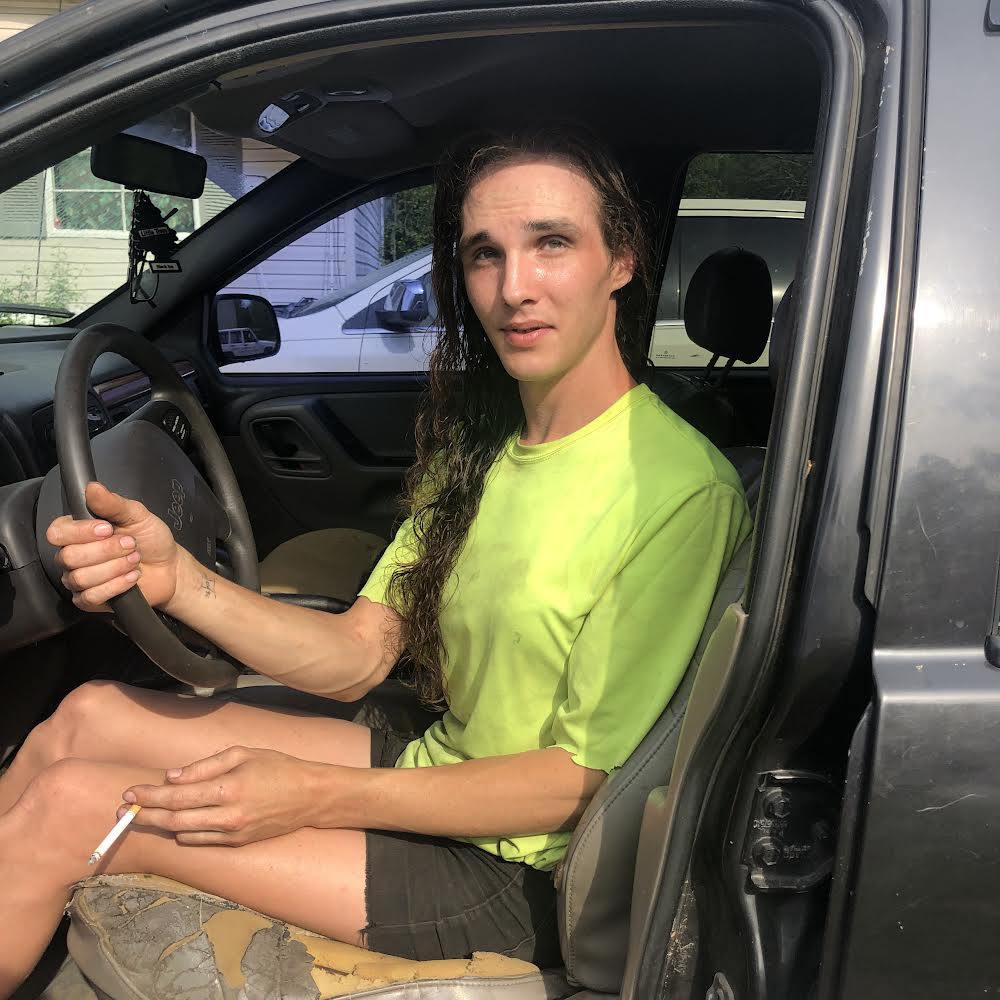
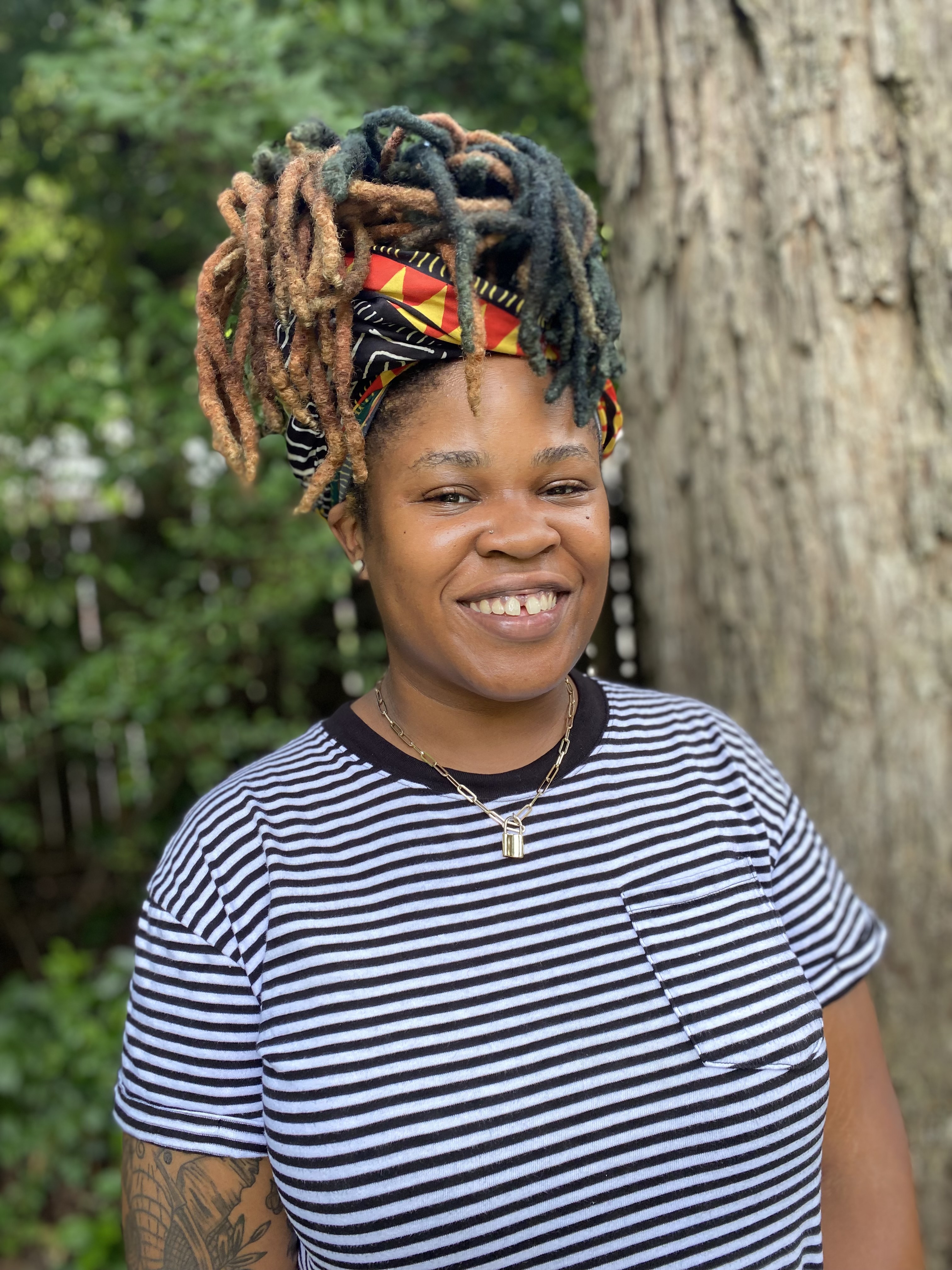
Summer Sturdivant, an activist and pastry chef from Selma, Ala., watched her little brother die. He lay in the street while the police captured the man who shot him. The ambulance made a wrong turn, doubled back, arrived when he was still alive but got there too late to keep him that way. 

Sturdivant, then 25, didn’t have time to digest any of it. “It was like the next thing and the next thing and the next thing. Trying to make sure my mom’s OK, trying to make sure everybody’s OK.”

When she spoke with Appleseed nearly a year later, she was still consumed with that task. Her brother left behind a very young son, and after her brother died, she became the little boy’s primary caregiver, responsible for food and clothing and doctor’s appointments but without access to state support because of legal obstacles and a bureaucracy that is ill-suited to the realities of her everyday life 

Her family was also worried about the money they still owed the funeral home for the cost of the burial. They applied for assistance from the Alabama Crime Victim’s Compensation Commission, which offers financial help to crime victims and their families. A year later, the Commission still hadn’t gotten back to them and the funeral home was threatening to take them to Small Claims Court.

The victims’ services workers Sturdivant interacted with seemed busy and distracted, uninterested in the particulars of her family’s needs or the depth of their grief. Sturdivant said that death by violence is “so normalized in this area,” that victims’ advocates have become used to it. 

“It’s a lot to bury a child and even be worried about where the money is coming from, then worry about whether you’re going to get to small claims court,” she said. “It just makes you feel like you’re on an island.” 

“I’m thankful to be connected to people that pour into me.”

Long before her brother was killed, Sturdivant was active with Mothers and Men Against All Violence In Solidarity (MAAVIS), an organization founded by Callie Greer, who also works as Alabama Appleseed’s Community Navigator. 

MAAVIS brings together families who have experienced loss to help them process their grief together – over meals, through song, through art, through community, through activism. With the goal of building a more restorative community and defusing the retaliatory violence that can occur in the wake of a homicide, it also creates space for people to connect safely with the families of those who harmed their loved ones, if that is what they want to do. 

Sturdivant relied on what she learned from Greer and MAAVIS when, the day after her brother died, the mother of the man who killed him reached out, wanting to talk with Sturdivant’s mother.

“I was like, No, my mom is not in a place for that,” Sturdivant said. “So I spoke with her, and I had a prayer with her. We talked, and I let her know she’s a good mom,” she said. “She was crying because she lost somebody too, you know? She lost a child who – he might not be dead, but he’s in the system for good now.” 

She wishes people who work for that system had the same compassion. “When you’re handling families and specifically Black families, you got to be careful. You got to be really careful how you talk to them,” she said. 

Sturdivant is handling her struggles with grace. Even as she continued to deal with the bureaucratic, financial, and emotional aftermath of her brother’s death and the sudden experience of parenthood, she also let herself find joy in building her small business as a pastry chef while maintaining and strengthening the relationships she formed through her work with MAAVIS. Her brother always encouraged her dreams of baking, and her business, which she said “was birthed out of a loss.”

Reflecting on a community event she attended with other women who had lost loved ones to violence, she said, “I’m thankful to be connected to people that pour into me. To be the baby of directly affected women and still be able to give and even pour into other people.” 

State leaders promised to find an Alabama Solution to the “deeply humiliating” federal findings. But 698 incarcerated people have since died in state prisons, a new $1 billion prison will not open until 2026, and the federal trial is scheduled for next year. 

By Eddie Burkhalter and Carla Crowder
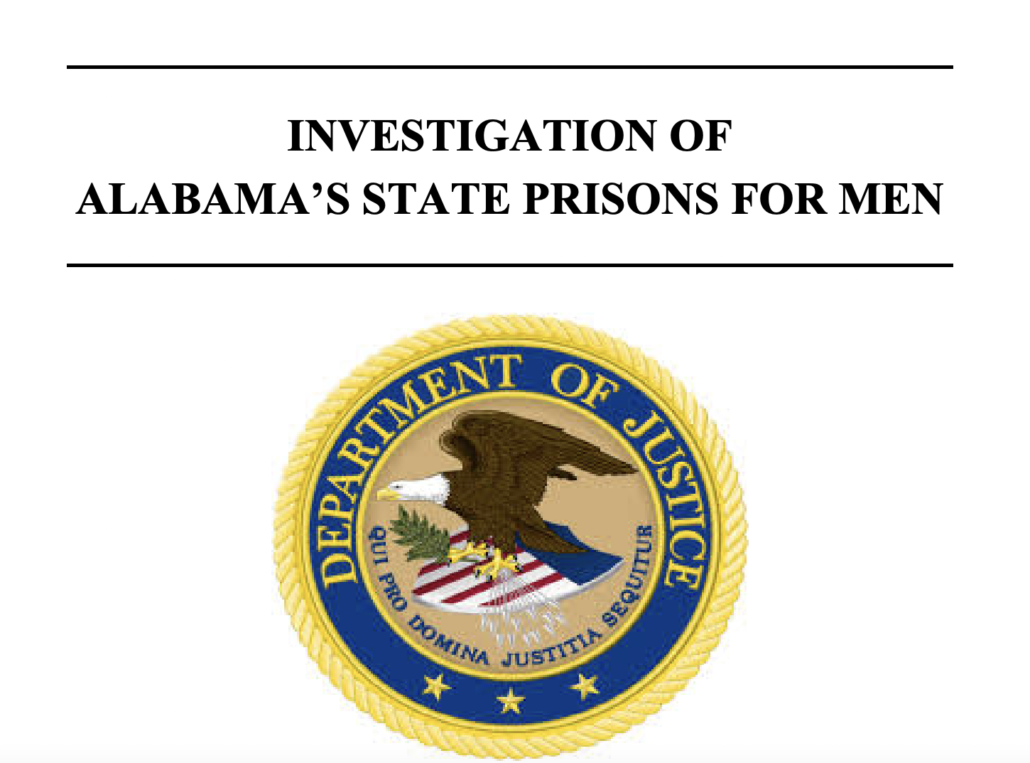

This week marks the fourth anniversary of the U.S. Department of Justice report detailing such horrific and widespread violence, death, and sexual abuse inside Alabama’s prisons for men that state officials were forced into account for “severe, systemic,” constitutional violations meticulously documented in the 56-page report signed by all three Alabama U.S. Attorneys. 

“This problem has been kicked down the road for the last time,” Gov. Kay Ivey said in a statement, six weeks after the report’s release. “Over the coming months, my Administration will be working closely with DOJ to ensure that our mutual concerns are addressed and that we remain steadfast in our commitment to public safety, making certain that this Alabama problem has an Alabama solution.”

Those concerns were not addressed. The DOJ issued a second report in July 2020 detailing widespread use of excessive force, including deadly force, by corrections officers against incarcerated people. And in December 2020, the federal government sued the state and the Department of Corrections in a case that is scheduled for trial in less than 18 months. At that time, DOJ lawyers will attempt to prove that the state “fails to provide adequate protection from prisoner-on-prisoner violence and prisoner-on-prisoner sexual abuse, fails to provide safe and sanitary conditions, and subjects prisoners to excessive force at the hands of prison staff,” as alleged in the lawsuit.

Those of us closely following the state’s promised responses, the so-called “Alabama solution” to the federal intervention, had reason to believe that there would have been progress by now against the constant violence, overcrowding, understaffing, corruption, and mismanagement documented four years ago by the Republican-led Justice Department..   

Instead, all of the factors contributing to the “enormous breadth of ADOC’s Eighth Amendment violations” in the words of the DOJ, have gone in the opposite direction; they’ve gotten worse. Except for one – the population of individuals crowded into ADOC’s major facilities has declined by 511 since April 2019.  But during this time frame, 698 incarcerated people have died in these prisons, according to ADOC’s monthly statistical reports. Thus, much of that decline can be attributed to the matter at the heart of the litigation, that “Alabama is incarcerating prisoners under conditions that pose a substantial risk of serious harm and death.”

Given that the clock is ticking on a trial that will have major ramifications for public safety and the justice system statewide, it’s important for Alabamians to understand how we got here, what has transpired in response, and how other states have fared in similar situations. 

“Minimal Remedial Measures”
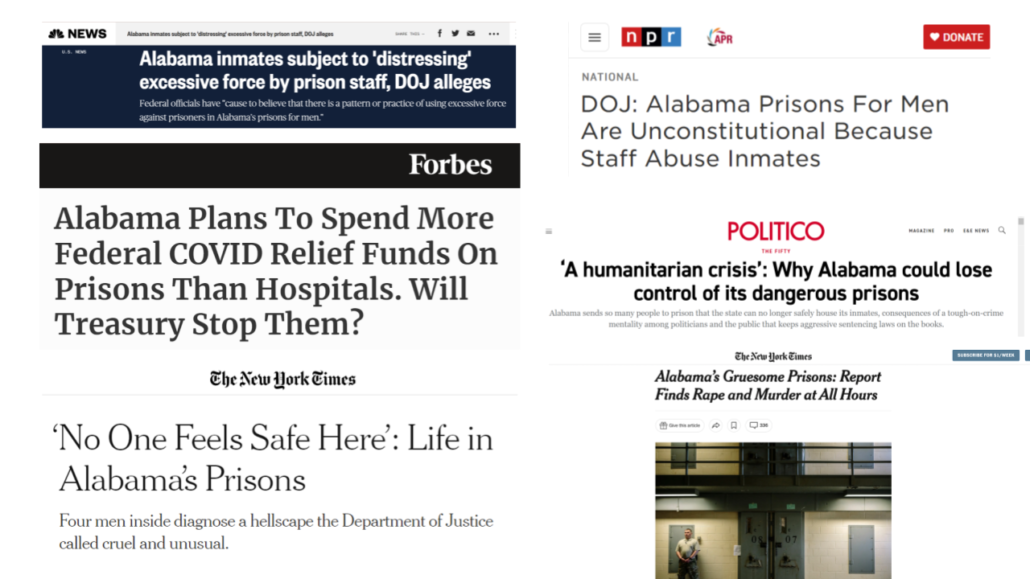
News headlines highlighting Alabama’s prison crisis

Alabama’s prison crisis was nothing new, but the federal government’s report –  technically a Notice required by the Civil Rights of Incarcerated Persons Act (CRIPA), that provides statutory authority for the federal government to investigate and intervene in a state’s systemic failure to protect the incarcerated – brought the crisis to the nation’s attention. 

Shameful neglect and abuse of thousands of Alabamians that had been hidden for years suddenly tumbled onto the front pages of publications ranging from the Montgomery Advertiser to the New York Times. Fox News quoted then-Sen. Cam Ward describing the findings as “deeply humiliating” for Alabama. “It’s disgusting. I mean, it is.”

If ADOC leadership were confused about how to begin to ameliorate the myriad of problems, all they had to do was to keep reading. 

The 2019 report listed “minimal remedial measures” ADOC should take to begin making prisons safer and avoid a lawsuit. Among them:

  • contact the director of the National Institute of Corrections to arrange a joint conversation between the department, NIC and the DOJ to discuss the areas in Alabama prisons that needed immediate attention.
  • develop a centralized system to contain autopsy reports of all incarcerated people who die in ADOC custody. 
  • draft a policy requiring the screening of every person who enters prisons (staff, volunteers, visitors, etc…) and to implement that policy within one month.
  • reclassify every incarcerated person for sexual safety issues, and ensure that potential predators are separated from potential victims. 
  • immediately begin shakedowns to stem the flow of contraband, such that 15 percent of all housing areas are searched every day, with congregate areas searched every week.

An ADOC spokesperson in a response to Appleseed on Monday said the department was and is in contact with the director of the National Institute of Corrections to receive advice and training on correctional-related issues, including a recent training on staffing analysis. ADOC’s response did not address the question about the DOJ’s recommendation to develop a centralized system to contain autopsy reports of all incarcerated people who die in ADOC custody. 

ADOC also claimed in its response that some of the policies suggested by the DOJ were already in place and suggested that the federal lawsuit was premature. “Rather than continuing to collaborate with the ADOC to find workable solutions to these issues, DOJ surprised the state by abruptly filing suit in December 2019,” the ADOC stated. The lawsuit was filed in December 2020, twenty months after the Notice and following 52 deaths from homicide, suicide or drug overdoses in 2019 and 2020.

Subsequent DOJ filings, including the May 2021 amended complaint in the ongoing litigation, makes clear that ADOC has fallen short in addressing the primary contributor to the unconstitutional violence: contraband. (“ADOC told us that ADOC staff are bringing illegal contraband into Alabama’s prisons,” the 2019 report noted.) 

According to the DOJ, illicit cellphones and drugs that pour into the prisons through cell phone usage are a major contributor to the widespread violence, as “the inability to pay drug debts leads to beatings, kidnappings, stabbings, sexual abuse, and homicides.”  

The complaint goes on to note: “Although ADOC has not allowed visitors into Alabama’s Prisons for Men since March 2020 pursuant to COVID-19 restrictions, prisoners continue to have easy access to drugs and other illegal contraband,” suggesting visitors are not the source.

While ADOC has made arrests of officers charged with bringing in contraband, the flow of drugs, weapons and other contraband continues. Incarcerated people tell Appleseed that ADOC’s Correctional Emergency Response Teams often raid a prison dorm prior to a visit to the dorm by DOJ’s attorneys, clearing the area of contraband, only for it all to return shortly afterward. 

ADOC continues to insist that incarcerated people are single-handedly responsible for the delivery of contraband:  “The ADOC continues to employ a myriad of strategies to find and eliminate contraband in its facilities.  As the ADOC explores and develops new strategies, inmates continue to find new ways to introduce contraband.  Thus, ADOC’s efforts to find and prevent contraband are always evolving, and the department continues to look for new and innovative methods of eliminating the existence and introduction of contraband into its facilities,” the response reads. 

None of the numbers are moving in the right direction
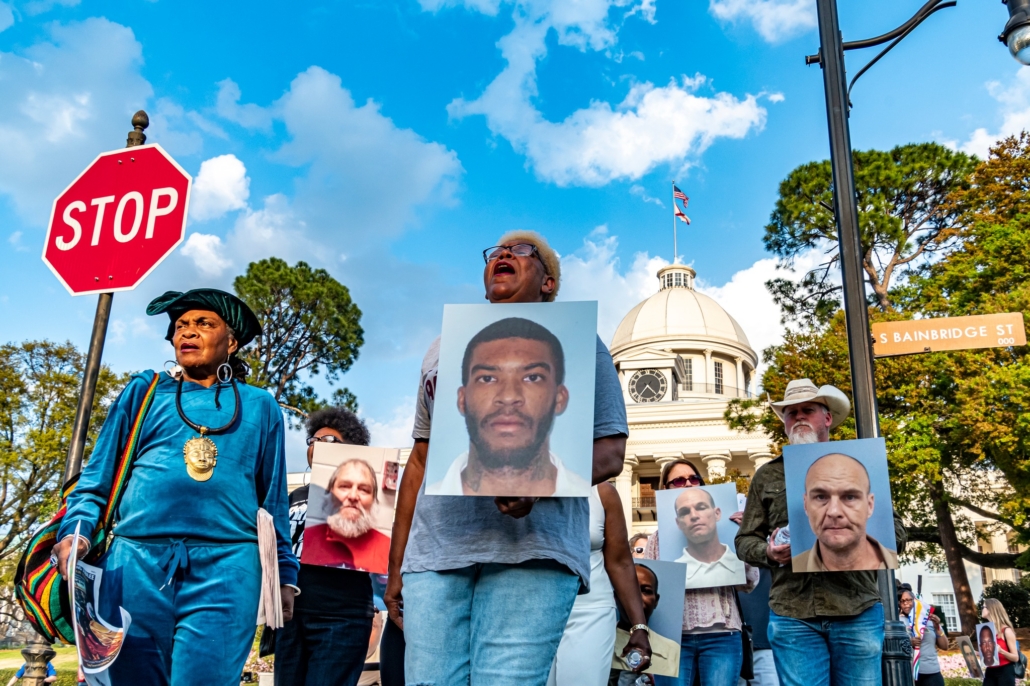
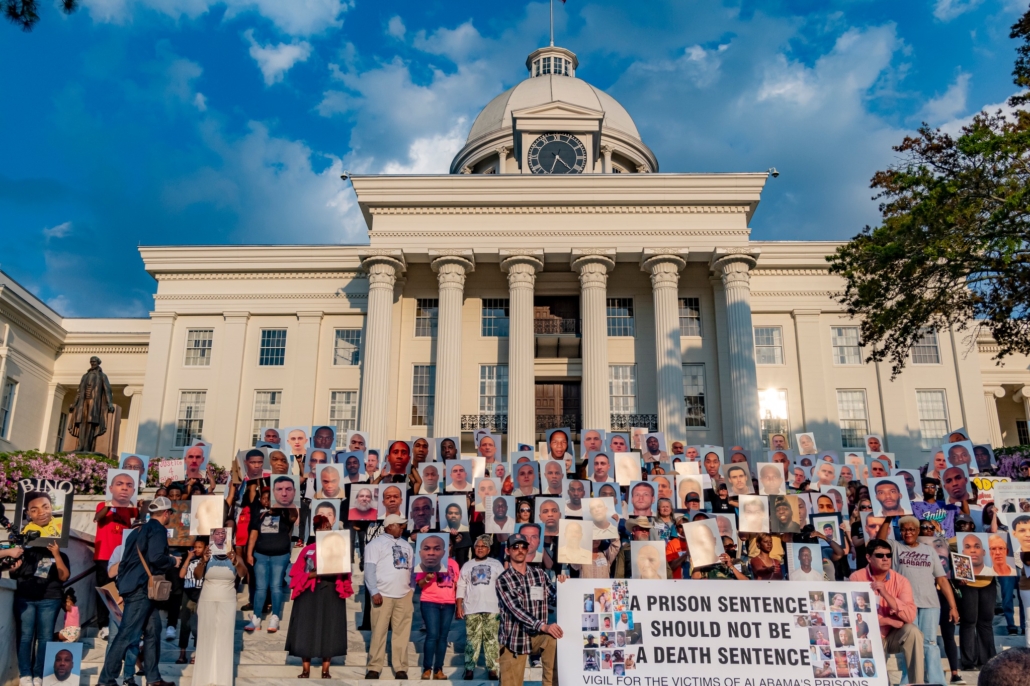
A vigil in remembrance of the nearly 300 people who have died in Alabama’s prisons this past year was held on March 7, 2023 at the State Capitol. Photo by Lee Hedgepeth.

Year after year conditions have only worsened, and promises from state leaders then to fix the crisis have yet to materialize.

The DOJ report noted that an “egregious level of understaffing” results in increased violence and death, with prisons employing 1,072 of the 3,336 authorized officers. Four years later, ADOC Commissioner John Hamm stood in front of legislative budget leaders, basically threw up his hands at the persistent lack of security staff and asked with a straight face, “any suggestions you have we’re all ears.”

U.S. District Judge Myron Thompson in a separate case about mental health care in prisons in 2017 ordered the state to hire an additional 2,000 correctional officers, but in February, 2023, the judge warned the state that staffing remains critically low.  “We had horrendous understaffing in this department and something has to be done,” Thompson said.

 Again, the numbers are moving in the wrong direction.

ADOC’s quarterly report published in January states that for the fiscal year ending on Sept. 30, 2022, ADOC recorded a net decrease of 415 security employees. The latest quarterly report shows another net loss of 52 security staff as of Dec. 31, 2022. 

ADOC has added new types of security staff to try and boost numbers – cubicle operators who can only operate doors, and basic correctional officers who have a shorter training period than other officers. The agency raised salaries so that officers at maximum security facilities start at $55,855, a salary it would take 17 years as a public school teacher to earn. It’s too soon to tell if that salary will help recruitment. Nothing else has.  

These deficits are not abstract for thousands of Alabamians living in prisons and for desperate family members who just want their loved ones to finish their sentences alive.

In images shared on social media by incarcerated people, correctional officers in several Alabama prisons can be seen sleeping inside their cubicles. Incarcerated people tell Appleseed that they’re often left to fend for themselves if attacked. In instances when a person is critically wounded, officers have been slow to respond, sometimes resulting in death while other incarcerated men clamor to get officers’ attention to render aid.  

“Inmates have knives and axes and drugs including fentanyl; they are available in copious amounts in these prisons,” wrote the mother of a man serving 15 years at Limestone prison. “He was attacked while on the phone 3 days ago and said nothing to anyone about it because that’s what causes you to be stabbed. He was attacked this morning going into the bathroom and now has a broken rib and received 7 stitches in his mouth and sent back to his dorm.”

If understaffing is one ingredient in the deadly mixture that makes up state prisons, overpopulation is the other. 

The month that DOJ’s report was published in 2019, Alabama prisons were at 168 percent capacity, according to ADOC’s statistical report. Alabama prisons remained at 168 percent capacity in January, according to the latest report

To add to the deadly mixture, paroles in Alabama have plummeted since 2017. 
During the 2022 fiscal year the three-member Pardons and Paroles Board denied 90 percent of applicants for paroles, according to board statistics, down from 46 percent denied during fiscal year 2017, and Black applicants are being paroled less than half as often as white applicants. 

What happens when you have understaffed, overpopulated prisons? According to the DOJ report, “inadequate supervision that results in a substantial risk of serious harm.” The report highlighted five stabbing deaths in prisons that year in which those men had previously been stabbed and survived. “ADOC, with the knowledge that previously stabbed prisoners were at risk for further violence, took no meaningful efforts to protect these prisoners from serious harm—harm that was eventually deadly,” the report reads. 

The meticulous documentation of death after death after death seemed shocking in 2019. But shock gave way to resignation and this grim status quo is just that, just the way prisons are, for most of Alabama’s elected leadership. In a recent meeting to discuss prison conditions and possible solutions, a freshman representative dismissed our concerns, saying that prisons aren’t supposed to be “the Taj Majal.”  

Against the persistent backdrop, prison deaths have surged, reaching a record high 270 last year, more than double the 130 deaths in 2019 when the report was released and officials vowed to take the bloodshed seriously. At that time the homicide rate in Alabama’s prisons was eight times the national rate. It has gotten worse.

At least 95 of the 270 deaths in 2022 were preventable deaths: homicides, suicides, and confirmed or suspected drug-related deaths, according to investigative reporter Beth Shelburne. This is the highest number of preventable deaths since she began tracking them in 2018.

So far this year someone has died in Alabama prisons every other day. Our research has confirmed 36 prison deaths. Among those, 27 were suspected to be overdoses, one suicide and four suspected homicides.  

Study group formed, but results lacking
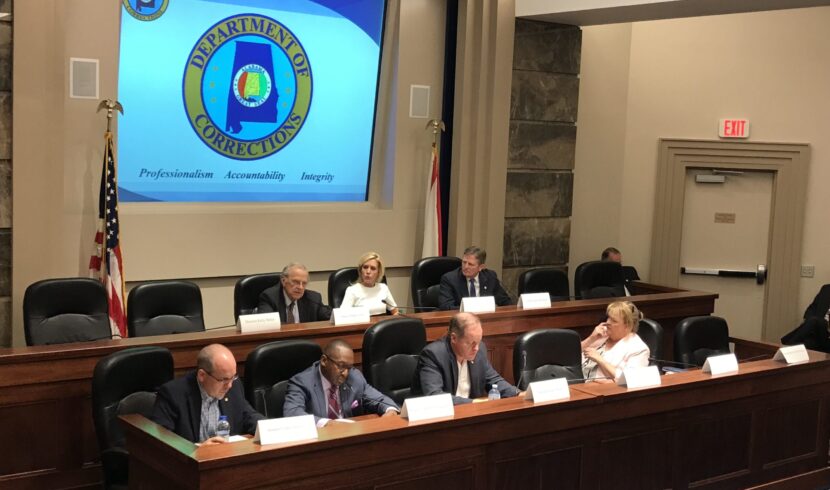
The Governor’s Study Group on Criminal Justice Policy. Photo courtesy of the Associated Press.

We are not suggesting state leadership has not responded to the allegations in the four-year-old report, but the meager responses have produced few results to assuage the breathtaking brokenness of Alabama’s largest law enforcement agency as documented in 2019.  And the 2023 legislative session so far has seen efforts to fast-track bills that will increase prison sentences and intensify the ADOC chaos.

Initially, the Governor’s Office promised a multi-faceted, data-driven solution. By executive order three months after the DOJ report was released, Ivey formed the nine-member Governor’s Study Group on Criminal Justice Policy and tasked the members with analyzing data and best practices, and seeking solutions to the prison crisis. 
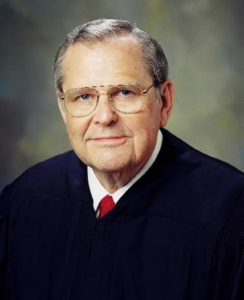
Former Alabama Supreme Court Justice Champ Lyons and chairman of the Governor’s Study Group on Criminal Justice Policy

The task force met for seven months and in a 10-page letter to Ivey suggested modest sentencing reforms, a focus on educational and rehabilitative programs aimed at reducing recidivism and an increase in the number of people released early and placed on mandatory supervision. 

The study group noted that a 2015 law that allowed for early release and mandatory supervision for some incarcerated people only applied to those sentenced after 2015, and suggested it be expanded to those sentenced prior to the law being enacted. Under the law those sentenced to up to five years could be released as early as five months before the end of their sentence. Those serving up to 10 years could be released as much as a year early. 

A bill to impact those sentenced before 2015 passed decisively with bipartisan support in 2021. Its supporters saw it as a way to reduce recidivism and ease prison overcrowding, noting studies that found that monitoring those released does just that. 

Systematic problems with underfunded, chaotic victim notification systems slowed those early releases, Appleseed discovered, but once releases began, pushback was swift and now there is legislation to undo this slim bit of reform. 

“When this bill passed in 2021 originally, it was something that I was very much opposed to, and had concerns about the passage of,” Sen. Chris Elliott, R-Fairhope, told Alabama Reflector. Elliott filed a bill on Jan. 31 that would delay those early releases until 2030. 

Ivey’s study group also recommended enhanced early release incentives. 
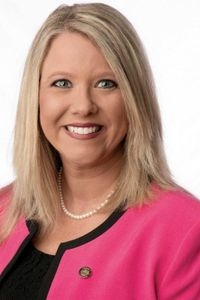
Sen. April Weaver (R-Brierfield) introduced the Good Time Bill in the 2023 legislative session

“As with sentencing reform, public safety requires  great  caution  in  determining  who might  be  eligible  for  such  incentives,” study group chairman and former Alabama Supreme Court Justice Champ Lyons wrote to Ivey. “Nevertheless, we support the award of early release incentives for those inmates who complete certain courses and maintain good behavior while incarcerated.” 

The Alabama Legislature approved of that recommendation, and Ivey in May 2021 signed into law a bill that reduces prison sentences by up to one year for incarcerated people who complete academic and vocational programs while in prison.

But it didn’t take long for the Legislature to begin working to reverse that gain, and 10 months after Ivey signed that the Alabama Senate approved a bill sponsored by Sen. April Weaver, R-Brierfield, that would reduce the amount of “good time” incarcerated people can earn. 

Weaver has cited the June 2022 shooting death of Bibb County Deputy Brad Johnson as the impetus. Austin Patrick Hall, who has been charged in the death, was allowed early release on good time despite numerous infractions, both in and out of prison, including an escape, for which Hall was not charged for three years – until after Johnson’s death.

Had ADOC followed existing law and forfeited Hall’s good time after his escape from the Camden Work Release Center in 2019, or if Hall had been timely prosecuted for the escape, Hall would not have been out of prison when Johnson was shot, the Alabama Political Reporter noted in August 2022.
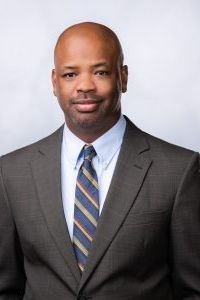
Rep. Chris England (D-Tuscaloosa) has repeatedly sponsored bills aimed at reducing the prison population and holding ADOC accountable

In reality, a dysfunctional system unable to follow laws already in place contributed to Johnson’s death. Lengthening sentences in prisons unable to provide rehabilitative services or even keep prisoners alive is unlikely to produce the public safety results Alabama deserves. It’s important to recognize that multiple instances in which lawmakers have toughened sentences were in response to individuals who have served time in these hellish settings, been released with no rehabilitation and then gone on to harm Alabamians. 

Not all lawmakers have been complacent. Rep. Chris England (D-Tuscaloosa) has repeatedly sponsored bills aimed at reducing the prison population and holding ADOC accountable. England’s bill requiring increased reporting by ADOC passed in 2022. The agency now posts quarterly reports that document drugs and weapons confiscated at the prisons. The reports routinely list free world weapons and even firearm confiscations. But no one in state leadership has expressed concerns about this new data.

Alabama’s long history of abusing the incarcerated until federal officials make us stop

When it comes to Alabama’s prison crisis, there’s nothing new under the sun. 

That’s how Austin Sarat, the William Nelson Cromwell Professor of Jurisprudence and Political Science at Amherst College in Massachusetts, described the state’s prison problems, and placed them into historical context during a conversation with Appleseed. Sarat has been a visiting professor at the University of Alabama School of Law, teaching a course on punishment.

Sarat discussed U.S. District Court Judge Frank Johnson’s 1976 opinion in the landmark Alabama case Pugh v. Locke, in which the plaintiff, an incarcerated man named Jerry Pugh, sued ADOC for failing to protect him and others from violence in violation of the Fourth and Eighteenth Amendments to the U.S. Constitution. 
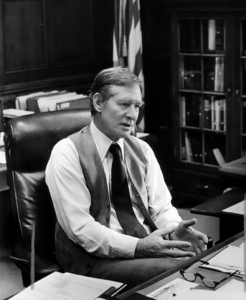
U.S. District Court Judge Frank Johnson’s 1976 opinion in the landmark Alabama case Pugh v. Locke. Photo by Birmingham News.

Johnson agreed, and appointed a special master to ensure ADOC followed his orders to resolve the dangerously unconstitutional conditions nearly 50 years ago. ADOC remained under federal supervision for 13 years. The Court enjoined ADOC from accepting any new prisoners, except escapees, into four prisons until the population was reduced. In July 1988 ADOC was forced to release 222 incarcerated people early. State prisons had many of the same problems then as today; they were overcrowded and violent, the buildings were dilapidated and unsanitary. “Reading the DOJ report and findings, if you close your eyes, it could have been Frank Johnson writing them,” Sarat said. 

Sarat described Johnson’s remedial decree as “extraordinarily detailed and quite controversial.” 

“At the time that he made the decision, he was among the first judges to say that prisoners retain all rights, except those necessarily lost as an incident of confinement,” Sarat said. 

Lost in the emphasis on prison construction as a remedy to the current crisis is the fact that Alabama embarked on a prison building spree in the 1980s to make things right. It was not a long-term solution.

A warning from California and a lesson from Texas
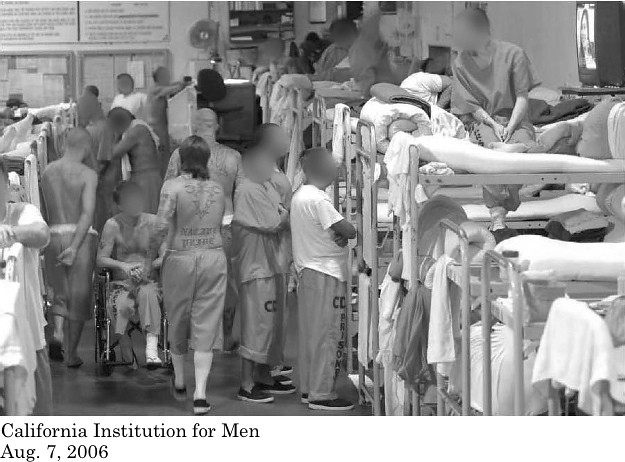
California Institution for Men from Brown vs. Plata

What could Alabamians expect to come out of the federal government’s lawsuit over Alabama’s broken prisons? One might look at a similar case in California that resulted in a court order to reduce the state’s prison population by more than 30,000 people within two years. 

“The situation had gotten so bad, reading the Plata decision, I realized that we were really heading down the exact same road,” said then-Sen. Cam Ward, as chair of the Legislature’s Prison Oversight Committee eight years ago. 

The U.S. Supreme Court in the 2011 Brown v. Plata case ordered California to remedy unconstitutional conditions that deprived incarcerated people of adequate medical and mental health care. For starters, the State had to find a way to reduce its prisons to 137% of designed capacity from about 200%.  One tactic, called “realignment” required county systems to house all non-violent and non-sex offenders upon conviction to free up prison space for everyone else. Implementation was not easy, however, given that most county jails lacked unused space as well as sufficient treatment and programming to provide rehabilitation. 

It’s important for Alabama officials to recognize the Plata Court’s emphasis on violence and death. The Court noted that in 2006 “a preventable or possibly preventable death occurred” somewhere in California’s prison system “once every five to six days.” 

Alabama is worse. Our prisons have thousands fewer people than California’s, but more deaths. In Alabama prisons so far this year, someone has died every other day. Of the 36 deaths in Alabama prisons Appleseed has confirmed so far this year, 32 were preventable. 

If Alabama’s conservative “tough on crime” lawmakers might wince at the notion of looking at California for answers to Alabama’s problems, perhaps they should look at Texas.

Texas was on track to need 17,000 new prison beds by 2012, at a cost of approximately $2 billion, but instead, lawmakers appropriated $241 million for drug treatment programs in and outside of prisons, and created specialty courts to handle those struggling with drugs, and veterans in need of special care. 

“According to Texas Department of Public Safety statistics, from 2007 to 2008 Texas saw a 5 percent decline in murders, a 4.3 percent decline in robberies, and a 6.8 percent drop in rapes,” according to the Daily Beast. “ In those same years, Right on Crime, a conservative think tank devoted to criminal justice reform, reports the number of parolees convicted of a new crime fell 7.6 percent; the number of incarcerations dropped 4.5 percent.”

Texas lawmakers in 2011 closed the state’s second-oldest prison, and within another two years shuttered two more prisons. 

“You want to talk about real conservative governance?” then-Texas Gov. Rick Perry asked the audience at the 2014 Conservative Political Action Conference. “Shut prisons down. Save that money.” 

Alabama’s Billion Dollar Solution
Thus far, the Alabama Solution does not involve saving money.

The DOJ in the 2019 report wrote that while new buildings may solve some of the problems it identified “new facilities alone will not resolve the contributing factors to the overall unconstitutional conditions.”

Even so, dating back to Ivey’s predecessor, Gov. Robert Bentley, the plan for many years has been to build new prisons, with the promise that doing so will solve the crisis. 

Ivey’s previous plan, which called for new prisons to be built by the private prison company CoreCivic and leased to the state at a cost of $3.6 billion, fell through when CoreCivic was unable to secure financing for the deal, following much pressure against financial firms from investing in prisons.

Alabama lawmakers in 2022 approved $1.3 billion to build two 4,000-bed prisons for men, agreeing to direct $400 million in federal COVID aid toward the projects. That budget includes a $785 million bond issue and $135 million from the state’s General Fund. The state in April 2022 signed a $623 million contract with Caddell Construction to build a 4,000-bed prison for men in Elmore County. 

Last month, the cost of one prison jumped to $1 billion and the expected completion date was extended several months. At this rate, it will not be open until about 2 years after the 2024 trial. A second prison, promised for Escambia County, is without a contractor and seemingly without most of the funding needed to build it, unless state leaders have a surprise funding stream. Gov. Ivey has requested $100 million from the Education Trust Fund budget to go into prison construction, but that still would not come close to bridging the funding gap created by the Billion Dollar Prison.    

It’s unclear how the state will pay for the second planned new 4,000-bed prison in Escambia County. The new construction will not add space, but will only replace dilapidated prisons.

“Alabama is not the only state, but it turns out that it seems that prison construction is one place where budget constraints, at the end of the day, often don’t matter,” Sarat told Appleseed. “They matter in public education. They matter in health care. They matter in infrastructure, but it doesn’t seem to matter all that much when it comes to how much we’re going to spend on the prison system.”

“This is abnormal and so wrong.” Views from the inside
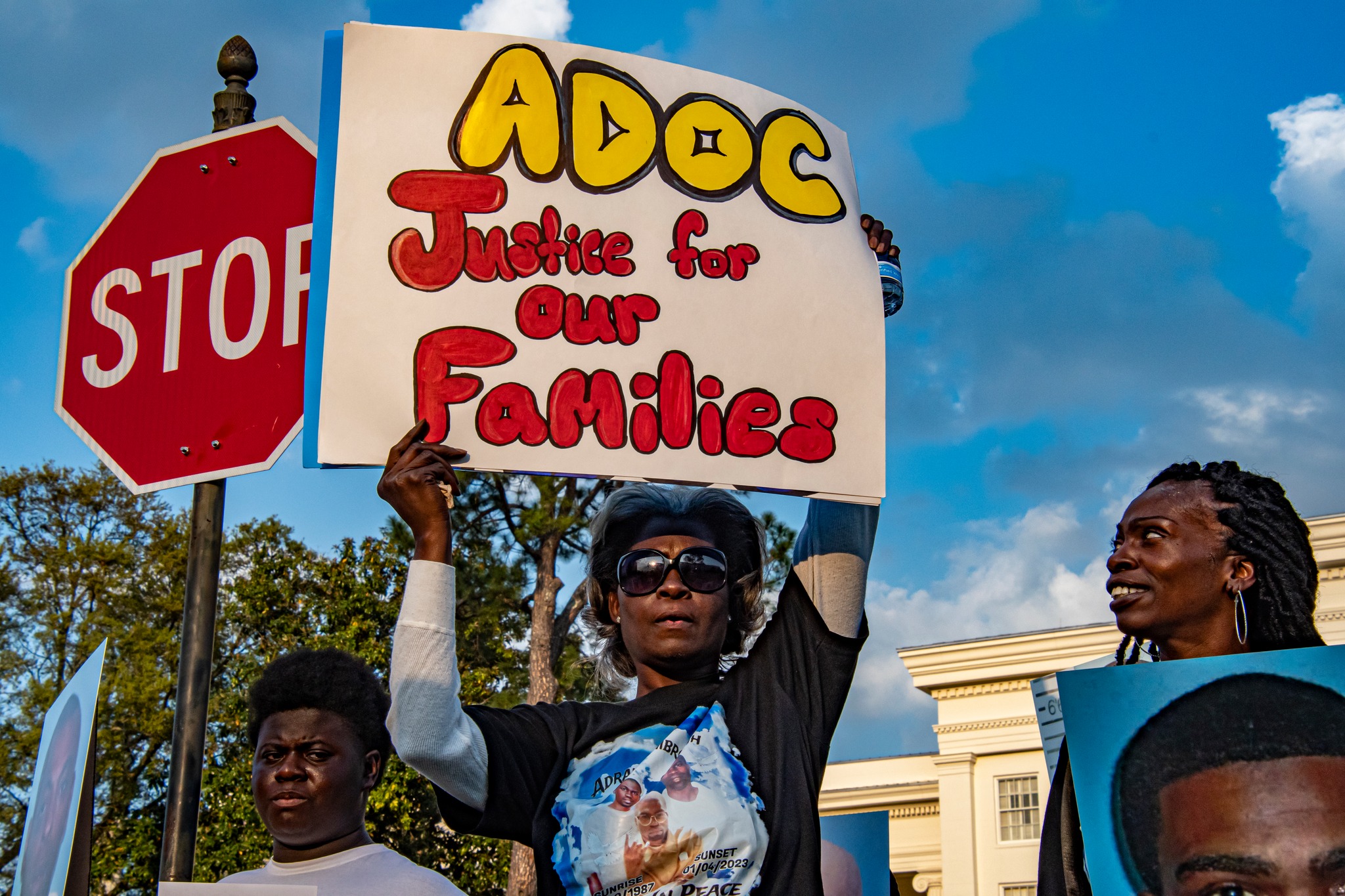
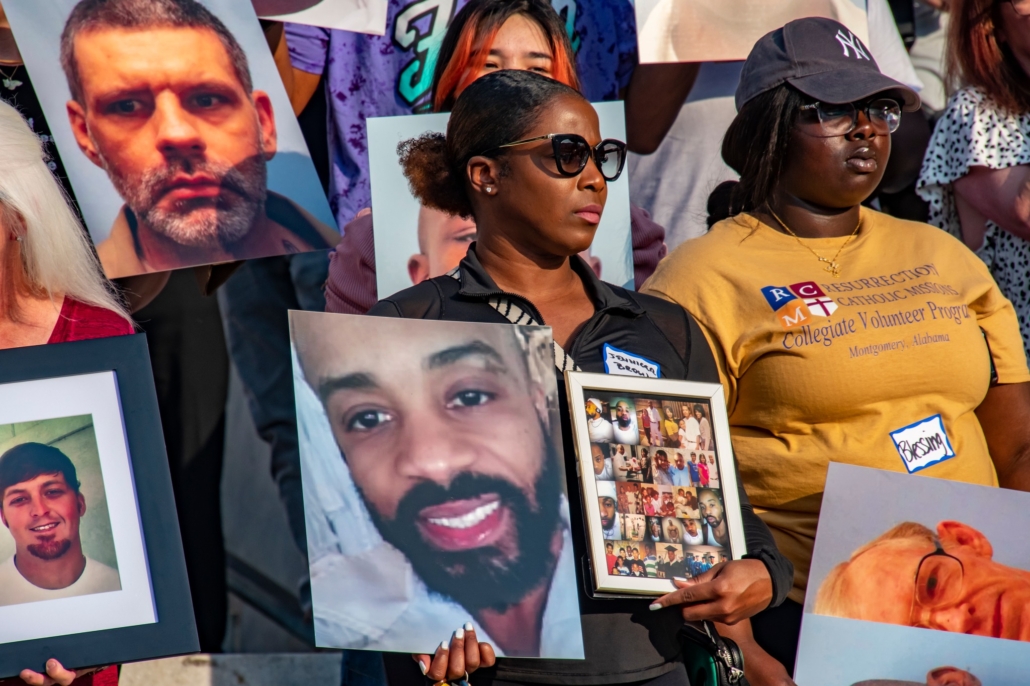
Family members at the Vigil for Victim’s on March 7, 2023. Photo by Lee Hedgepeth

Beyond the back-and-forth between state leaders and the federal government attempting to hold them accountable are the voices of people barely surviving in the prisons they were supposedly sent for rehabilitation.

The sister of a man serving at Bullock prison described to Appleseed two separate attacks that nearly cost her brother his life.  “My brother was assaulted on March 6th and 21st 2021 at Bullock Correctional Facility. He almost lost his life on the 21st; he had to be airlifted, placed on life support and was left with a collapsed lung, [and] they returned him from the hospital within 3 DAYS!!!! They put him back in population, with stitches, staples, a tube and he had to sleep on the floor!!!!!! He was stabbed over 30 times,” the sister wrote. 

A man who served several years at Fountain Correctional Facility told Appleseed that when he first entered the prison he had no idea what he was in for.  “Over the 2 years I was there I saw more stabbings than I could count and was beaten several times myself,” the man wrote. “I woke up one night tied to my bunk and was beaten and sexually assaulted for what seemed an eternity. I continued to be sexually assaulted multiple times and never reported it for fear of being killed if I did.” 

“I was forced to do things that I never dreamed of doing in order to survive,” he said in the letter. “I tried reporting one incident when I was almost stabbed by someone who was trying to rape me and wasn’t taken seriously by officers, even humiliated and made fun of.”

An elderly man serving a sentence of life without parole at Donaldson Correctional Facility wrote to Appleseed about his concerns over understaffing, poor living conditions and the rash of overdoses. 

“At night time [there is] only one officer to watch 650 prisoners,” he wrote. “We have prisoners here who are ‘homeless.’ Prisoners who are afraid to to go into an assigned cell b/c of being raped, set up to be robbed, beat up, and etc. These prisoners sleep in the open day room, some sleep under the stairs, some sleep in the old–not used–showers.” 

Donaldson prison’s infirmary sees two to three overdoses daily. “We have had as much as 5 in one day. The Infirmary does not keep a count on overdoses…90% of the contraband coming into prison is coming in by officers; and these officers are being aided with the help of other officers.”  

Four years ago, the DOJ began its report, with a description of a scene from Bibb County Correctional Facility: “At the back of the dormitory and not visible from the front door, two prisoners started stabbing their intended victim. The victim screamed for help. Another prisoner tried to intervene and he, too, was stabbed. The initial victim dragged himself to the front doors of the dormitory. Prisoners banged on the locked doors to get the attention of security staff. …The prisoner eventually bled to death. One resident told us he could still hear the victim’s screams in his sleep.”

The State of Alabama still houses tens of thousands of people in these conditions. Four years after a blistering warning from the U.S. Department of Justice, nothing has changed.

In July, Antonio Wallace wrote to Appleseed from Bibb. Wallace had survived in Alabama’s prisons since age 17. He had served 35 years for his role in a murder at age 16 when he was homeless and using drugs. Wallace was hoping to finally be granted parole. “I’m ready to come back [into] society and live the life of which I know what I suppose to do, be the father to my daughter and a grand dad to my grand baby girls,” Wallace wrote. “So I ask again: please don’t let me die in here.”

Just three months after sending this letter, Wallace was found unresponsive and pronounced dead, the result of a suspected overdose, according to sources inside Bibb prison. He was 51 years old. 

Yes I was a juvenile when I got off into this mess and from there my life hasn’t been much of anything and it’s sad when I look back at my situation and see nothing from there,” Wallace wrote. “I know I have good in me. I know I can function, if and when [given] a chance back into society. …I came in as a juvenile and I had to grow up in a place such as this which is abnormal and so wrong.” 

Appleseed Legal Assistant Libby Rau contributed to this report.

John Coleman served 34 years for offenses involving no physical injury under Alabama’s Habitual Felony Offender Act. Now he’s free and experiencing kindness for the first time in way too long.

By Carla Crowder, Executive Director


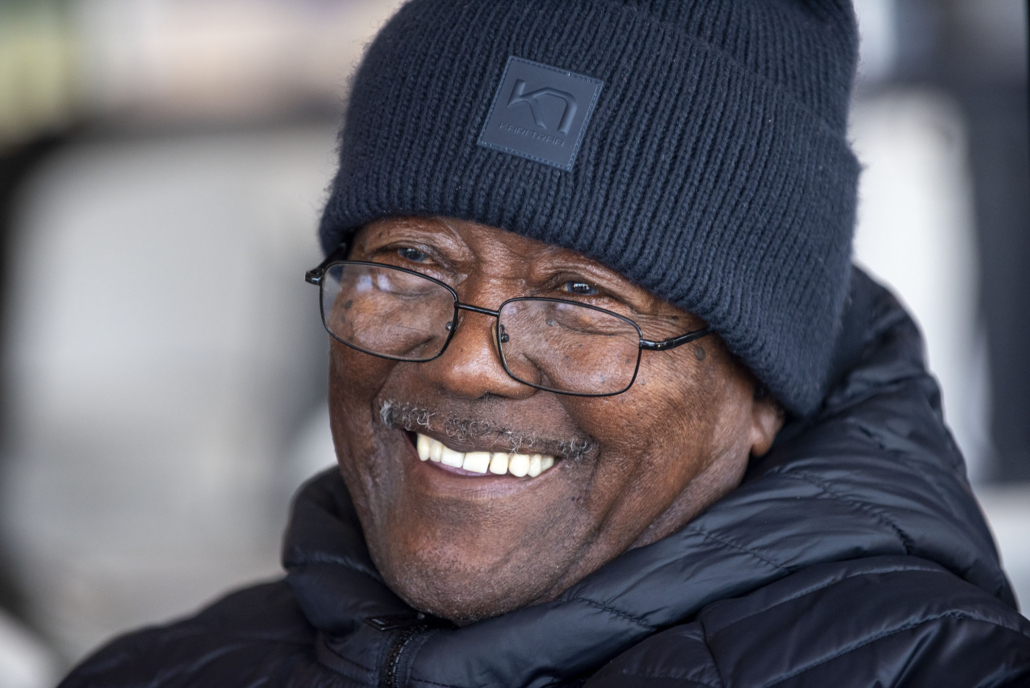
John Coleman was sentenced to die in prison and is released after serving 34 years. He recently celebrated his 89th birthday. Photo by Bernard Troncale.

“I’m 86 years old and all alone. Please don’t let me die in prison. I’m not ready to die yet.” 

John Coleman wrote those words to me in June of 2020. He was suffering with kidney disease and living in the infirmary at St. Clair Correctional Facility, once the state’s most violent and mismanaged prison and recently the subject of a federal class-action lawsuit. I visited St. Clair frequently and had toured the entire place nearly a decade ago. It was shameful that Alabama housed anyone in these third-world conditions, much less octogenarians.  

“I’m proud to say that at 86 years old I can still bathe myself, still put my underwear and clothes on right, my socks and shoes all by myself,” Mr. Coleman wrote, as if to signal that he would not be much trouble if he was, somehow, released from prison.

For the last three years, Appleseed has been working to free incarcerated Alabamians from extreme sentences imposed decades ago under the state’s draconian Habitual Felony Offender Act (HFOA). Everyone comes to us with a sentence of life imprisonment without parole; they’re supposed to die in prison. Because none of their offenses involved physical injury to another person, we are sometimes able to persuade prosecutors and judges that these sentences are excessive, these men have been punished enough, and they are no longer a threat to anyone.

Mr. Coleman blows out his candle on his requested pecan pie for his 89th birthday.

Once our clients are freed, we cover them with supportive reentry services. Our small Appleseed team has embraced working closely with men in their 60s and 70s, newly freed and unsteady in our fast, modern world. We’ve gotten pretty good at this. 

But the thought of finding – and funding – safe and stable re-entry housing and care for someone leaning toward 90 was daunting. With hundreds of incarcerated people asking for our services and two lawyers to tackle the stacks of desperate requests, I believed in 2020 that Mr. Coleman would have to wait until we were on surer footing with geriatric re-entry. I could not bear the thought of extracting him from St. Clair into an unknown future without robust medical care. 

He turned 87, then 88. We got a grant to hire an experienced social worker who could navigate the byzantine world of federal social security and Medicaid forms. We secured release for another elderly client and got him safely situated in a nursing home within weeks.

Mr. Coleman celebrates his 89th birthday with Legal Assistant Libby Rau and some new music!

So on June 12, 2022, a team from Appleseed arranged a legal visit with Mr. Coleman, during which he began to whistle. During the next visit, he began to sing.

And since then, he has joyfully confirmed what he first wrote to us nearly three years ago. He was not ready to die. And for that we are grateful. On March 14, Mr. Coleman celebrated his 89th birthday on the sunny porch of a Birmingham restaurant, surrounded by Appleseed staff and other recently freed clients, all older men ranging in age from 61 to 80. 

I baked him a pecan pie, his requested dessert. Libby Rau, our legal assistant, swung by Seasick Records for some B.B. King and Al Green. Upon opening his gifts, once again Mr. Coleman began to sing.

After his birthday celebration, Mr. Coleman sat in my car nearly in tears. “Ms. Crowder, nobody has been nice to me like this in so long, I don’t know how to respond.”

The Legal Part 

 Once Appleseed agreed to take Mr. Coleman’s case, we began collecting legal documents and medical records. We knew he was serving life without parole for robbery and kidnapping as a result of one incident.

John Coleman with Executive Director Carla Crowder at the Appleseed offices on the day of his release.

A review of the trial transcript painted a fuller picture: In 1988, he attempted to rob a woman outside a Birmingham nightclub. An off-duty police officer was working security and immediately intervened when a woman came running towards him announcing that Mr. Coleman had a gun. Mr. Coleman backed away using the woman he had attempted to rob as a hostage. The off-duty officer called for back-up which quickly arrived. Mr. Coleman was cornered and ultimately dropped his weapon and was apprehended. The victim was freed without physical injury. When officers recovered Mr. Coleman’s weapon, they discovered it was not loaded. However, prior robbery convictions from the 1970s permitted an enhanced sentence under the HFOA, and Mr. Coleman was sentenced to life imprisonment without parole.

We determined the victims in this 34-year-old case had moved to California and long since passed away. There would be no victim opposition. Also promising was the fact that this case was in Jefferson County, where District Attorney Danny Carr was occasionally willing to not oppose our resentencing efforts, as long as the victims were not opposed. 

But the question still loomed – how does a small, legal nonprofit ensure an 88-year-old man with little family support will have the medical care he needs? I did not need broken hips on my watch.

We acquired his 4-inch stack of medical records and Dr. Michael Smith, a Hoover physician who joined our Board of Directors last year graciously agreed to review them. Dr. Smith confirmed what we suspected, that Mr. Coleman had some mobility issues and once was provided a wheelchair. (It is unclear whether he agreed to actually use it.) There was some chronic age-related illness, but some hopeful news as well, he had once required dialysis for kidney disease but was off of dialysis. Onward!

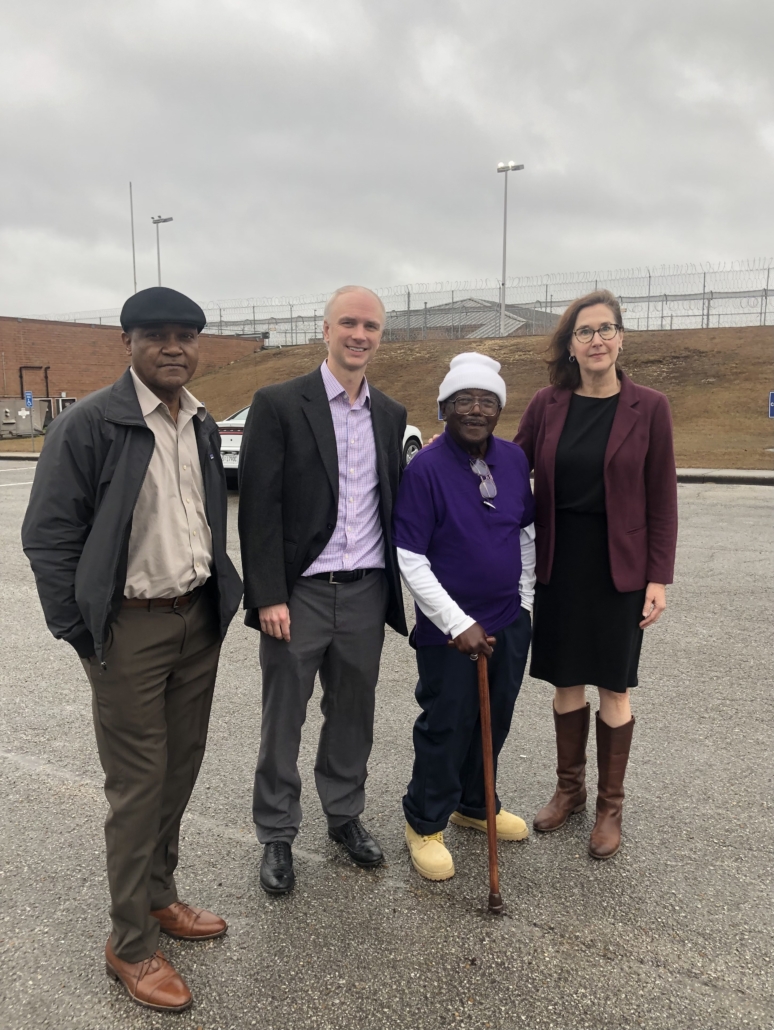
Appleseed Re-entry Coordinator Ronald McKeithen, Staff Attorney Scott Fuqua, and Executive Director Carla Crowder outside of St. Clair Correctional Facility with John Coleman on his release day.

Attorney Scott Fuqua set out to draft a post-conviction petition and began regular communication with Mr. Coleman. “Whenever he called to check in, he started referring to all of us collectively as ‘fam.’ He was so excited at the prospect of freedom, but was never in a rush. He was just happy to know someone cared and was working on his behalf,” Scott shared.

In January, DA Carr agreed not to oppose our release efforts, which meant Jefferson County Circuit Judge Kechia Davis would have jurisdiction to rule on a matter stemming from a 34-year-old conviction.  

“Coleman has been incarcerated for 34 years under the Habitual Felony Offender Act (the “HFOA”) and has reached the extremely advanced age of 88-years old. He is serving a sentence of life imprisonment without parole. The incident which led to his incarceration did not result in any serious physical injury to the victim,” Carr wrote in his response. “As shown in Petitioner’s brief and supporting documents, Coleman has demonstrated clear evidence of rehabilitation, participated in extensive programming, and compiled an exemplary institutional record with only 1 disciplinary infraction in 34 years of incarceration.”

Judge Davis agreed and ordered Mr. Coleman’s resentencing to time-served. On February 9, he walked out of St. Clair prison with the assistance of a cane. It was a bleak, overcast day, but that did not matter to John Coleman. 

Release Day

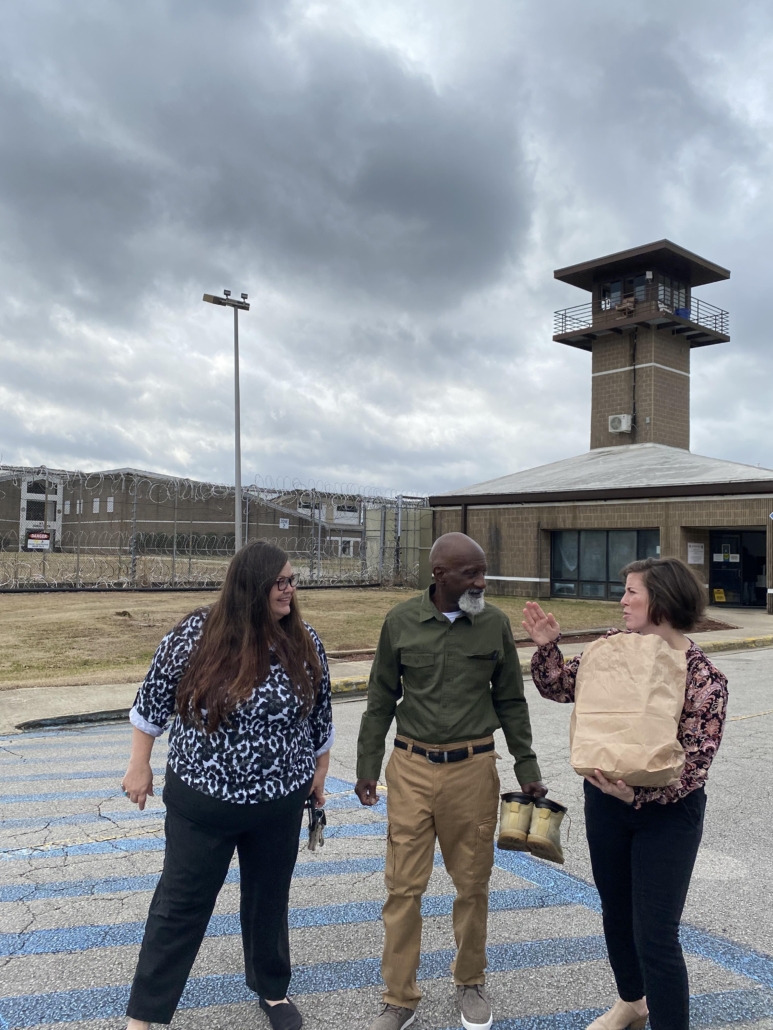
From the moment he walked into the parking lot with the fence and razor wire of St. Clair Correctional Facility behind him – in his past –  John Coleman was smiling.  A prison worker driving by as he walked out of prison wished him well. Mr. Coleman was well liked among prison staff, many of whom came to say goodbye before he left. Of all the Alabama prisons he’d been in, St. Clair prison was the most dangerous, Mr. Coleman told us. 

“I’m glad y’all got a few of them out of there,” Coleman said. “I really thought I was never going to get out.” 

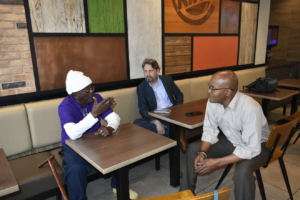
Mr. Coleman at Burger King for breakfast after his release with Appleseed Researcher Eddie Burkhalter and Re-entry Coordinator Ronald McKeithen.

We stopped at a nearby Burger King for biscuits and orange juice, but mostly for reassuring conversation that he would be taken care of as he gets back on his feet.

Lee Davis, who had served time in prison with Mr. Coleman in the 1980s and another man Appleseed successfully freed from a life without sentence, called Ron McKeithen on our staff during breakfast to say hello. 

“Hey Hen! What’s going on?” Mr. Davis asked Mr. Coleman over the phone, calling him by his nickname, Hen. “Ain’t nothing happening. I’m just trying to get there,” Mr. Coleman told him. 

“Everything is going to be good. I’m glad you’re on this side,” Mr. Davis said. 

Attorney Scott Fuqua talked to him at breakfast about the next steps, and how he’d be able to live where he wanted, with support along the way from Appleseed. It was all a lot to take in, Coleman explained. 

“I’m so satisfied right here I don’t know what to tell y’all,” Coleman said of sitting in a restaurant and eating a meal outside of prison fences for the first time in 34 years. 

Asked what he was looking forward to most in the first days of his freedom, Mr. Coleman returned to talking about the men he’d served time with and whom Appleseed won freedom for. 

“I just want to meet all the guys,” he said, and asked who’d be next to be freed.

Finally free and almost 90

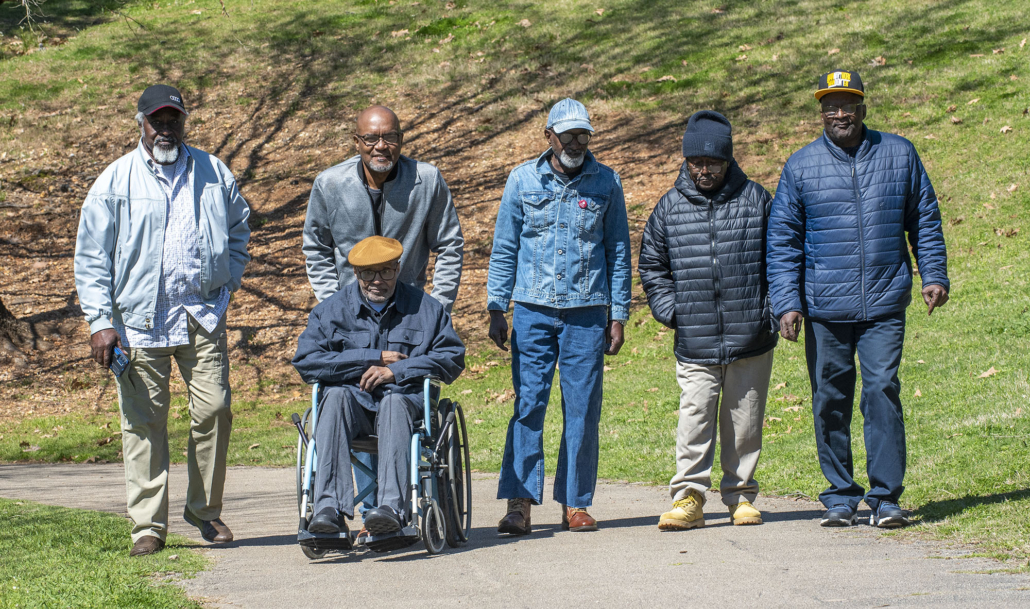
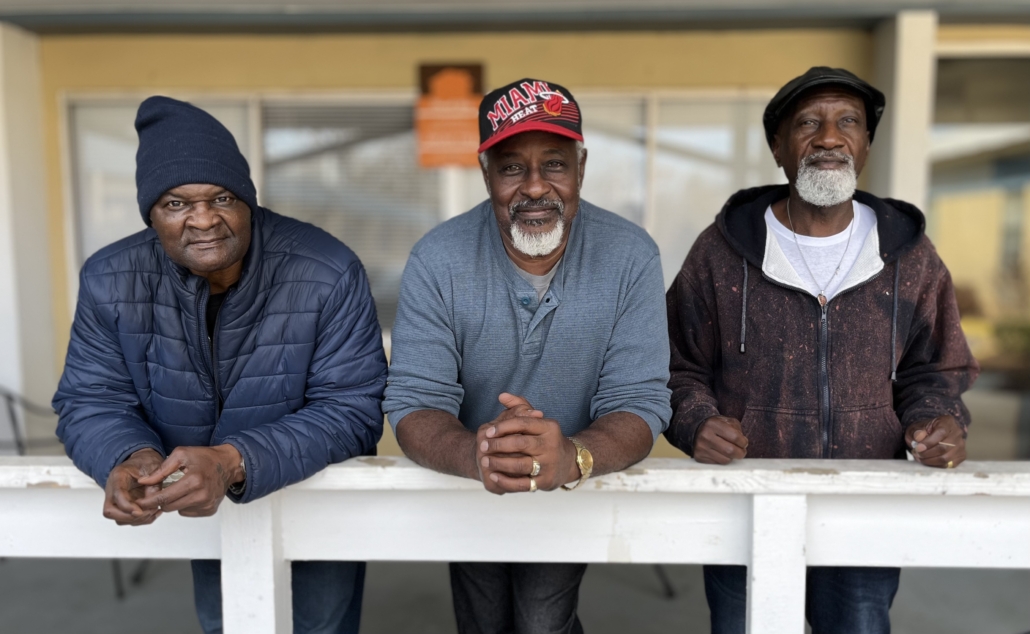
Mr. Coleman with Appleseed clients Larry Garrett, Ronald McKeithen, Robert Cheeks, Lee Davis, and Willie Ingram. Photo by Bernard Troncale.

Not surprisingly, Mr. Coleman has brought almost as much joy to us as we have given him. The only thing he’s ever asked for, aside from some snacks, was a battery for his dad’s old watch that he treasures. He loves orange juice and salad, as long as thousand island dressing is available. He’s determined to walk without a cane; we’re not sure exactly where he’s hidden it.

Mr. Coleman with Appleseed client Robert Cheeks.

Mr. Coleman resides at Shepherd’s Fold Reentry Ministry, joining three other older men who have been freed from death-in-prison sentences over the last few months. They all look out for each other. 

Nearly every day, Appleseed’s Reentry Case Manager, Kathleen Henderson, checks in on him. She has helped him acquire critical identification and medical care. Her calm, reassuring presence has convinced Mr. Coleman that people in this world care about him. She’s begun the search for senior housing.

At his first medical appointment at Christ Health, the doctor noticed he and Mr. Coleman shared a birthday. The doctor left the room, then returned with a giant cookie and other staff singing “Happy Birthday.” Mr. Coleman told the doctor he didn’t know how to respond; he’s not used to anyone doing anything for him. “I ain’t never had anyone before ‘cept Appleseed.”

Appleseed Staff Attorney Scott Fuqua, Researcher Eddie Burkhalter, and Reentry Case Manager Kathleen Henderson contributed to this post.

By Eddie Burkhalter, Appleseed Researcher 

Loved ones stand in front of the State Capitol in Montgomery on March 7, 2023 for a vigil in remembrance of the nearly 300 people who have died in Alabama’s prisons this past year while Gov. Kay Ivey gave her State of the State speech. Photo by Lee Hedgepeth

Alabama prison deaths are again surging, after state prisons saw a record high year of deaths in 2022. 

At least eight men have died in Alabama prisons this month, following 12 deaths in February and 12 in January, although the actual numbers are likely higher. Those 32 deaths include three homicides, numerous suspected drug overdoses, deaths likely caused by illnesses and one suspected suicide. 

The Alabama Department of Corrections (ADOC) doesn’t release timely reports on prison deaths, leaving it up to journalists and others to receive tips and seek confirmation. With prisons woefully overpopulated and understaffed, despite a court order to increase the number of correctional officers, the State has failed to keep incarcerated people safe from deadly drugs and violence..

Appleseed confirmed that from the start of 2022 through Dec. 28 there were 266 deaths in Alabama prisons. The Montgomery Advertiser confirmed four additional deaths between Dec. 28 and the end of the year, bringing the total to 270 last year. 

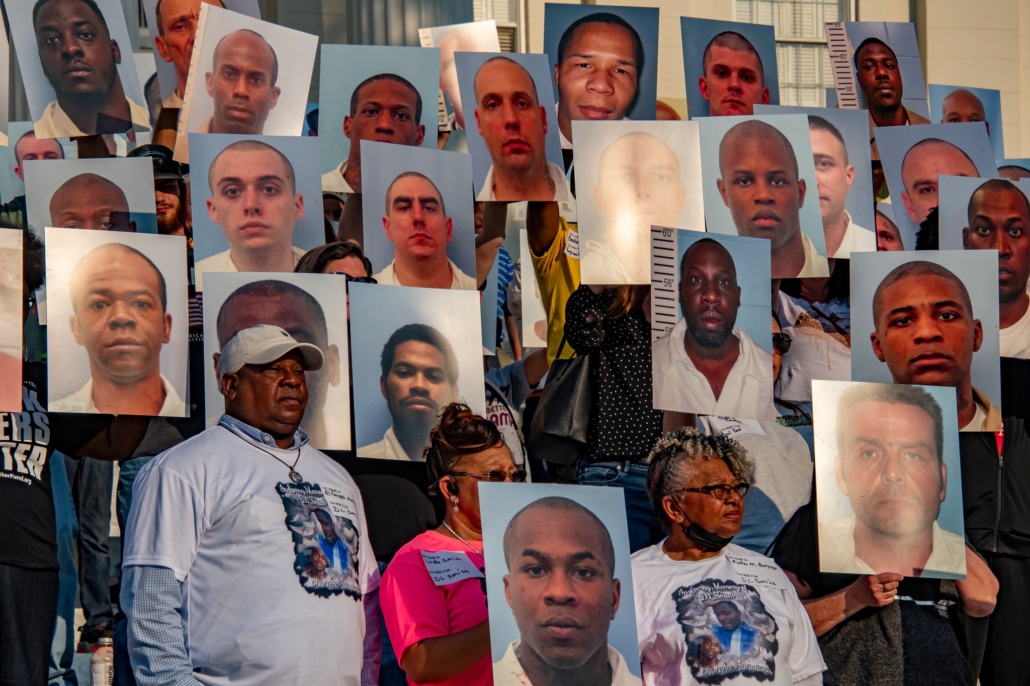
Loved ones hold pictures of those who have died in Alabama’s prisons. Photo by Lee Hedgepeth

Of the 270 Alabama prison deaths, at least 95 were preventable: homicides, suicides, and confirmed or suspected drug-related deaths, according to investigative reporter Beth Shelburne. This is the highest number of preventable deaths since she began tracking them in 2018.

There is no evidence suggesting that ADOC investigations, interventions, or the plans to build new prisons are stemming the loss of life. In fact, as the Legislature has poured increasing amounts of tax dollars into the prison system, conditions have only gotten more brutal. Currently, ADOC costs Alabama taxpayers around $3 billion: $1.3 billion for new prisons, $1.06 billion for a healthcare contract, about $700 million in annual General Fund dollars.

Most recently, Steve Cliff, 57, on Tuesday was found unresponsive at Staton Correctional Facility and was pronounced dead, ADOC confirmed for Appleseed. 

Felix Ortega, 39, died on March 7 at Elmore Correctional Facility after being assaulted by several other incarcerated people, according to the Equal Justice Initiative. ADOC in a response on March 14 wrote that “There has been no report of an assault on inmate Felix Ortega.” 

Tony Evans, 51, was found unresponsive at Donaldson Correctional Facility on March 5 and was pronounced dead that day in the health care unit, the Alabama Department of Corrections confirmed for Appleseed. 

Joshua Ledlow, 39, was found unresponsive and died at Limestone Correctional Facility on March 2, ADOC confirmed. Sources tell Appleseed his death is suspected to be caused by an overdose. Ledlow was serving a 15 year sentence after pleading guilty in 2017 to a charge of burglary in Cullman County, according to court records. 

A day after Ledlow’s death, 33-year old Mohamad Osman was found unresponsive at Limestone prison and was pronounced dead, ADOC confirmed. Sources tell Applseed his death was also likely the result of an overdose. 

Bunyan Goodwin, Jr., 51, told prison staff on March 4 that was having trouble breathing, ADOC confirmed for Appleseed. 

“He was transported to the Health Care Unit for evaluation and treatment. His condition deteriorated and he became unresponsive,” a department spokesperson wrote to Appleseed. “Life-saving measures were administered, but medical staff was unable to resuscitate him, and he was pronounced deceased by the attending physician.”

That same day, Bobby Ray Bradley, 69, died at Donaldson Correctional Facility, as did 40-year-old Joshua Strickland. Bradley’s death followed a long illness, according to the Jefferson County Coroner’s office. Strickland was found unresponsive in his cell and was pronounced dead at the prison’s health care unit, according to ADOC. 

According to several sources who spoke to Appleseed, Michael Hubbard, 46, was beaten by another incarcerated person at St. Clair Correctional Facility days before he died on Feb. 22 at a local hospital.

The ADOC spokesperson wrote that Hubbard’s death was reported but gave no information about how he may have died. In a photo obtained by Appleseed, Hubbard appears to be in physical distress, lying under a bed. The incarcerated man who supplied that photo said it was taken after Hubbard was beaten. 

Appleseed asked in a followup request whether he had been assaulted prior to his death, and the spokesperson responded “ADOC can’t comment on open investigations.”

The Vigil for Victim’s on March 7, 2023. Photo by Lee Hedgepeth

Appleseed replied that the department regularly states in press releases when a person dies as the result of an assault, and sent the photo of Hubbard to the department. 

In a followup response five days later the spokesperson wrote to Appleseed that “there has been no report of an assault on inmate Michael James Hubbard” and that he was taken to the prisons health care unit “for evaluation and treatment due to a suspected overdose.”

“During transport, he stopped breathing. Life-saving measures were administered, and he was stabilized. He was transported to an area hospital for further treatment. Unfortunately, his condition never improved and ultimately, he died,” the response continued. 

Brian Keith Wanner, 47, died at Bullock Correctional Facility on Feb, 4 after being assaulted by another incarcerated person two days before, according to ADOC. 

Family members honor their loved ones who died in Alabama’s prisons this past year. Photo by Lee Hedgepeth

Families across Alabama whose loved ones have died in state custody are trying to get the attention of elected officials, but have largely been ignored. On March 7, the first day of the 2023 legislative session, about 100 Alabamians gathered at the Alabama State Capitol for a vigil in honor of those who died in state prisons in recent years.

Below is a list of the incarcerated people who have died in state custody so far this year:

January deaths

  • Carl Kennedy, 57, died at Limestone Correctional Facility on Jan. 2 after being found “in distress,” according to ADOC.
  • Ariene Kimbrough, 35, died at Limestone Correctional Facility on Jan. 4 after being assaulted by another incarcerated man, according to ADOC.
  • Paul Rolan Ritch, Jr, 53, died at Staton Correctional Facility on Jan 6, according to Alabama Political Reporter.
  • Kevin Marcus Ritter, 33, died at Donaldson Correctional Facility on Jan. 7 after being found unresponsive, according to ADOC.
  • Ronald Nowicki, 66, died at Limestone Correctional Facility on Jan. 10 after being found unresponsive, according to ADOC.
  • Corey Jerome Johnson, 49, died at St. Clair Correctional Facility on Jan. 11 in a suspected suicide, according to Alabama Political Reporter.
  • Trenton Jamario White, 30, was found unresponsive and died at Donaldson Correctional Facility on Jan. 28, according to ADOC.
  • Justin Douglas Grubis, 25, was found unresponsive at Ventress Correctional facility on Jan. 28 and was pronounced dead, according to ADOC.
  • Michael Theodore Medders, 61, was found unresponsive and died at Donaldson Correctional Facility on Jan. 29, according to ADOC.
  • Christopher Shannon Fulmer, 44, died Jan. 31 at Elmore Correctional Facility after being found “in physical distress,” according to ADOC. Fulmer’s mother in April told the Alabama Board of Pardons and Paroles that her son would die in prison if they denied him parole.
  • Roderick Demarcus Lee, 33, died at Kilby Correctional Facility on Jan. 27 after the department said he was found “behaving erratically in his dorm.”

February deaths

  • Brian Wanner, 57, died at Bullock Correctional Facility on Feb. 4 after being assaulted by another incarcerated man, according to ADOC.
  • Alfred Lee Williams, 57, died at Staton Correctional Facility on Feb. 4 after being found unresponsive, according to ADOC.
  • Craig Randall Lee, 67, died at Staton Correctional Facility on Feb. 5 after being found unresponsive, according to ADOC.
  • Timothy Sanderson, 57, was pronounced dead at St. Clair Correctional Facility on Feb. 5 after being found in his dorm’s shower, according to ADOC.
  • Michael Wayne Perry, 62, died at Donaldson Correctional Facility on Feb. 8 after being found unresponsive, according to the Jefferson County Coroner’s Office.
  • Larry Dewayne Dill, 44, died at Fountain Correctional Facility on Feb. 13 after reporting chest pains to prison staff, according to ADOC.
  • Reginald Rashard Davis, 41, died at Staton Correctional Facility on Feb. 15 after experiencing “respiratory issues,” according to ADOC.
  • Michael James Hubbard, 46, died at St. Clair Correctional Facility on Feb. 22. Sources tell Appleseed he was assaulted by another incarcerated man days before he died. ADOC says his death is a suspected overdose.
  • Michael Joe White, 45, was found unresponsive at St. Clair Correctional Facility on Feb. 22 and died that day, according to ADOC.
  • Christopher Melton, 37, died at Ventress Correctional Facility on Feb. 22 after being attacked by another incarcerated man, according to ADOC.
  • C. Borden, Jr, 55, was found unresponsive and was pronounced dead at St. Clair Correctional Facility on Feb. 25, according to ADOC.
  • Fredrick Bishop, 55, died at Easterling Correctional Facility on Feb. 27 after being found unresponsive, according to ADOC.
  • Charles Daniel Waltman, 41, died at Easterling Correctional Facility on Feb. 27 after being found unresponsive, according to ADOC.

March deaths 

  • Joshua Felton Ledlow, 39, died at Limestone Correctional Facility on March 2. Sources tell Appleseed his death is a suspected overdose. ADOC says he was found unresponsive.
  • Mohamad Osman, 33, died at Limestone Correctional Facility on March 3 of a suspected overdose, sources tell Appleseed.
  • Bobby Ray Bradley, 69, died at Donaldson Correctional Facility on March 4 and was being treated for multiple medical problems, according to the Jefferson County Coroner’s Office.
  • Joshua Strickland, 40, died at Bullock Correctional Facility on March 4 after being found unresponsive, according to ADOC.
  • Bunyan Goodwin, Jr, 51, died at Bibb County Correctional Facility on March 4 after reporting trouble breathing, according to ADOC.
  • Tony Edward Evans, 51, died at Donaldson Correctional Facility on March 5 after being found unresponsive, according to ADOC.
  • Felix Ortega, 39, died on March 7 at Elmore Correctional Facility after being assaulted by several other incarcerated people, according to the Equal Justice Initiative.
  • Steve Cliff, 57, on March 14 was found unresponsive at Staton Correctional Facility and was pronounced dead, ADOC confirmed for Appleseed.

By Frederick Spight, Policy Director and Elaine Burdeshaw, Policy Associate


As we look forward to the start of the 2023 legislative session, and the beginning of the Quadrennium, Appleseed plans to bring forth several legislative priorities. As is our custom, these initiatives are based on evidence and research that will advance the goals of good, efficient government as well as providing support and relief to many Alabamians.

This session help us pass the following four priorities:

End Drivers License Suspensions for Low Wealth Alabamians


Once again we are bringing our Drivers License Suspension Bill. The Bill made it through the Senate last year and in both the House Judiciary and State Government Committees, but unfortunately never made it to the House floor for a vote. Sen. Will Barfoot (R-Pike Road) along with Sen. Merika Coleman (D-Jefferson County) will sponsor in the Senate. This year Rep.Tim Wadsworth (R-Arley) will sponsor in the House.

Just to recap: as of 2021 almost 170,000 Alabamians had their drivers licenses suspended in the state for failure to pay a traffic ticket or for failure to appear in court. In this state, the loss of a driver’s license is particularly devastating for the poor and working class. Without a driver’s license people have a hard time getting to work, getting children to school, and taking care of the day to day needs of adult life. This creates a cascade of effects on not only the individual, but their families and communities. Based on the result of our survey of Alabama drivers whose licenses were suspended due to unpaid traffic debt, we know that 89% had to choose between basic needs like food, utilities, or medicine and paying what they owed; 73% had to request charitable assistance they would not have otherwise needed; 48% took out high-interest payday loans; and 30% admitted to committing crimes like selling drugs or stealing to pay off their tickets.

Getting these drivers back on the road will also have a positive impact on our workforce. Business leadership and the Governor have been trying to institute, or influence, policies to get Alabamians to work. Currently, Alabama ranks 45th in the country for workforce participation at 57%. The national average is around 62%. A recent Cygnal poll showed that 31% of Alabamians cited transportation as the main reason they are unemployed– we have plenty of jobs, but often lack people to fill them. The Driver’s License Bill is a simple solution that will achieve higher workforce participation, stabilize communities and provide relief for thousands of low income Alabama families.

End Fines, Fees and Court Costs for Children


Alabama Appleseed has been working to reform unjust court fines and fees for more than  5 years. So far, these efforts have been geared toward the adult court system. As we began to dig into the issue we found another court system about which there has been less advocacy around fines and fees: the Juvenile Court System. This is for a myriad of reasons, but particularly due to the confidential nature of the proceedings themselves. Also, many parents and youth are unwilling to publicly speak out, lest they draw more attention to the mistake they made as a minor. Unfortunately, this has led to many families suffering in silence.

The goal of the Juvenile Justice system in Alabama is to rehabilitate the child. The imposition of fines, fees, and court costs are overly punitive measures. A growing body of research has shown that the imposition of fines and fees on youth can actually lead to poorer outcomes such as continued involvement in the criminal justice system well into adulthood. Therefore, we aim to end the practice of assessing these fines and fees, with the exception of restitution to victims. This legislation will be sponsored by Rep. Jeremy Gray (D-Opelika) and Sen. Kirk Hatcher (D-Montgomery).

Provide Older People Serving Long Prison Sentences a Second Chance at Life


Currently there are about 230 incarcerated Alabamians serving life without parole for crimes that did not involve homicide or sex offenses. Most of these crimes involve no physical injury to the victim. These individuals were sentenced under Alabama’s Habitual Felony Offender Act, a three-strikes law created in the late 1970s. Many have served 30-plus years and are over 50-years old.

As this population has aged, prison health care costs have climbed. The Alabama Department of Corrections is now poised to spend $1 billion on prison health care, a figure that is sure to continue growing as people with death-in-prison sentences continue to age behind bars.

Continued punishment of elders is not a wise investment. Criminality declines by age 40 and continues to fall as people reach their 50s. By age 60, recidivism is virtually nonexistent. 

Our prisons are overcrowded and extremely violent. The conditions have already been declared unconstitutional by the federal government. One solution to alleviate some of this pressure is to release individuals who pose little to no threat to public safety.

As such, Alabama Appleseed has crafted the Second Chance at Life: Elder Review Act that will give those serving sentences of life imprisonment without parole for offenses in which there was no physical injury to the victim an opportunity to have their sentence reviewed by the sentencing judge to determine if additional punishment is warranted. Individuals who have reached age 50, served at least 15 years, and have no homicide or sex crimes on their record will be eligible for resentencing. Representative Chris England (D-Tuscaloosa) will sponsor the bill.

Re-entry Housing Pilot Program

Three of Appleseed’s recently released clients Willie Ingram, Larry Garrett, and Lee Davis outside of Shepherd’s Fold re-entry facility. Photo credit Bernard Troncale.


Even with $3 billion going to prisons, Alabama spends no money whatsoever on housing for the thousands of individuals who leave those prisons every year with nothing. Our final legislative priority is securing funding for a re-entry pilot program in Jefferson County.

Already, Appleseed has begun to provide re-entry services for individuals released from prison. This includes: acquiring birth certificates, driver’s licenses, social security cards, securing housing, employment, and health care. We have found, and studies have shown, that housing security is a major determining factor to success following incarceration. It should surprise no one that those with stable housing and a solid network are significantly less likely to reoffend than those with few resources.

Therefore, we are requesting a $500,000 budgetary line item for re-entry within the Bureau of Pardons and Paroles budget. We have secured participation from Aletheia House, a Birmingham-based nonprofit with decades of housing experience, that will receive all of the $500k in state funding to coordinate housing. Appleseed will provide wraparound services based on the model we have developed over the last three years. Alabama will not be the first state to invest in re-entry housing as a way to reduce recidivism. In fact, many states, including our Southern neighbors, have recognized the necessity of supporting formerly incarcerated people as they get back on their feet. If we want to get serious about reducing the prison population, investing in adequate re-entry services is imperative.

By Eddie Burkhalter, Appleseed Researcher


Politicians across Alabama expressed concern and outrage when victims were not notified in advance of planned releases of several hundred people from Alabama Department of Corrections custody last week.

Those notifications didn’t happen because of underfunded, troubled victim notification systems and an unwillingness by an array of state leaders to fix these problems during more than a decade of dysfunction, Appleseed has learned.

These victim-notification shortcomings came to a head last week, upending what was supposed to be the orderly first phase of a supervised release program instituted in 2021 by bipartisan vote as part of a desperately needed effort to relieve crowding and ensure safe re-entry for incarcerated people nearing the end of their sentences.

As release day approached, court filings revealed that, contrary to the written letter of the law, the Alabama Department of Corrections (ADOC) had notified fewer than 20 victims affected by the pending release of approximately 400 incarcerated people, which began last week.

ADOC had more than 15 months since the law passed to notify these victims. What went wrong?

The problem dates back at least a decade and a half, and appears to be crime victim notification systems and departments that don’t share data between several systems and a failure of multiple state actors and agencies to address the problems, despite a law enforcement culture perpetually claiming to put victims first.

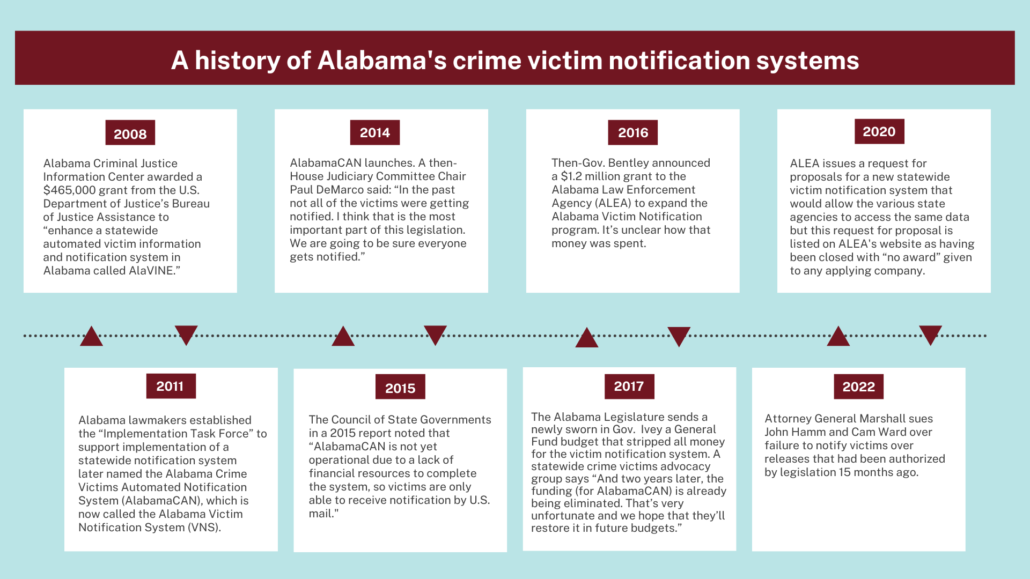
First, in 2008, the Alabama Criminal Justice Information Center was awarded a $465,000 grant from the U.S. Department of Justice’s  Bureau of Justice Assistance to “enhance a statewide automated victim information and notification system in Alabama called AlaVINE.”

AlaVine is still active but appears only to be used by Sheriffs offices in Alabama.

ADOC uses its own stand-alone system that requires users to register online here. An ADOC spokesperson explained to Appleseed that ADOC’s system doesn’t automatically enroll victims. Because of this, many victims don’t receive notifications.

“If people don’t register, we don’t have their information,” the spokesperson said.

To complicate matters, the Alabama Attorney General’s office and the Alabama Bureau of Pardons and Parole use a separate notification system called the Alabama Victims Notification System, formerly called AlabamaCAN, but historically data from that system hasn’t been shared with ADOC.

Alabama Bureau of Pardons and Paroles Director Cam Ward told Alabama Political Reporter last week that the notification problem at ADOC may be because of ADOC’s notification system.

“The problem is that they don’t have access to the same database that we have,” Ward told APR, adding that this separation was enforced by law. “We need a new notification system.”

The ADOC spokesperson told Appleseed that the department started working with the AG’s office to gather victim information for the necessary notification of those being released under the 2021 law. Asked whether ADOC’s work with the AG’s office to obtain that victim information began last week, the spokesperson declined to directly answer, and wrote that “ADOC, ABPP, and the AG’s office are working together to ensure these notifications.”

Yet another attempt to solidify a uniform database came in 2011. That’s when Alabama lawmakers through the Alabama Act 2011-681 and Code 15-22-36.2 established the “Implementation Task Force”  to support implementation of a statewide notification system that was later named the Alabama Crime Victims Automated Notification System, or AlabamaCAN, which is now called the Alabama Victim Notification System and is known as VNS.

The code also established the “Victim Notification System Fund in the State Treasury” to be paid out by the Alabama Law Enforcement Agency (ALEA) at the direction of the task force.

The task force was to meet first on March 1, 2012, and once members voted that a system complied with requirements in Alabama codes, the task force was to “automatically convert to the Victim Notification Oversight Council…”

Press coverage in October 2014 lauded an “innovative” crime victim notification system. Appleseed has learned of over a decade of underfunding and an unwillingness by an array of state leaders to fix the troubled victim notification systems.


AlabamaCAN launched in October 2014 and was supposed to allow victims to be notified of parole hearings “via email, text message or automated phone call.”

Press coverage lauded the “innovative” crime victim notification system and featured photos that included then-State Rep. Paul DeMarco and victims advocates as part of a task force implementing the new system. At the time, then-House Judiciary Committee Chair Paul DeMarco was quoted by WBRC as saying: “In the past not all of the victims were getting notified. I think that is the most important part of this legislation. We are going to be sure everyone gets notified.”

DeMarco recently weighed in on the early releases, but made no mention of this system.

From the very start AlabamaCAN was troubled, not in small part due to a lack of funding and coordination.

The Council of State Governments in a 2015 report noted that “Alabama’s automated victim notification system is not operational and not all victims are notified when people are released from prison to the community.”

“AlabamaCAN is not yet operational due to a lack of financial resources to complete the system, so victims are only able to receive notification by U.S. mail,” researchers wrote in the 2015 report. “Currently, not all victims are notified when an offender is released from prison. There are gaps in the DOC notification process, such as victims not always being notified if the offender is released from prison for medical treatment or is released to a CCP work release program.”

More attempts to fix the issues came along in 2016.

Then-Gov. Bentley announced a $1.2 million grant to ALEA to expand the Alabama Victim Notification program. It’s unclear how that money was spent: an ALEA spokeswoman received Appleseed’s questions regarding that grant, but did not provide responses as of the publishing of this piece.

Suddenly, a year later, after Gov. Kay Ivey was first sworn into office in 2017, the Alabama Legislature sent Ivey a General Fund budget that stripped all money for the victim notification system.

“This was something that was promised to victims two years ago when they were wanting to release more inmates from prison to help us take the notification system to a new level,” then-president of a chapter of a statewide crime victims advocacy group told WSFA 12. “And two years later, the funding is already being eliminated. That’s very unfortunate and we hope that they’ll restore it in future budgets.”

On Feb. 21, 2020, ALEA issued a request for proposal for a new statewide victim notification system that would allow the various state agencies to access the same data.

Proposals were to be submitted by April 6, 2020, and the system was to be designed to “integrate with the Alabama Board of Pardons and Paroles (“ABPP”), the Alabama Department of Corrections (“ADOC”), and other state agencies as may be needed” but this request for proposal is listed on ALEA”s website as having been closed with “no award” given to any applying company.

ALEA has not since issued a similar request for proposal for a new notification system, according to the agency’s website.

While crime victims were left wondering whether Alabama’s leaders are serious about following through on their promises to put victims first, people incarcerated in Alabama’s violent, deadly prisons were subject to yet another failure at the hands of the agency that incarcerates them.

The notification problems have left those expecting to be released under the 2021 law living in limbo, and even some those who have been released were given only a bus ticket and ankle monitor.

A source within an Alabama prison told Appleseed that violence and fights had increased in the wake of the botched release. And an incarcerated person at Easterling Correctional Facility told Alabama Political Reporter last week that “some of those eligible for the early release had begun giving away food and hygiene items, only to be told they would not be released on Tuesday.”

By Eddie Burkhalter, Appleseed Researcher


A recent report by the nonpartisan, nonprofit Council of State Governments (CSG) found that overall crime, including violent crime, across the U.S. and in Alabama, has been on the decline.

The report’s findings undercut the pervasive narrative of surging crime used to frighten communities and support mass incarceration. But as CSG’s data shows, as prison populations have declined, so has crime.

The CSG report, which used crime data reported to the Federal Bureau of Investigation, also supports Alabama appleseed’s own research that showed overall crime is decreasing.

Appleseed is committed to educating policymakers as to the importance of using research, data, and evidence-based practices to tackle Alabama’s toughest challenges. As we head into the 2023 legislative session, we will continue to lift up nonpartisan research, such as this, to help craft informed decisions about public safety.

The CSG report notes that the violent crime rate between 2019 and 2021 fell in 25 states and increased in just four. Additionally, law enforcement agencies in 21 states failed to report sufficient crime data to the FBI to draw a conclusion on crime rates in 2021.

In states that didn’t report enough data to make a determination on changes in crime through 2021, researchers for the report looked at data through 2020.

In Alabama, which is among the 21 states with insufficient 2021 data, the overall violent crime rate between 2019 and 2020 fell by 12 percent, according to the report. Aggravated assaults dropped by 6 percent and robberies by 33 percent. Rapes fell by 32 percent while homicides increased by 12 percent. Gun violence remains concerning in several Alabama cities, but there is no evidence that fear of long prison sentences or harsh punishment is stemming the problem. Alabama has some of the nation’s harshest sentences, including the death penalty, yet gun violence persists.

The decrease in overall crime is mirrored in the decrease of incarcerated Alabamians, and a drop in the number of people serving prison sentences for violent crimes, according to the report.

In Alabama, “There were 15,189 people in prison for violent offenses at the end of 2020, comprising 60 percent of the total prison population,” the report reads. “Since 2010, the number of people in prison for violent offenses decreased by 10 percent. During that same period, the number of people in prison for nonviolent offenses decreased by 32 percent.”

Just 52 percent of law enforcement agencies reported their full data to the FBI’s National Incident-Based Reporting System for 2021, which the bureau had used alongside the older Uniform Crime Reporting Program until changing fully over to the new system last year.

Among Alabama’s agencies that did not report 2021 data are some of the largest, including the Huntsville Police Department, which covers a jurisdiction of 202,884 people, and the Montgomery Police Department, which covers a jurisdiction of 197,755 residents.

Additional, Alabama-specific crime data can be found at crime.alabama.gov, a collaboration between the Alabama Law Enforcement Agency (ALEA) and the University of Alabama’s Culverhouse College of Business, Institute of Data and Analytics. The website documents the steady decline in Alabama crime from 2005 to 2019 (the most recent year a full data set is available.)

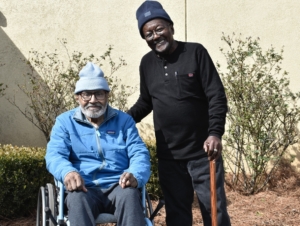
A bungled robbery in 1983 sent Lee Davis to prison on a life without parole sentence. Appleseed’s legal work brought him home.

By Carla Crowder, Executive Director


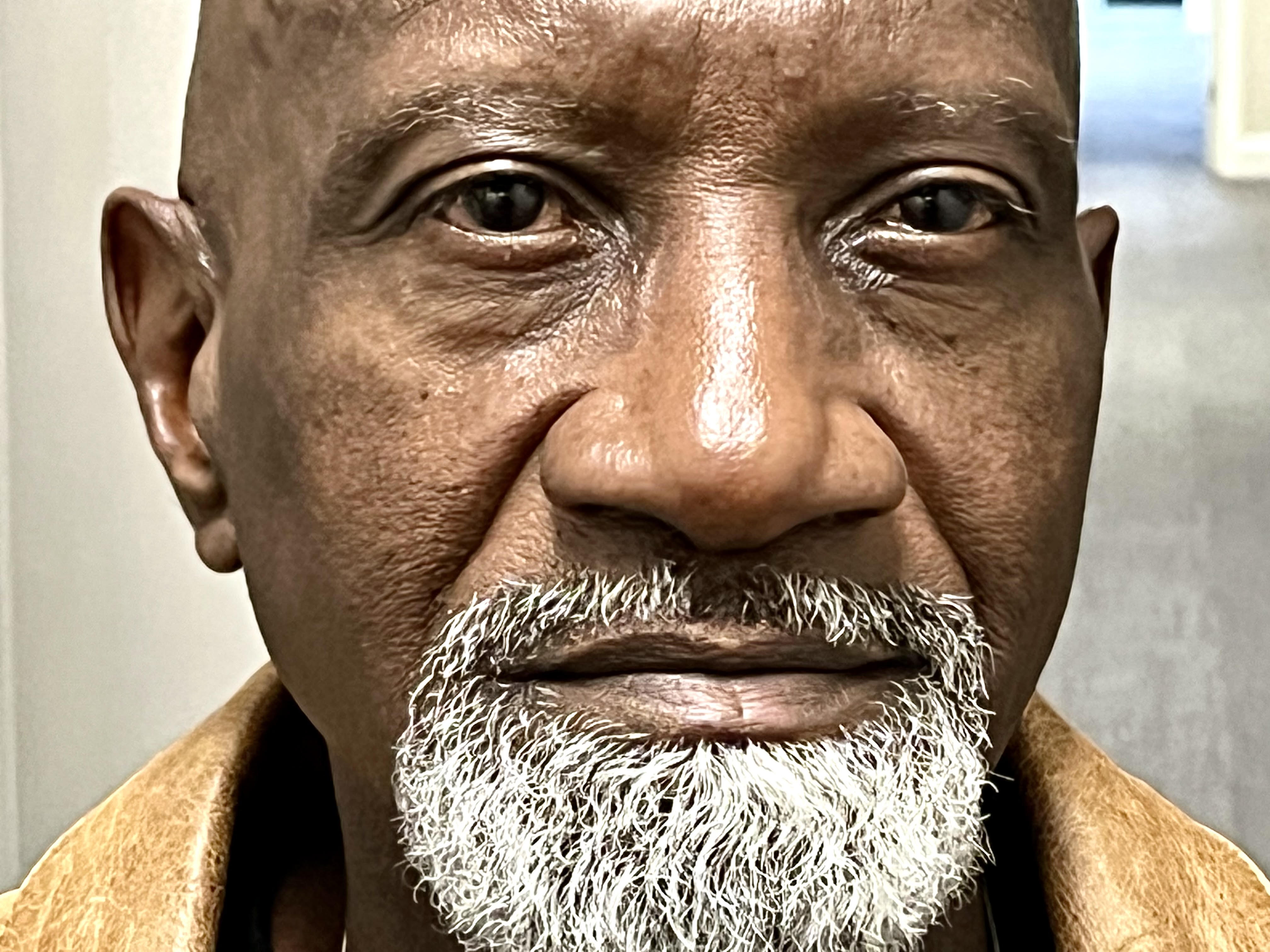
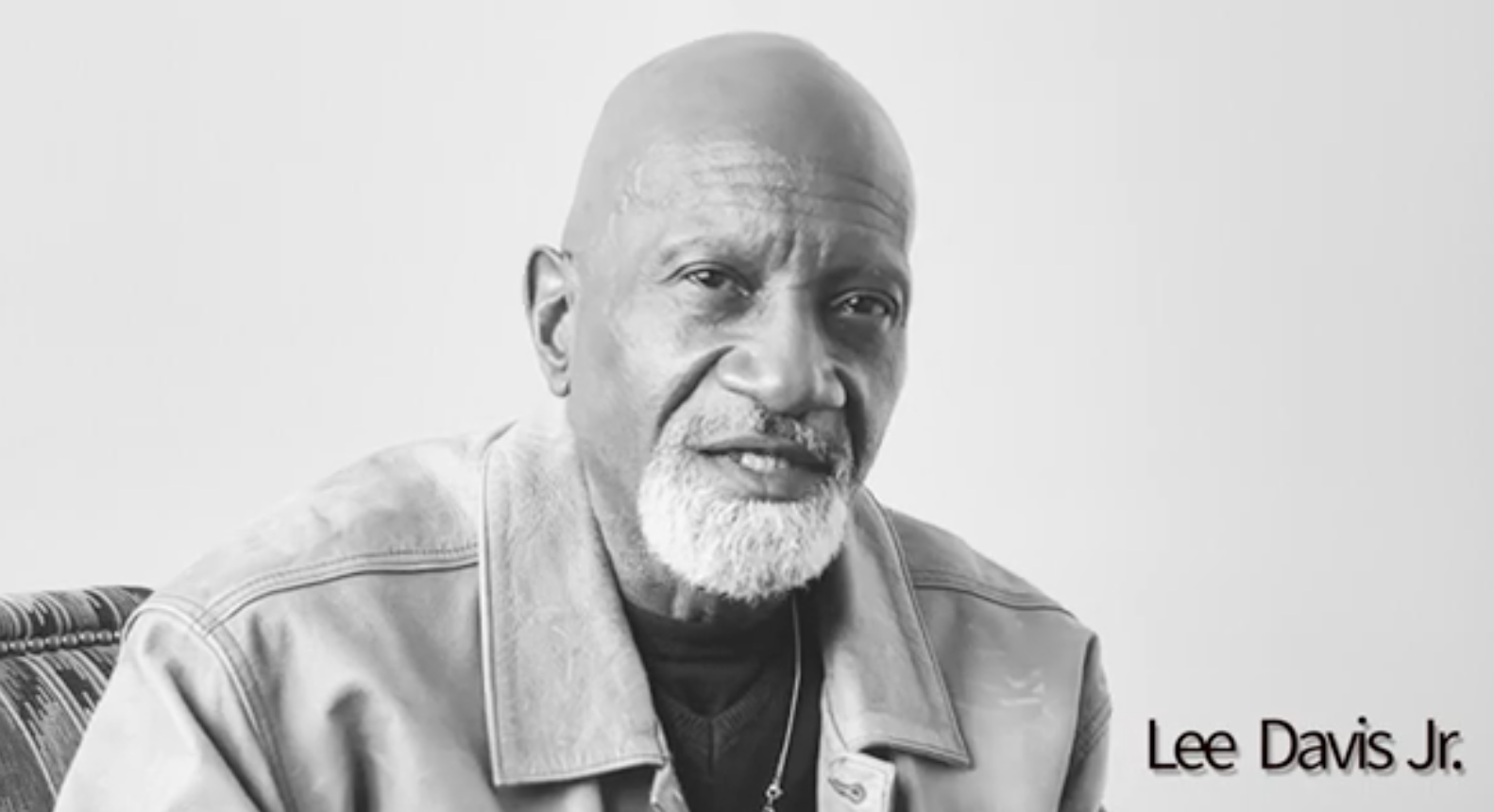
Lee Davis Jr. Photo credit Bernard Troncale.

Lee Davis spent 39 years incarcerated for a robbery conviction in which no money was taken and no one was injured. At age 70, he is finally a free man.

“I want to thank God for seeing me out of that prison at the age that I am,” Mr. Davis said.

Appleseed took on Mr. Davis’s case after learning that he had nearly four served decades in Alabama prisons without a single disciplinary infraction. We learned he spent his time working for no pay in the Donaldson prison laundry, exercising, and doing his best to set an example for younger people in prison. “I humbled myself and I didn’t accept having a life without parole sentence and never seeing the streets again,” he told us. “A lot of guys would say, ‘You got nothing to lose, you got life without parole.’ I say, ‘But I can still stay focussed on getting out of here. Ain’t nothing impossible with God.”

After researching his case, Appleseed lawyers also learned that the crime that resulted in his original life without parole sentence was a bungled robbery.  Mr. Davis entered a store in North Birmingham where two men were working, reached inside his jacket, and as he began to remove a weapon, a clerk jumped over the counter. A struggle ensued and the weapon slid under the counter. The two employees subdued Mr. Davis until police arrived. No one was injured, and no money was taken. These details are documented in the pages of the transcript from his 1984 trial in Jefferson County.

Lee Davis Jr. talks about being focus and staying positive while serving 37 years in prison under Alabama’s Habitual Felony Offender Act. Video by Bernard Troncale.

At 32-years old, Mr. Davis was sentenced to a mandatory term of life imprisonment without parole under Alabama’s Habitual Felony Offender Act (HFOA).

He knew he needed help with the heroin addiction that led to his convictions. He’d been introduced to heroin by a friend who returned from the Vietnam War with an addiction. Prior to his heroin use, Mr. Davis held down a good job at Hayes Aircraft. He had a high school diploma, a wife, and young children.

He struggled with addiction for over a decade, and almost lost everything when he was sentenced to die in prison. But he did not lose hope.

In November, Appleseed filed a petition for resentencing in Jefferson County. District Attorney Danny Carr filed a response supporting release and Circuit Judge Michael Streety granted the unopposed petition in December. 

Mr. Davis leaving Donaldson prison with Appleseed Re-entry Case Manager Kathleen Henderson and Alex LaGanke

In addition to full-time work at Donaldson, Mr. Davis took advantage of rehabilitative opportunities. He earned certificates from numerous months-long programs focused on sobriety, leadership, fatherhood, and Biblical studies, completing over 150 classes and programs throughout his incarceration.

Most of his time in prison was spent performing unpaid labor for the prison system, as a barber, an infirmary worker, and in the laundry, often from 6 am until late afternoon. Mr. Davis never complained about the work; it was a way to stay out of the chaos of the dorms and stay productive.

Throughout his incarceration, he maintained close ties with family, particularly his mother and two sisters, all of whom have passed away.  These days, he is never seen without a locket that holds a photo of his late mother. She was his rock. They never lost contact, despite the bricks, bars, and razor wire separating them.

Mr. Davis has a brother still living and extended family, including nephews, who have embraced him, assisted in his reentry, and shared football-watching weekends with him. “I’ve got to learn all over again. I’ve got to renew relationships. I’ve got to start from scratch.”

By Frederick Spight, Policy Director


“Let us fight passionately and unrelenting for the goals of justice and peace, but let’s be sure that our hands are clean in this struggle. Let us never fight with falsehood and violence and hate and malice, but always fight with love…” 

Dr. Martin Luther King, Jr. spoke these words on April 7, 1957 at Dexter Avenue Baptist Church in Montgomery, AL. His sermon, entitled “Birth of A New Nation” was the first of many sermons in which Dr. King reflects and draws inspiration from his time in Ghana. The country had, just a month before, declared its independence from the British Empire and Dr. King was able to witness its beginning stages firsthand. Under the leadership of Kwame Nkrumah, who had spent roughly ten years in the United States, Ghana became a leader in the African and, arguably, world decolonization movement of the mid-to-late 20th century.

On Dr. King’s return to the segregated South he mused on the images he saw: Nkrumah’s first speech as president of the new nation while wearing the hat he wore in prison as a result of his activism, children running the streets yelling freedom and Nkrumah dancing with the Dutchess of Kent at the state ball, as equals. It was here that Dr. King said “The aftermath of nonviolence is the creation of the beloved community”. 

In Kingian philosophy the Beloved Community is one in which “… poverty, hunger and homelessness will not be tolerated because international standards of human decency will not allow it. Racism and all forms of discrimination, bigotry and prejudice will be replaced by an all-inclusive spirit of sisterhood and brotherhood.

On this Martin Luther King Jr, Day I reflect on the Beloved Community, as I tend to do from time to time. As a policy director, my goal is to craft legislation and advance the overall goal of achieving justice and equity for all Alabamians. As an attorney, my job is to ethically fight for the best of my clients,   which historically, have been the poor and disenfranchised. As a husband, I believe it is my role to be supportive, kind and understanding through all the challenges that life throws. As a father, my goal is to lead by example so that my children can always fall back on the foundation of right and wrong that I set. Finally, as a Black man, I believe it is my responsibility to build a legacy for future generations to build upon.

In all of these roles, in isolation but also as they overlap, I aim to bring about the Beloved Community. But I am one person and to bring about the Beloved Community it will take the broader masses to believe and strive for the same end.

In our system of government, we elect leaders who then come together as one body to take on the task of passing laws, rules, budgets and the otherwise mundane (but extremely important work) of administering the touch stones of government in our daily lives. This is true in both our State and the federal government. This past week was the organizational session in which members, new and seasoned, of the Alabama State Legislature came together for the first time before the beginning of the regular session. People received committee assignments, were assigned offices, while also passing rules in how our legislative body would operate. There were talks of fairness and collegiality while making direct and indirect references to the state of our national discourse.

Recently, it appears that instead of being a bottom up system of governance, it has become top down. Those in power, the elected and those non-elected who have influence over our lawmakers, have begun to tell the citizenry what to care about, or more accurately, what to be enraged by. And this is evident as many in this state suffer from the injustice that is poverty and all the inequities that flow from it, while focusing on niche issues of culture or heady academic subjects.

Therefore, it would be naive to say that the polarization that affects this nation at our highest levels of government is not also present in this  state. We see the effect all around us and inevitably we will see it this session. In these moments I hope all members of the Legislature, but more importantly all Alabamians, will to remember the words of Dr. King as he said “[w]e must come to the point of seeing that our ultimate aim is to live with all men as brothers and sisters under God, and not be their enemies…”

In reflecting on the legacy of Dr. King and the Beloved Community, we should also not miss the opportunity to reflect on our own legacies. What will people say after we are gone? Will we make the pages of history, or will we be forgotten in a generation? I can only imagine how Dr. King, a man who was despised and hated by many, would have reflected before he was martyred for justice. Maybe more importantly, how would he respond to the state of Alabama, this Nation and the World and those who use his name for their own goals. 

In sum, I ask all of you who read this to reflect as I have: what role do you play in the Beloved Community and how will you bring it to be?

“Forward Ever, Backward Never”₃


¹ https://kinginstitute.stanford.edu/king-papers/documents/birth-new-nation-sermon-delivered-dexter-avenue-baptist-church
² https://thekingcenter.org/about-tkc/the-king-philosophy/
₃ Kwame Nkrumah’s Conventional People’s Party slogan

Alabama prison deaths reach record levels in 2022. The Department of Corrections’ response? Less reporting on deaths.

By Eddie Burkhalter, Appleseed Researcher


Eddie Richmond was 17 years old at the time of the robbery that led to his death sentence in the Alabama Department of Corrections. 

He was not sentenced to die; the United States does not permit the death penalty for children or for individuals convicted of robbery. However, here in Alabama, prison terms routinely turn into death sentences. And 2022 was the deadliest year yet as 266 people died in government custody within Alabama Department of Corrections prisons.

Many, like Mr. Richmond, were young men serving relatively short sentences for offenses involving no physical injury to any victim. At the time of Mr. Richmond’s offense, he was not old enough to legally buy cigarettes, to join the military, to drink a beer, or to vote. Yet he was prosecuted as an adult, sentenced to prisons that have been declared so dangerous they violate the U.S. Constitution, then died six months later in prison. He was 20.

This week, news that the Alabama Department of Corrections is removing statistics about prison deaths from its monthly reports comes at the same time the Department reports the highest annual number of in-custody deaths since records have been kept.

An Alabama Department of Corrections spokesperson said that 266 people died in state prisons through Dec. 28, 2022, which is the highest death count since at least 2002, according to the department’s statistical reports. That number was provided in response to Appleseed’s questioning, not as part of a general release of information.

 Those 266 deaths came to 1,330 deaths per 100,000 incarcerated people, based on the state’s prison population last year. That death rate is nearly 200 percent higher than a decade ago, a stark reminder at how deadly Alabama’s overpopulated, understaffed prisons are. 

No response from prison officials 

For years, state officials have watched prison deaths steadily rise, yet taken no action that has addressed the loss of life. The overall mortality rate in state and federal prisons in Alabama between 2008 and 2018 rose by 98.6 percent. Only two states had higher mortality rates than Alabama in 2018, according to a Bureau of Justice Statistics 2021 report

In 2022, there were at least 95 preventable Alabama prison deaths: homicides, suicides, and confirmed or suspected drug-related deaths, according to investigative reporter Beth Shelburne. This is the highest number of preventable deaths since she began tracking them in 2018.

Of those 95 preventable deaths, 18 were caused by violence, five by suicide and two by either suicide or suspected overdose. Another 69 deaths were either confirmed or suspected as being drug-related, according to Shelburne’s tracking. She classifies drug-related deaths as suspected and confirmed overdoses, and deaths from disease or with prolonged or acute drug use as a major contributing factor. 

It is only through the efforts of unrelenting journalists, alongside family members of incarcerated people, that the public learns about the deaths of individuals in government custody. Another source is the Twitter accounts of incarcerated activists. 

Despite the surge in deaths in Alabama prisons, it’s unclear to what extent ADOC is working to address the crisis. Appleseed asked ADOC, among several questions, whether the department was looking into the reasons behind the rapid increase in deaths, or planned to do so. A department spokesperson declined to answer. 

ADOC also has a history of not accurately reporting deaths, and the department doesn’t routinely release the names of those who die, or report the number of deaths in a timely fashion, requiring journalists to request confirmation on those deaths after receiving tips. ADOC’s shoddy reporting practices have drawn the attention of the federal government. 

“There are numerous instances where ADOC incident reports classified deaths as due to ‘natural’ causes when, in actuality, the deaths were likely caused by prisoner -on- prisoner violence,” according to the U.S. Department of Justice’s findings in a 2019 report on Alabama prisons. In 2020, DOJ sued the State over its dangerous and understaffed prisons; the State has refused to settle and the case is headed for trial next year.

A change in reporting methods announced recently also means the public won’t get real-time information from ADOC on how many are dying in state prisons. 

In its October monthly statistical report, published in late December, the department noted that the number of deaths in state prisons would no longer be published in those monthly reports, and instead would only be reported in ADOC’s quarterly reports. Yet, the most recently published quarterly report contains data that is six months old.

“How in the world do they get a hold of this stuff?”

Eddie Richmond leaves behind a devoted family struggling to get answers.

Eddie Richmond was found unresponsive on December 15th in his bed and died there at Fountain Correctional Facility

He survived what may have been an overdose at Fountain Correctional Facility on Nov. 25, 2022. About three weeks later, on December 15, he was found unresponsive in his bed and died there, ADOC confirmed for Appleseed.

“They were pretty much saying he was gone then, but he wasn’t. They were able to bring him back,” his mother, Wisteria Richmond, told Appleseed in December, speaking of that first incident in November that required an airlift to a local hospital. 

ADOC did not call Richmond’s mother immediately to tell her her son was dead. Instead, as has become routine due to ADOC’s stunning indifference to the importance of informing people in a timely fashion that someone they love has died, the family first learned about his death from other incarcerated men. While he hadn’t expressed suicidal thoughts to his mother on the daily calls the two had from prison, she was worried that he might be considering taking his own life.

She expressed her concerns about her son’s well being with a prison captain but said “she really didn’t have any words for me.” The family learned from those other incarcerated men that her son may have taken fentanyl in the first possible overdose. “We had a million questions. How in the world do they get a hold of this stuff?,” she asked. 

Richmond grew up with his mother in the small, rural community of Salem in Lee County. As a child, he played football, and was a talented running back and quarterback, his mother said, playing until about the eighth grade. He loved his family and his friends, and was passionate about rap music, said Ms. Richmond, who now lives in Phenix City. 

Richmond was serving a three-year sentence after pleading guilty to a robbery that occurred when he was 17, according to court records. A Lee County Circuit judge denied Richmond’s request to be tried as a youthful offender, those records show.

After his release from jail on the robbery charge, and before that charge was adjudicated in court, Richmond was charged with breaking into two vehicles and two additional thefts, offenses that occurred on the same day in April 2021, according to court records. 

Andrew Stanley, the attorney who represented Mr. Richmond on the robbery charge, told Appleseed that his client wasn’t alone that day in April, when the group of young people Richmond was with broke into those cars. “When I talked to Eddie in person, whether he was in jail or out of jail, he was respectful,” Stanley said, but added that was clearly hanging out with the wrong people. 

Stanley explained that even without incurring the new offenses it would have been hard to get the judge to approve youthful offender status to a young person who was facing a first-degree robbery charge in which a firearm was used. 

Eddie Richmond with his family. Photo courtesy of Wisteria Richmond.

Once in prison, Richmond called his mother often and it was clear to her that he was struggling. “He was worried about coming home and being judged. He said, ‘Mom y’all don’t even know what we go through down here’,” she said. 

In phone conversations from prison before he died, Richmond told his mother that once he got out he wanted to travel with his parents. He wanted to go to New Orleans with them, get a job and save up to move away and start over somewhere new.  “He had things he wanted to do. He had dreams.” 

In many of those phone calls from prison, her son expressed concern that once he got out he wouldn’t be able to shake the stigma of his past. “I tried to instill in him that people make mistakes. You learn from them,” his mother said. His death at a young age in an Alabama prison put an end to that chance. 

Wisteria Richmond buried her son on Dec. 29 at Evergreen Cemetery in Opelika. When his birthday comes around on May 20 the family plans to gather together and celebrate his life. “Even though he won’t be here for it,” she said. 

A Glimmer of Hope

News of the decrease in reporting on deaths at ADOC has raised concerns among elected officials, including lawmakers from both sides of the aisle and judges. 

Considering how bad things are going in ADOC, now is certainly not the time to be less transparent,” Rep. Chris England, D-Tuscaloosa, said in a Tweet this week. “If ADOC insists on doing the bare minimum here, then maybe we need to change the law to force them to do better. Fortunately, Session starts in March.” 

Rep. Matt Simpson, a Republican and former prosecutor from Baldwin County, who has called out ADOC mismanagement in the past, responded: “He’s not wrong.”

To put Alabama’s staggering number of prison deaths into perspective, officials with the Vermont Office of the Defender General and the Vermont Department of Corrections in December formed a task force to investigate prison deaths there after an eighth incarcerated person died in Vermont prisons for the entire calendar year. 

Vermont’s Defender General Matthew Valerio told a local newspaper that the group will also look into changing release dates for those who have served good time “are not a threat to themselves or society, and are looking for better release dates based on age, health issues and COVID numbers.” 

A death sentence for a probation revocation

Another recent death involved an Etowah County man originally convicted of drug charges – distribution of salvia – and sentenced to probation, only to have his probation revoked.

Marc Snow died on November 25, 2022 at Ventress Correctional Facility. He was 25 years old. Photo courtesy of Snow’s family.

Marc Snow died in the health care unit at Ventress Correctional Facility just a few short months later, on Nov. 29. He was 25.

The warden told the family that Snow had just smoked a cigarette and was seen visibly sick in his bed. Snow had a history of using synthetic marijuana, a mix of spices and herbs sprayed with a synthetic compound, and salvia, a plant with psychoactive properties, court records show. The exact cause of Snow’s death awaits a full autopsy and toxicology results.

Snow graduated from a rehabilitation program in Birmingham in February 2021, court records show. Soon after, he was reunited with his young son because he was doing so well, said Tera Cothran, who has had legal custody of Snow’s son since the boy was 18 months old. Cothran’s niece, the boy’s mother, has also struggled with drug addiction, Cothran told Appleseed. “We told my nephew at the beginning of the summer that Marc was his biological dad, and he got an opportunity to spend some time with Marc over the summer,” Cothran said. 

Later this summer, Snow’s probation officer received a tip that Snow was selling drugs, and evidence surfaced that he was associating with a woman who had admitted to the officer that she was selling drugs, a woman whom the officer told Snow to stay away from, according to court records. The officer filed for a probation revocation. An Etowah County Circuit judge in September ordered Snow to serve three years in prison, court records show.  “That bought him three years at Ventress prison, and a death sentence,” Cothran said. 

Snow was not known to use any drugs other than synthetic marijuana and salvia, and court records don’t show he was ever charged with, or tested positive for, any other drugs. “This five-year-old boy’s father was essentially stolen from him, and somebody should answer for that,” Cothran said. “I took this kid to a funeral and he’s barely tall enough to see in the casket.” 

Already, a violent start to 2023

A slew of stabbings at St. Clair Correctional Facility over two days at the start of 2023 left numerous men with injuries, a violent start to the new year in Alabama’s deadly prisons. 

Appleseed received tips that several men had been stabbed, and the Alabama Department of Corrections confirmed that Bienemy Luther on Jan. 2 was attacked by another incarcerated man at St. Clair prison, and was taken to a local hospital for treatment. 

The following day at St. Clair, three men – Martin Adams, Montrell Towns and Ladarius Lucas  – were involved in a fight with weapons, ADOC confirmed. Adams was treated for his injuries at the prison, and Lucas was taken to a local hospital for treatment. 

That same day Shedrick Williams III was assaulted with a weapon by more than one other incarcerated man, ADOC confirmed. He was treated at the prison for his injuries. 

Of the men injured this week, three are serving 20-year sentences and one is serving a 25-year sentence. All are to be released from prison and return to their communities in the future, if they survive Alabama’s deadly prisons. 

There were 12 preventable deaths at St. Clair prison in 2022, according to investigative journalist Beth Shelburne’s tracking, which defines such deaths as drug-related, deaths caused by assaults and suicides. 

Four days into the new year, the first homicide of 2023 at ADOC occurred. “Ariene Kimbrough, 35, was killed in his cell at Limestone prison. ADOC confirmed the murder but provided no details. Sources say prison staff placed Kimbrough & another man in a segregation cell designed for one person,” Shelburne shared on Twitter.