By Leah Nelson, Research Director


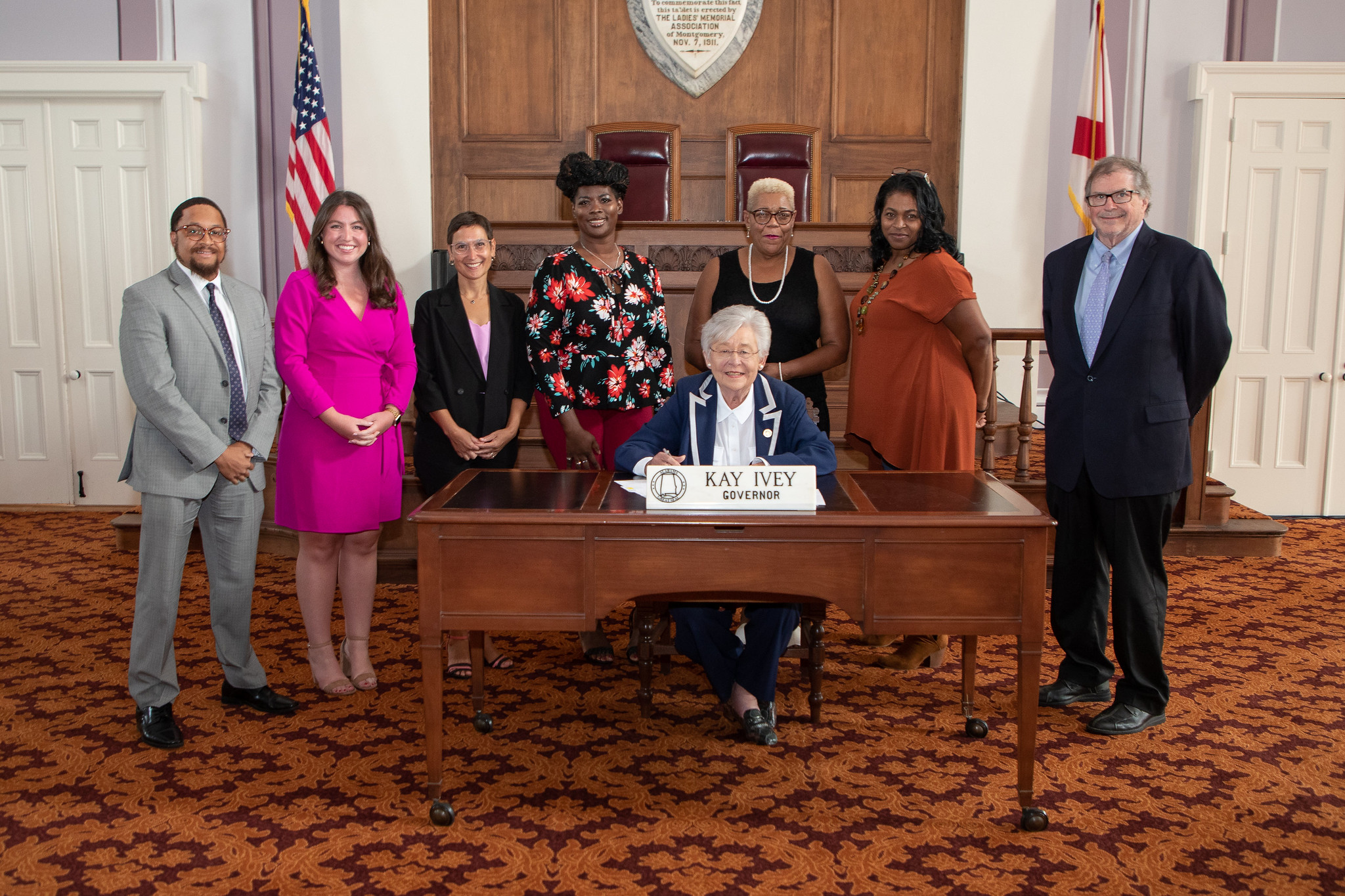
Governor Kay Ivey signs SB154 into law with (from l to r) Frederick Spight, Elaine Burdeshaw, Leah Nelson, Teon Smith, Callie Greer, Faye Mitchell, and Rep. Tim Wadsworth. Photo by Billy Pope.

When Teon Smith and I got to talking at a June 2018 event for people who needed legal assistance, I think it’s fair to say that neither of us expected we were making an acquaintance that would change Alabama law for the better. Yet almost exactly five years later, here we are, watching Gov. Kay Ivey sign a bill we helped advocate for that will do just that. 

I spent a lot of 2018 camped out at events like the one where I met Teon, asking people to take surveys for some research on how court debt haunts people for years, impeding their ability to work, earn, parent, and live freely. 

Teon made an impression right away: striking, thoughtful, with four gorgeous children in tow. After she took the survey, she shared about how excited she had been to earn her associate degree recently and how devastated she was when she learned that her driver’s license was suspended due to unpaid tickets. Without her license, she struggled to find a steady job and was working irregular hours at a low-paying job at a mall store. She was scared every time she drove, and her pay was so low that “we run out of food, for real,” she said.

Teon and I kept in touch. In November 2018, she told me she had a court date where she hoped the judge would agree to accept an installment on her payment plan and give her a clearance letter allowing her license to be reinstated. It was a pay docket day, and the courtroom was packed as church on Easter – except for the judge’s bench up front, which was empty when I arrived. I asked a man in the back row if I was in the right courtroom. “Ain’t no judge in this m*****f***ing courtroom,” came the answer.

The judge never showed up. Instead, two court staffers sat in his place making decisions that would affect the lives of hundreds of litigants. Teon offered evidence of her dire financial circumstances, but they rejected it, telling her that she had to pay her roughly $1,400 balance in full or she could not have her license back. They told her she had to pay at least some money that day or she would be jailed. She paid what she could and went back to the life that was waiting for her.

I met Faye Mitchell around the same time. She was recently out of prison and thrilled to have a job as a housekeeper at a Montgomery church. It was summer, and she was walking to work, she told me, because her license had been suspended due to a court hearing she had missed while she was incarcerated. The clerk in Brookside, Alabama, which had issued the suspension, wouldn’t tell her what she needed to do to get it back. The clerk said Faye would have to come to the courthouse to find out – and that on arrival, she would be arrested and held until a judge found time to see her. 

“I wanted to be able to go ahead and just – what is it that I need to pay, what is it that I need to do?” Faye told me that summer. “What I’m facing now is not really being able to go handle it myself for fear of being locked back up.”

“I just got this new job. I cannot afford to not be at work,” she said.

Through Appleseed, Teon and Faye found lawyers who helped get their licenses back, but it was clear to our team that this problem was not best tackled one person at a time. As things stood, a single missed payment or court date could result in a suspended license, triggering an avalanche of consequences like job loss and food insecurity. It was going to take a change in law to meaningfully reduce the harm caused by debt-based drivers license suspensions.

Over the next several years, our team worked with lawmakers and experts to devise a bill that would balance compassion with accountability, making space for people like Teon and Faye to experience financial or other setbacks without immediately losing their licenses while maintaining consequences for people who flout the law by ignoring their tickets entirely. The bill that passed in 2023 allows people to miss up to two payments on a payment plan (like Teon did) or one compliance hearing (like Faye did) before their license can be suspended. It also requires judges to clear people for license reinstatement when they show up in traffic court.

Our campaign drew on support and expertise from economists, social workers, educators, faith leaders, and law enforcement officials who believed change in law would be an investment in safety and prosperity. In May, the bill passed unanimously in Alabama’s Senate and received overwhelming support in the House.

Its passage doesn’t solve every problem Teon and Faye might face. Life is complicated, especially for people who lack savings and juggle work and childcare obligations. But it does remove a major obstacle that held both women back for far too long. And it reinforces the idea that thoughtful, evidence-based advocacy can achieve results everyone can be proud of.

And today, in a state where policymaking too often benefits the wealthy and reinforces the rights of the already-comfortable, Teon and Faye stood behind our governor as she signed a piece of legislation aimed specifically at making their lives freer. 

That, I believe, is a win for us all. 

By Leah Nelson, Research Director from the Appleseed report Afterward


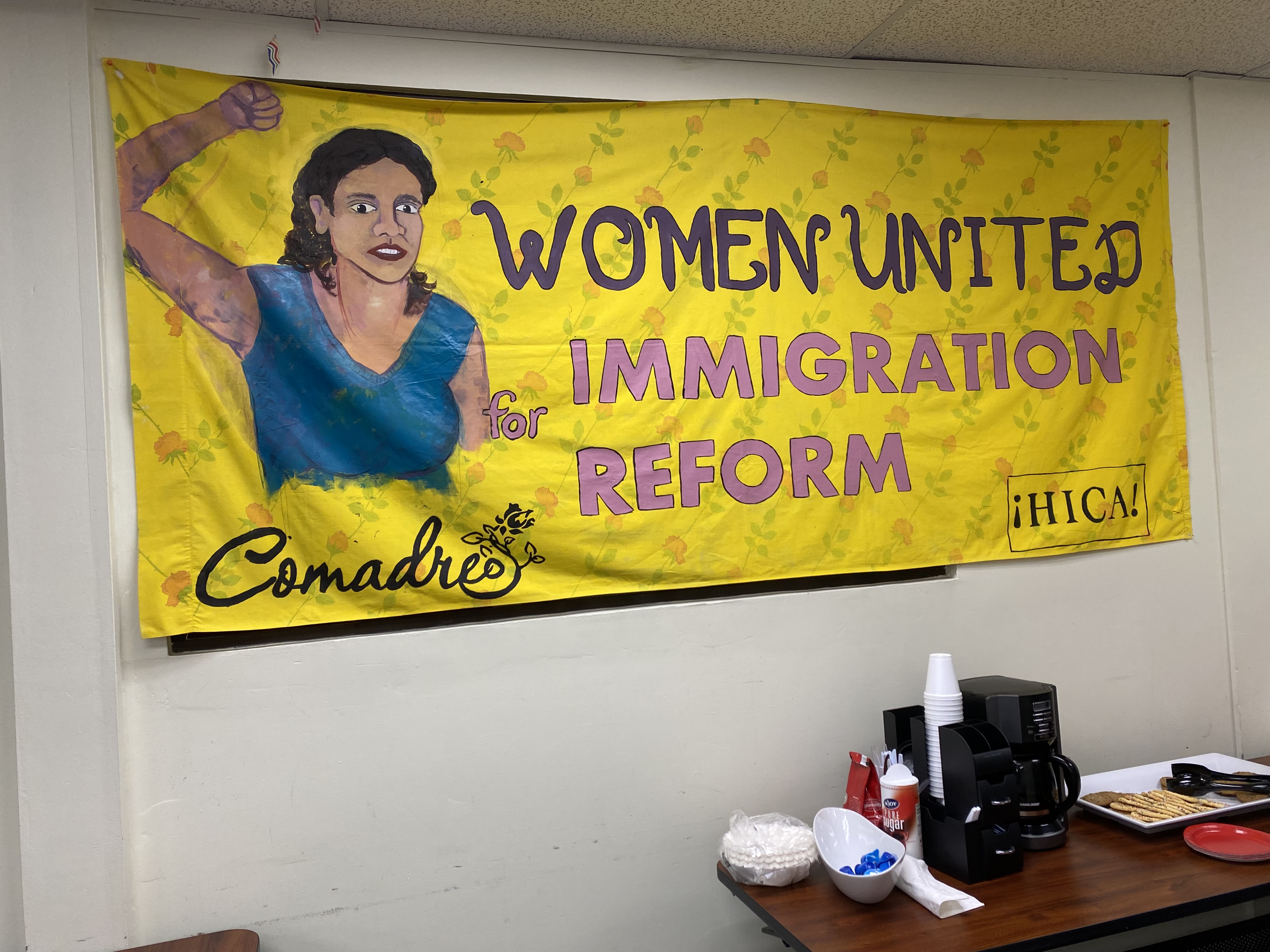
On a rainy Thursday in early March, Alabama Appleseed sat down in the offices of the Hispanic Interest Coalition of Alabama (¡HICA!) with 11 women who were victims of violent crime. Over tacos, we asked them to take our survey and invited them to talk with us about their experiences with violence and its aftermath. 

All the women spoke Spanish more fluently than they spoke English, so we provided a Spanish-language version of the survey (translated by ¡HICA!) and facilitated the conversation in Spanish. A bilingual interpreter took contemporaneous notes translating participants’ comments into English, and the author of this report debriefed afterwards with the Spanish-speaking facilitator to ensure that as little was lost in translation as possible.

To fill in knowledge gaps and develop an understanding of trends, Appleseed also spoke with several members of ¡HICA!’s Strong Families Program, who provide support to Hispanic Alabama residents who have experienced violent victimization. 

The Spanish-language version of our survey was almost identical in content to the English-language version, but after consulting with the experts at ¡HICA!, we determined it did not make sense to merge the results of the two surveys or rely on the Spanish-language survey to meaningfully document what participants have lived through. Although the words were translated accurately, the Spanish speakers who took our survey have significant experiences that the survey was not designed to capture. For instance, for undocumented immigrants, any contact with the criminal legal system can trigger deportation, but the section of our survey designed to document the experiences of people who are justice-involved does not get at that reality. Nor was our survey designed to account for the fact that many of ¡HICA!’s clients undertook dangerous journeys to flee violence and broken justice systems in the countries where they spent their youths. They live with trauma related to those experiences.

¡HICA!’s Strong Families clients often have that trauma compounded in the United States – first through violent victimization, then by the systems putatively in place to respond to it. Victim’s advocates at ¡HICA! said their constituents are vulnerable to predation and violence because of language barriers, immigration status, and bigotry. Many are afraid to call the authorities out of fear that contact with the law could trigger deportation proceedings, or because they or people they know have been treated callously in the past by law enforcement officials who make no secret of the fact that they consider Hispanic immigrants undeserving of equal protection.

¡HICA! stressed that law enforcement practices vary around the state and observed that some jurisdictions are doing better than others to meet the needs of the immigrant and Spanish-speaking communities they serve. Prosecutors in the Birmingham and Bessemer divisions of Jefferson County, and police and Department of Human Resources staff in Shelby County, have done substantial work to become more inclusive and culturally competent, ¡HICA! said.

But challenges remain, especially in rural areas. Many law enforcement agencies have no protocol for securing interpreters. Officers frequently use young children as interpreters. In one instance, the English-speaking husband of a Spanish-speaking woman who had been attacked and raped was made to describe her injuries to police in detail, which worsened the trauma and horror of the rape.

Some officers refuse to take reports because of language barriers. In an incident that disappointed ¡HICA!, a mother of six called police after her partner strangled her twice in a single day. Two deputies showed up, but they refused to take a police report because the woman, for whom English is a second language, used the word “argument” to describe the incident instead of the word “fight.” The woman fled her home with her children and still has not returned because she fears for their lives. 

¡HICA! made sure the woman’s injuries were documented, and eventually police opened a case. But their refusal to take a report on the spot because of language issues undermined their credibility with both the victim and community members who heard about what happened.  “In our community, when someone has a bad experience, everyone will know about it,” said Angelica Melendez, who leads ¡HICA!’s victim advocacy work.

Contact with the system can even backfire, Melendez said. ¡HICA! once told a woman whose intimate partner violated a Protection from Abuse order (PFA) to go to the police station to file a report. While she was there, officers asked her for identification. She didn’t have any. When she drove out of the police station, an officer followed her. “Pulled her over. Took her car. Left her in the middle of the road with her child,” said Melendez.

¡HICA! paid to get the car out of impoundment, but the whole incident undermined their work with that specific victim – and beyond. “How in the world, if somebody goes to file a police report because a PFA was violated and she was in danger, how are you more worried about the fact that the person didn’t show you an ID than the safety of the person?” Melendez said. “When things like that happen, people don’t even trust us.”

Below, we share stories from victims who spoke up during our community conversation. This documentation would not have been possible without the work of Facilitator Catherine Alexander-Wright, Interpreter/Notetaker Giovanna Hernandez-Martinez, and ¡HICA!  Strong Families advocates including Angelica Melendez, Adriana Alderete, and Ana Ockert.

“They are hunting us.”

In 2022, a spate of robberies targeting families and workers at construction sites rocked Jefferson County’s Hispanic community. More than 40 Hispanic residents of Jefferson County were robbed in October alone, including six people in five separate incidents on a single day. 

¡HICA! explained that many of the people they serve do not have bank accounts and keep their money in cash because of their immigration status and lack of ID. A woman who joined our community conversation expanded on that: “We feel more vulnerable as Hispanics, because they know that we’re scared to call the police. They are hunting us because they know that a lot of Hispanics working in construction, they cash their checks at the gas station, and we carry a lot of cash. We are easy for them to target.” 

The Birmingham Police Department includes some Spanish-speaking officers who encouraged victims to report these incidents, and police have charged several suspects. But a woman who called police after her husband and father-in-law were held at gunpoint and lost their IDs, wallets, phones, cash, and equipment on one of these incidents told our community conversation that the officers who arrived on the scene were shockingly insensitive to the trauma her family had just experience. 

They “just kind of laughed and said ‘Oh, we got four more [victims],’” she said. “Like it was funny.”

“Only because I cannot speak English, I cannot explain things.”

One of the women in the conversation recounted a chilling experience in Chilton County, a largely rural central Alabama county where 8.1% of residents identify as Hispanic or Latino – a rate higher than the overall Alabama rate of 4.8%. 

The woman, C, lives in Chilton County with her partner and her children. C’s partner is physically abusive, and one day in early 2023 C’s daughter called 911 because the partner was strangling C. 

C’s partner was still restraining C when police showed up, but he also had marks on him from where C had fought back to save her own life.

The partner speaks English; C does not. He leveraged the language barrier to his advantage, making a police report against C before she had a chance to get an interpreter who could help her. Even though a recording from the 911 call makes it clear that C’s partner was strangling her, the fact that he was able to make a police report first has put her in a disadvantaged and dangerous position. Chilton County law enforcement put C in jail and filed charges against her. She bonded out, but her status as a defendant became an obstacle to securing safety.

Police refused ¡HICA!’s efforts to help C file a Protection From Abuse (PFA) order, saying that because she was the defendant in the case and had not filed a police report (which was impossible due to the lack of an interpreter), she was ineligible for their help. After she was arrested, the children’s father took custody of them. She has not been able to get them back. She is afraid to return home, and police told her they would not help. 

C wept as she shared her frustration, fear, and grief. “To the sheriff, I am the aggressor. Only because I cannot speak English, I cannot explain things,” she said. “To this day, I cannot get my kids back, because I am labeled the ‘aggressor.’”

Aftermath of a murder

One of the women who joined our group had recently lost her son to homicide. Although her home address was on her son’s driver’s license (which police had in their custody), police didn’t come to notify her that he was dead. Instead, she learned about his murder from social media and confirmed it with a funeral home.

Her son was a U.S. citizen and left behind a child. The child’s grandmother is his next of kin, but because she is undocumented, she is not eligible for victim’s compensation or other funding she could use to help her grandchild. But because the woman’s son was not married to the child’s mother, there is no legal connection between them, so the mother of the child is not entitled to compensation either.

The murdered man’s grieving mother is working on getting documents that will allow her to become a citizen. All she wants, she said, is to get compensation so she can provide for the grandchild whose dead father no longer can. 

By Leah Nelson, Research Director from the Appleseed report Afterward


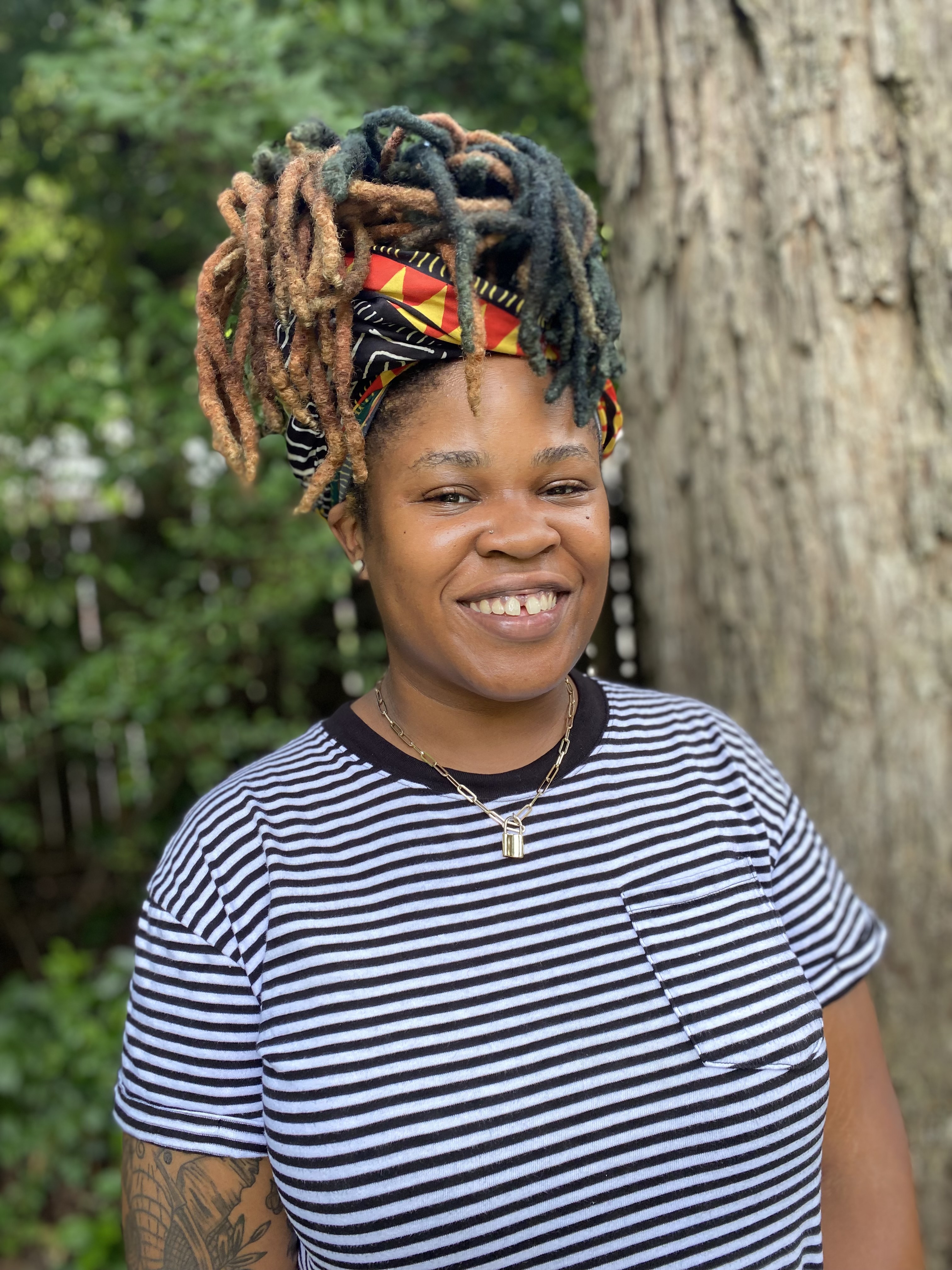
Summer Sturdivant, an activist and pastry chef from Selma, Ala., watched her little brother die. He lay in the street while the police captured the man who shot him. The ambulance made a wrong turn, doubled back, arrived when he was still alive but got there too late to keep him that way. 

Sturdivant, then 25, didn’t have time to digest any of it. “It was like the next thing and the next thing and the next thing. Trying to make sure my mom’s OK, trying to make sure everybody’s OK.”

When she spoke with Appleseed nearly a year later, she was still consumed with that task. Her brother left behind a very young son, and after her brother died, she became the little boy’s primary caregiver, responsible for food and clothing and doctor’s appointments but without access to state support because of legal obstacles and a bureaucracy that is ill-suited to the realities of her everyday life 

Her family was also worried about the money they still owed the funeral home for the cost of the burial. They applied for assistance from the Alabama Crime Victim’s Compensation Commission, which offers financial help to crime victims and their families. A year later, the Commission still hadn’t gotten back to them and the funeral home was threatening to take them to Small Claims Court.

The victims’ services workers Sturdivant interacted with seemed busy and distracted, uninterested in the particulars of her family’s needs or the depth of their grief. Sturdivant said that death by violence is “so normalized in this area,” that victims’ advocates have become used to it. 

“It’s a lot to bury a child and even be worried about where the money is coming from, then worry about whether you’re going to get to small claims court,” she said. “It just makes you feel like you’re on an island.” 

“I’m thankful to be connected to people that pour into me.”

Long before her brother was killed, Sturdivant was active with Mothers and Men Against All Violence In Solidarity (MAAVIS), an organization founded by Callie Greer, who also works as Alabama Appleseed’s Community Navigator. 

MAAVIS brings together families who have experienced loss to help them process their grief together – over meals, through song, through art, through community, through activism. With the goal of building a more restorative community and defusing the retaliatory violence that can occur in the wake of a homicide, it also creates space for people to connect safely with the families of those who harmed their loved ones, if that is what they want to do. 

Sturdivant relied on what she learned from Greer and MAAVIS when, the day after her brother died, the mother of the man who killed him reached out, wanting to talk with Sturdivant’s mother.

“I was like, No, my mom is not in a place for that,” Sturdivant said. “So I spoke with her, and I had a prayer with her. We talked, and I let her know she’s a good mom,” she said. “She was crying because she lost somebody too, you know? She lost a child who – he might not be dead, but he’s in the system for good now.” 

She wishes people who work for that system had the same compassion. “When you’re handling families and specifically Black families, you got to be careful. You got to be really careful how you talk to them,” she said. 

Sturdivant is handling her struggles with grace. Even as she continued to deal with the bureaucratic, financial, and emotional aftermath of her brother’s death and the sudden experience of parenthood, she also let herself find joy in building her small business as a pastry chef while maintaining and strengthening the relationships she formed through her work with MAAVIS. Her brother always encouraged her dreams of baking, and her business, which she said “was birthed out of a loss.”

Reflecting on a community event she attended with other women who had lost loved ones to violence, she said, “I’m thankful to be connected to people that pour into me. To be the baby of directly affected women and still be able to give and even pour into other people.” 

By Eddie Burkhalter and Leah Nelson


Public outcry over the arrest of an 82-year-old Valley woman for $77 in unpaid garbage bills was swift, but records show the city has for decades arrested people over unpaid trash bills.  

Martha Menefield’s arrest three days after Thanksgiving, made international headlines. The charge against her was dropped after Menefield, on Dec. 5, paid the $77 and an additional $35 in court costs, records show. But an investigation by Alabama Appleseed and other outlets indicates that Menefield was but one of many victims of Valley’s trash police. 

This pattern of deploying police officers as bill collectors, particularly where the impacted residents are elderly, impoverished or both, does nothing to improve public safety and tarnishes the reputations of the small towns involved.  

Under a 2012 Valley municipal ordinance, nonpayment of garbage fees is a misdemeanor punishable by fine. Appleseed reviewed 26 arrests of Valley residents charged with failing to pay solid waste fees, 11 of which took place this year. Of 26 cases reviewed, 11 people had been arrested more than once over unpaid trash bills. 

Among those who were arrested on trash warrants by Valley police was 77-year-old Dee Kent, who was pulled over and arrested in November of 2021 while on her way to an appointment with her oncologist, CBS 42 first reported. 

Kent, now 79, told the news station she’d received no warning from the city prior to her arrest for failure to pay $141 in trash bills. She described her arrest to Appleseed by phone Thursday as “embarrassing.” 

“It was rough going to jail. Especially when everyone knows you. When you’ve grown up here,” Kent said. 

Nortasha Jackson, 49, was arrested Nov. 26 at her Valley home for $88 in unpaid trash bills, court records show. Her charge is listed as “Failure to Pay Solid Waste Fees” in those records. 

Jackson said she was arrested by two officers, one white and one Black, and described the younger Black officer as “gung ho.” 

“I came here to do my job. You’re going to be arrested,” the younger officer told her, Jackson said. 

Once at the Valley Police Department, she was given 20 minutes to arrange her bail or else be taken to the county jail. Panicked, Jackson said she got help from her adult son who was able to transfer a payment to help secure the bond before she was to be moved.

Jackson’s three children are grown and all have moved on. She receives partial disability benefits and works full time as a cashier, but her health problems prevented her from working during the months of October and November, Jackson said, meaning she had to stretch what little income she had even further. 

“It’s really hard,” she said. “My health is more important.” 

How a law becomes an arrest

With a few exceptions, participation in Valley’s garbage service program is mandatory. Residents are required to pay $18.10 per month for the service, or $15.60 if they are 65 or older and apply for an exemption. People who rely exclusively on Social Security benefits for income can also apply for full exemption.

Penalties for nonpayment include late fees, suspension of services, and civil actions. And pursuant to an ordinance adopted in 2012, people who violate any element of the city’s solid waste code “shall be guilty of a misdemeanor, and upon conviction, shall be fined not less than $50.00 nor more than $200.00.” The ordinance spells out that those fines can be compounded, with each day of noncompliance constituting a separate offense.

Valley has clarified that Menefield was arrested for failure to appear, not strictly for failure to pay her trash bill. But in Valley – along with at least 47 other Alabama cities – failure to pay trash bills alone is technically enough to trigger criminal charges. 

How does enforcement transpire? Every town operates differently, but to get a sense of how cities go about enforcing criminal codes where the offense in question is not something that would result in a call to 911 or a police stop, Alabama Appleseed spoke with two former city clerks who worked for small rural towns in Alabama.

The former clerks, who between them have decades of experience in municipal governance, explained that it is common for cities to contract with outside companies to collect their trash, as Valley does with a company called Amwaste. The cities pay the bill for that service, and city councils have discretion to pass those costs on to residents by passing a local ordinance. Fees collected pursuant to such ordinances have to be used for trash-related purposes and cannot be disbursed to the general fund. 

Generally, the clerks said, cities have an entity – a water or utilities board in some, a solid waste department in others – that oversees garbage collection services and collects fees from residents. In order to keep track of payments, that entity maintains a list of delinquencies, which in a city with an ordinance permitting criminal consequences it could turn over to a magistrate on a periodic basis. Based on that list, the magistrate would issue warrants which police would be tasked with executing. 

“I imagine they don’t even think about it, it’s just automatic. I think it probably stems from a policy set by the council or a directive from the mayor, but the magistrate is just doing what they do,” said Herman Lehman, former city clerk and treasurer for the city of Montevallo who now works as a consultant.

Lehman said that every single step of that process involves discretion. Like Valley, Montevallo contracts with an outside company to collect trash. The city pays the bill each month and collects fees from residents, who are required to participate in the service but can obtain exemptions if they can show they are unable to pay. As in Valley, Montevallo city code makes nonpayment of trash fees a misdemeanor. 

Lehman said he is unaware of the city ever having enforced that provision of its code. Instead, when Montevallo found a resident was struggling to pay, it sought to connect them with assistance through local churches, community-based organizations, or a Shelby County fund that is available to people with certain types of financial difficulties. Montevallo also made sure that eligible individuals knew they could apply for exemptions from the mandatory fee. When people habitually failed to pay or act on their bills, Montevallo used civil and administrative measures to sanction them and attempt to recover the money. 

“The idea that police were there to protect and serve, we sort of felt that serve was the operative word,” Lehman said of Montevallo’s reluctance to deploy police as debt collectors. “It just doesn’t make sense when you’re living in a community, particularly in a small community, to always play the bad guy, particularly in a situation where people may need help.”

Alabama law does not require custodial arrests for all misdemeanor charges. Among myriad unserved warrants for a wide variety of offenses dating back to 2003, Appleseed identified 22 for unpaid trash bills throughout Chambers County, along with one unserved warrant for the offense of “pants below waist.”

It is possible that the city of Valley issues summons initially, telling people who are delinquent on trash fees to come to court on a particular day for a hearing before a judge. What seems to have happened with Menefield is that she missed her initial court date. Typically, failure to appear at a court date prompts the issue of a second warrant, this time for failure to appear. That is the type of warrant that led to  Menefield’s November arrest.

But even failure to appear warrants are subject to discretion, retired Birmingham Police Captain Jerry Wiley explained to Alabama Appleseed. Wiley said that police in Alabama are required to take people into custody for certain misdemeanor charges such as driving under the influence. But alternatives to arrest, including warnings and admonitions to resolve the problem that prompted the warrant, are available for many misdemeanors. In a small town like Valley, Wiley said, expectations about how police should proceed in cases like Menefield’s are set by the police chief, who answers to the mayor and/or city council. Though individual officers legally have the discretion not to arrest for certain offenses, Wiley said that in a small town, they would have little authority to defy such policies without risking their jobs. 

But using police to punish nonpayment comes with a price for public safety. Research shows that when residents perceive police as debt collectors with badges, violent crimes are solved at a lower rate. 

“If the only thing you’re interacting with your police department is for is arbitrary arrests and silly things like that, it becomes an adversarial relationship,” Wiley said. “If the police are out doing this, they’re not fighting the crime they should be fighting.”

The Costs of Debt

 Making failure to pay trash fees a criminal offense doesn’t only make police officers debt collectors. It also results in many of those residents owing much more than their original fees.

Court records show that the average cost of unpaid garbage fees in those cases was $138.79. But as the cases progressed through the court, the average cost of all fees and additional court costs levied ballooned to an average of $402. 

The racial breakdown of the arrests mirrored Valley’s racial demographics fairly closely: 42 percent of the people arrested in the 26 cases reviewed by Appleseed were Black, and the town’s population is about 38 percent Black. 

These arrests could be stopped in a number of ways, but doing so would require action from Valley Mayor Leonard Riley and the seven-member Valley City Council, which could vote to change the language in the ordinance that makes nonpayment a misdemeanor. City officials could also simply stop the process that leads to the referral of those who are behind on payments for prosecution, and instead handle those debts as civil matters. 

Several attempts to reach Valley city officials and its police chief this week were unsuccessful. The only public statement from city officials was from Valley Police Chief Mike Reynolds, who in a press release stated that while officers can use discretion in certain matters “the enforcement of an arrest warrant issued by the court and signed by a magistrate, is not one of them.” 

“City of Valley Code Enforcement Officers issued Menefield a citation in August of 2022 for non-payment for trash services for the months of June, July, and August,” the statement reads. “Prior to issuing the citation, Code Enforcement tried to call Menefield several times and attempted to contact her in person at her residence. When contact could not be made, a door hanger was left at her residence. The hanger contained information on the reason for the visit and a name and contact phone number for her to call. The citation advised Menefield that she was to appear in court on September 7, 2022, in reference to this case. A warrant for Failure to Pay-Trash was issued when she did not appear in court.”

Jackson, the Valley woman arrested at home on Nov. 26, said the city needs to change how it handles unpaid garbage debt. She said that using police officers to collect such small amounts is “really stupid” and is not the sort of work taxpayers want from police departments. 

“It needs to be done better. It stigmatizes people,” she said.

Alabama Appleseed’s priorities for the 2022 legislative session are narrowly focused on sensible reforms and investments. Our priorities reinforce what so many Alabamians are beginning to understand: as a state, we pour too much money into prisons and punishment and fail to invest in policies and services that will make us all safer and more prosperous.

This session, help us pass the following three priorities: 

End drivers license suspensions for low-wealth Alabamians

Right now, nearly 170,000 Alabamians have their driver’s licenses suspended because they failed to pay traffic tickets or failed to appear in court. That’s 170,000 people who can’t easily hold down jobs, take care of themselves or their families, or otherwise go about their lives – not because they’re dangerous drivers, but because they owe the state money. At the same time, Alabama is facing a staggering labor shortage, with more than two jobs for every jobseeker. Something’s got to change.

This session, Appleseed will support bipartisan legislation sponsored by Sen. Will Barfoot (R-Pike Road) and Rep. Merika Coleman (D-Birmingham) that would sever the connection between unpaid traffic debt and driver’s license suspensions while ensuring accountability for individuals who receive traffic tickets and maintaining protections against dangerous drivers. Specifically, the legislation will end suspensions for failure to pay traffic tickets and failure to appear at compliance hearings about payment plans, while also making plain that drivers who simply ignore tickets can have their licenses suspended and leaving in place the points system that governs suspensions for habitually reckless drivers.

Reform is urgently needed. Businesses are suffering for lack of workers, and Alabamians who lost their licenses due to debt are making desperate choices in the meantime. Our 2018 survey of Alabama drivers whose licenses were suspended due to unpaid traffic debt found that 89% had to choose between basic needs like food, utilities, or medicine and paying what they owed; 73% had to request charitable assistance they would not have otherwise needed; 48% took out high-interest payday loans; and 30% admitted to committing crimes like selling drugs or stealing to pay off their tickets.

Alabama drivers need licenses so they can get decent jobs and do what they need to do to care for themselves and their families. This bill aims to help them get back on the road.

Invest federal COVID-relief funds into prison re-entry and diversion programs

In Alabama, individuals transitioning back into society after serving time for a criminal offense face a blockade and there is virtually no reasonable pathway for re-entry without family support. Individuals who have served their time and are trying to make a life change, but have no financial resources, need basic necessities to have any chance for safety and stability.

The State of Alabama currently provides no re-entry housing support for the vast majority of people exiting from the Alabama Department of Corrections’ custody. In fiscal 2021, that number was 4,122.  Appleseed’s proposal seeks to provide bare minimum support to this population in order to provide stability during their first months outside of prison and increase public safety. 

The Legislature should approve $10 million in American Rescue Act (ARPA) funding for licensed, private, nonprofit providers of housing and re-entry services throughout the State. Housing could be provided using two models: the group home/halfway house setting and the community-based transitional home model.  For $10 million annually, approximately 2,000 returning individuals could be safety housed as they get back on their feet. Models in Georgia, Texas, and Michigan have been enormously successful.

Already lawmakers have devoted $400 million in ARPA funds to help build two, new mega prisons, a controversial decision that has been widely criticized. Lawmakers must decide this session how to spend another $580 million. A small fraction for re-entry housing would help address the desperation and homelessness that thousands of people who leave prison every year face.

On the front end, lawmakers should use this rare federal funding opportunity to improve and support programs such as drug courts and diversion that treat people arrested for minor, nonviolent drug crimes in communities rather than sending them to Alabama’s unconstitutional prisons.

As Appleseed found in our 2020 report, In Trouble, these programs can cost thousands of dollars, which makes them inaccessible for low-income people.  More than eight in 10 participants we surveyed gave up a necessity like food, rent, or medicine to pay for a diversion program. One in five had been turned down for a diversion program because they could not afford it. 

Provide a grace period for individuals returning from prison to pay fines and fees

Finally, Appleseed is working to provide greater opportunities for success to formerly incarcerated people through legislation that would grant people a six month “grace period” following release before they must begin paying back court fines and fees. 

People often leave prison with little more than a few dollars and a change of clothes. They have no identification, they have a felony conviction, plus housing challenges. It is hardly a formula for success. On top of these challenges, most justice-involved people have accumulated thousands of dollars in court fines and fees – sometimes for decades-old traffic tickets. They must begin paying immediately or face re-arrest. It’s an endless cycle that costs all Alabamians and makes no one safer. 

Representative Jeremy Gray (D-Opelika) will sponsor legislation that will grant justice-involved people a six-month “grace period” before they have to begin paying back fines and fees after being released from prison. It just makes sense.

Join Appleseed’s Action Network to keep updated on our priority issues and more this session. Thank you for standing with us to build a better Alabama! 

By Leah Nelson, Appleseed Research Director

MONTGOMERY, Ala. — When police pulled Reunca Lewis over near downtown Montgomery on April 17, the 23-year-old Montgomery resident was baffled. Lewis’s car had been stolen and then involved in a hit-and-run, and she had spent most of the day with police downtown, dealing with the aftermath. Now, the police officer who pulled her over was asking why her new vehicle didn’t have tags.

She showed him her registration and proof of insurance and explained she couldn’t get tags because the office that issues them is closed due to Covid-19. The officer issued a warning, then excused himself and called dispatch.

Suddenly, three more police vehicles swarmed up and parked behind her car. The officer re-approached, told her to exit the vehicle, and arrested her for having outstanding warrants because she had missed a March hearing regarding unpaid traffic tickets. Lewis’ sister-in-law, 20, who happened to be in the car with her, was arrested for the same reason. In the back of the car, Lewis’s six-year-old son wept in fear while Lewis’ mother rushed across town to pick up the car and take the child home. 

Lewis, who has three other children at home including medically fragile 11-month-old twins, wept too.

The officer took Lewis and her sister-in-law to Montgomery City Jail, where they spent three nights locked in a tiny cell with two other women, one of whom was coughing and begging for medical attention.

All of the women were terrified. One was there in connection with an altercation with a neighbor, but, said Lewis, the majority of them there in connection with unpaid traffic tickets.

On a normal Friday, that wouldn’t be surprising. Like all municipal jails in Alabama, Montgomery’s city jail holds people arrested for allegedly violating municipal ordinances or committing misdemeanors. Many people are held in jail after missing hearings in connection with unpaid traffic tickets – Lewis herself has spent time there twice before in connection with tickets she did not have money to pay. Most of the time, the city jail also holds a few dozen individuals awaiting trial in federal court, as well as a handful of people serving sentence of less than a year.

But Friday, April 17 was not a normal Friday. On that Friday, cases of Covid-19, the potentially fatal illness caused by the novel coronavirus, were spiking across the state of Alabama. With less than one percent of the population tested statewide, there were already 206 cases in Montgomery County alone, according to data published by the Alabama Department of Public Health. That same day, the Alabama Department of Corrections announced for the first time that Covid-19 was spreading through its inmate population, with three positive tests at two different facilities. And weeks earlier, the governor had granted municipalities like Montgomery permission to issue summonses instead of arresting people who, like Lewis and her sister-in-law, were accused of nonviolent offenses. According to the proclamation, the reason for this extraordinary action was “[b]ecause the conditions of jails inherently heighten the possibility of COVID-19 transmission.”

Despite these known risks, Lewis and her sister in law were taken to jail. There, she said, none of the women she was with had personal protective equipment like gloves or face masks. There was no hand sanitizer or hot water. The inmates who gave her her jumper, mat, and other supplies when she was booked were without supplies, as were the inmates who worked in the kitchen. She reports that officers checked inmates’ temperatures before booking them in, but that while she was there, a male inmate arrived with a fever and was booked in anyway. Corrections officers made some effort to separate new arrivals from inmates who had been in for a while, but took no meaningful steps to protect the new arrivals from each other, Lewis reported.

When Lewis finally got before a municipal judge on Monday via videoconference, he told her a new date would be set, but declined to provide her with a clearance letter to get her license back after it was suspended for failing to appear in court. Until it is returned to her, Lewis, who is at heightened risk of being pulled over until state offices reopen and she is able to get a tag for her vehicle, risks being ticketed again for driving with a suspended license.

As an African-American woman, she is also at heightened risk of contracting Covid-19: In Alabama, nearly 58 percent of cases have been women and nearly 38 percent have been African American, even though the population overall is about 50 percent female and 27 percent African American.

Lewis is aware of these risks, and she is terrified. “Are our lives or tickets more important to them? Like, this is a fatal virus,” she said. “People are dying. They had us in there for tickets.”

Update: This post was updated on April 30, 2020 to reflect new facts provided by the City of Montgomery regarding the date of the hearing Ms. Lewis missed.


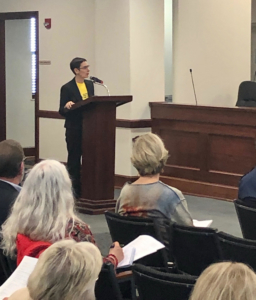
On Dec. 4, 2019, the Governor’s Study Group on Criminal Justice Reform convened at the Alabama Statehouse to hear proposals from the public on how to address Alabama’s prison crisis. Appleseed Research Director Leah Nelson was among the 20 presenters, including families of the incarcerated, formerly incarcerated, advocates, academics, lawyers, direct service providers, and faith leaders who shared proposals.  Below are Leah’s comments, based on Appleseed’s extensive research around prison diversion programs.  

Montgomery, Alabama — My name is Leah Nelson. I’m research director at Alabama Appleseed. I have spent 2 years surveying and interviewing hundreds of people in drug courts and diversion programs.

What I learned is that these programs are too expensive for people who lack wealth to participate in them without making outrageous sacrifices. And they are not designed to accommodate the everyday realities of folks who have jobs, children, or other obligations they must attend to.

Appleseed’s Leah Nelson shares her research on Alabama’s two-tiered justice system with the study group.

How many people in this room could drop everything several times a week to drive to another county to leave a urine sample? How many could get most of a day off once every couple of weeks to spend hours in a courtroom waiting for our chance to speak with a judge? Now imagine doing that if you were a single mom, if you worked at a job that paid by the hour and had an unpredictable schedule, or if you didn’t have a car.

I’d like to tell you a little about two people who cannot be here today.

The first person is a man named Ryan, who is in drug court in Shelby County right this minute and who will go to work after he’s through.

Ryan exemplifies the shortcomings of the system as it currently exists. In 2017, he was convicted of unauthorized possession of a controlled substance and put on probation in Chilton County. In early 2019, he reoffended in Shelby County and was accepted into Shelby’s drug court, widely acknowledged to be one of the toughest in the state.


Ryan excelled in rehab and got his life back together, but he didn’t understand he was supposed to still be checking in with his probation officer in Chilton. He thought his supervision had been consolidated in Shelby. When he learned there was a warrant out for his arrest, he turned himself in. He sat in jail for 3 months while much of the work he had done to rebuild his life disintegrated. He’s out now, but he’s struggling. He earns $400 a week to support himself and his young son. Between drug tests, supervision fees, drug court fees, and fines, he pays about $700 a month. That’s almost half of his income.

The second person I’d like to tell you about is a woman named Amber.

Amber was released from Tutwiler into Madison County Community Corrections this fall. She was so relieved be get home and get back to supporting and caring for her two teenaged sons. She received job training and multiple certifications while she was in Tutwiler. She couldn’t wait to get to work.

And she had to work, because Community Corrections requires her to pay $290/month for electronic monitoring plus another $20/week for drug tests. She had to bring them the first installment within 24 hours of her release or she’d be taken straight back to prison.

Amber has been offered multiple jobs, only to show up for the first day of work and be told they didn’t need her after all because of her felony. Right now, she brings home about $250 per week from unskilled labor she found through a staffing agency which takes part of her paycheck. About a third of her monthly income goes toward electronic monitoring and drug tests alone. That’s unsustainable.


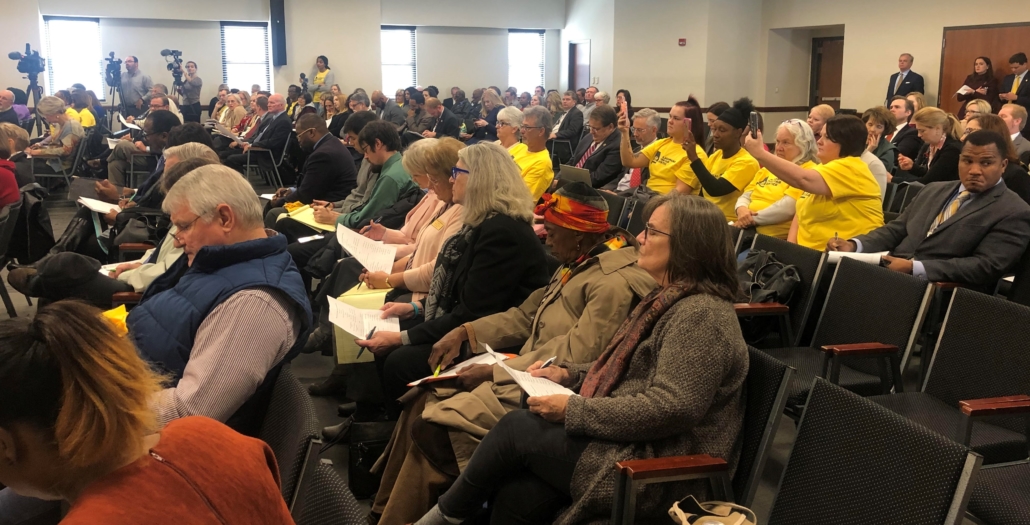
A packed room gathered to hear public proposals at the December 4 meeting of the Governor’s Study Group on Criminal Justice Reform.


She’s terrified of what going back to Tutwiler would mean for her family. When we spoke in late November, she wasn’t sure she’d still be home to spend Christmas with her boys.

Amber and Ryan are far from alone in struggling with the financial and operational obligations of diversion programs in Alabama. These programs have been described to the governor’s study group as unfunded, but that’s not accurate. The state doesn’t pay for them: instead, in most places, diversion programs are funded by the people who participate in them. And those payments are made at a terrible cost.

In 2018, Appleseed worked with partners to survey nearly 900 Alabamians about their experience with the courts. About 20% of the people we surveyed reported they were turned down for a diversion program like drug court because they could not afford it. About 15% had been kicked out of a diversion program because they were unable to keep up with payments.

In 2019, we followed up with a survey of a smaller group of people, all of whom had participated in some form of diversion program. Most of the people we surveyed were poor. 64% of them made less than $20K/year.

Most of them had been found indigent. Most of them had no idea how much the program would cost before they pled in. Yet they were still required to pay a median amount of $1500. Only one in 10 had ever had their payments reduced due to inability to pay.

Without that relief, two thirds gave up a basic necessity like food, rent, or car payments to keep up with their payments. More than a third took out a payday loan. And 30% admitted they had committed a crime to keep up with their payments.

Even so, 30% were forced to drop out because they couldn’t afford it or couldn’t keep up with the frequent drug tests and court appearances. The consequences were dire: One-fifth of people who were unable to complete their diversion program for structural or financial reasons found themselves incarcerated as a result. Our failure to make these programs workable for poor people is driving prison overcrowding.

Alabama can and must make diversion programs more accessible to poor people. To start with, judges should conduct individualized ability to pay determinations that take people’s financial realities into account.

Second, programs should be portable and easy to consolidate. As a rule, no one should be on more than one form of diversion or paying for supervision by multiple jurisdictions or entities. And folks should be able to serve their sentences where they live, not where they offended.

Finally, all diversion programs should track individuals’ progress and remain vigilant about how they can do better.  If these programs are to serve their purpose of giving Alabamians who have made mistakes a second chance and keeping families and communities healthy and strong, they must account for the everyday realities of the people who participate in them.

There is a lot of promise in diversion, but these programs are not accessible to people who lack wealth. If we don’t take steps to correct this, Alabama will continue to have one form of justice for the rich and a very different one for the poor.

In January, 2019, Appleseed will release its full report on the two-tiered justice system created by prison diversion programs funded on the backs of participants.

Across Alabama, residents lose their jobs, housing, drivers’ licenses, and spend long stretches in jail because they cannot afford to pay court fines and fees. This week, a unanimous United States Supreme Court reminded states that this is not supposed to happen anywhere in America.

The case, Timbs v. Indiana, concerns the questionable practice of civil asset forfeiture, where law enforcement is permitted to seize property of people merely suspected of criminal activity. But the Court devotes the bulk of its opinion to providing states a refresher on the Excessive Fines Clause of the Eighth Amendment, reaching back to the Magna Carta and recalling Southern States’ Black Codes. Fines get special attention because they have been wrongly used to raise revenue, punish political enemies, and subjugate African Americans, in a way that conflicts with “the penal goals of retribution and deterrence.”

Alabama Appleseed has documented how thousands of Alabamians are trapped in cycles of debt, incarceration, and grinding poverty because they cannot afford to pay fines, fees, and court costs assessed against them or their families. A survey conducted last year found that court debt drove over 80% of survey takers to give up basic necessities, that over 50% had been jailed for being unable to pay what they owed, and that about 40% had committed crimes like stealing or selling drugs to pay court debt for non-felony offenses. The majority believed they’d never be able to pay everything they owed.

Terrence Truitt spent eight days in jail because he couldn’t afford to pay fines from fishing without permission, which he did to feed himself and his children. Terry Knowles lived in a tiny motel room with his extended family so he could be close enough to work to walk because he could not afford the fee to reinstate his license.

Callie Johnson missed payments on basic necessities because she was helping her children pay their court debt. Angela Dabney, a single mother, lost her driver’s license because she couldn’t afford to pay traffic tickets – and because she lost her license, she lost her job.

If there was ever any doubt, this week’s unanimous opinion makes clear that the kind of suffering imposed on these Alabama families runs afoul of the Constitution and must stop. At a minimum, fines should “be proportioned to the wrong” and “not be so large as to deprive an offender (of his) livelihood,” the opinion states.

Also at issue in the Timbs case was civil forfeiture. Alabama law enforcement officials have claimed that state laws protect citizens from the kinds of abuses documented in Timbs.

Not necessarily. As Alabama Appleseed and the Southern Poverty Law Center reported last year, Alabama’s abusive civil asset forfeiture scheme, which allows the state to take money and property from people without even accusing them of a crime, enriches law enforcement agencies and disproportionately harms people of color. Civil asset forfeiture is an unjust process that deprives people of property without due process, and it should be abolished.

In its ruling, the high court stated that the constitutional provision which forbids excessive fines applies to states in civil as well as criminal cases when the resulting forfeitures are at least partially punitive. In essence, it found that Indiana’s seizure of a man’s Range Rover was unconstitutional because $42,000 was a radically disproportionate fine for the sale of $400 worth of heroin.

Here in Alabama, police more often seize rent money, not Range Rovers. Our study found that the amount of cash seized in civil forfeiture cases involved $1,372 or less in half of all cases examined. The legal fees to get it back are usually more, so most property owners never attempt to get their property back — even where they were not convicted of wrongdoing in connection with the seized property. That should give us all pause.

The fines levied against Terrence Truitt, Angela Dabney, Terry Knowles, Callie Johnson, and the other individuals who took Appleseed’s survey were on average far lower than $42,000, but their consequences were no less devastating. Because they had no way of paying what the state demanded of them, people who took this survey gave up food, shelter, and medicine. They went to jail.

An orderly society requires that violations carry consequences, and it is not Appleseed’s contention that individuals who break the law be permitted to “get away with it” simply because they are poor. But excessive fines are in the eye of the beholder, and Appleseed’s research makes clear that fines that would be manageable for some are devastating for others.

No one should lose their driver’s license, and with it, their ability to work, because they cannot afford to pay a ticket, fees, and interest for a busted headlight. No one should be jailed, or homeless, or give up medicine, or feel forced to accept charity or commit a felony, because they were too poor to pay their court debt. Alabama can fix this, by ending the practice of revoking licenses for unpaid traffic debt, and by evaluating individuals’ financial circumstances and scaling fines to their ability to pay.

Excessive fines are alive and well in Alabama, and they are destroying lives. As nine Supreme Court justices agreed this week — It’s time for a change.

Read it on AL.com

by Leah Nelson, researcher and Dana Sweeney, organizer

Payday industry supporters have often claimed that “neither the general public nor the so called ‘poor’ [are] clamoring” for payday lending reform in Alabama.

Actual borrowers might beg to differ.

Between October 2016 and September 2017, the State Banking Department reported that nearly 215,000 Alabamians took out 1.8 million payday loans – more than eight loans per customer, on average. Each of those loans represents an untold story of struggle where borrowers were forced to weigh the urgent need for cash against the prospect of repaying predatory lenders who charge interest rates as high as 456 percent APR and can demand full repayment within as few as 10 days.

Publicly available comments made by Alabama borrowers to the Consumer Financial Protection Bureau (CFPB) show that for some, payday loans turn out to be a far greater financial burden than what drove them to payday lenders in the first place. These self-reported stories offer a small but representative window into the horrors of predatory lending for many Alabamians.

Writing in March 2015, an individual who borrowed $300 from a payday lender said they were receiving harassing phone calls every day from a lender who was automatically deducting money from their bank account, leading to hundreds of dollars in overdraft fees and forcing them to close their account. “I paid out a lot of money to the Bank for these transactions, money they could have had if they would not have kept trying to debit my account. I am so tired of this and I don’t know nothing else to do except not answer the phone,” the borrower wrote.

In May 2016, a borrower wrote that their payday lender was threatening to track them down at work. “They call me all day every day and if I fail to answer them they will call my sister, aunt, mom and harass them too.”

“I ‘m having to pay over $1000.00 for a $400.00 loan that I was told was paid for and that my balance was $0.00,” a borrower who had paid off their loan in full, only to have their bank account garnished in connection with unpaid fees, wrote in February 2017. “This is absolutely insane. How is this not illegal?”

“I was making payments until I lost my job and I contacted agency to see if I could postpone my payments until I began working again they refused my attempt and I haven’t heard from them since until today I received an email threatening to arrest me,” wrote an individual in May 2017.

“Been paying this company 2 payments every 2 weeks. They was only surposed to get 1 payment a month but taking out 2 every 2 weeks,” wrote another in May 2017. “I can’t pay my regarler bills because of this.”

“Though I do work full time I am struggling to pay off debt,” a single mother who was working with a debt consolidation program to pay off her various creditors, wrote in July 2017. The payday lender, she wrote, “has called my phone, my job, friends and family relentlessly!!   They harass me on a daily basis!! I told them about me going through the debt consolidation place and they got very very nasty, saying they aren’t participating in this program, and demanding Money NOW!!”

The CFPB did what it could to follow up with lenders and help customers resolve, or at least gain clarity, about what was happening to them. A handful of cases were “closed with monetary relief.” But the majority were “closed with explanation” – that is, the only relief the borrower received was an understanding of why the lender was allowed to do what it was doing.

For desperate people seeking help with unmanageable debt, that’s no relief at all.

In Alabama, borrowers continue to find themselves crushed by rapidly ballooning debt traps and loans continue to be issued with triple-digit APRs. Many other states have passed successful reforms, including our Southern, business-minded neighbors in Georgia, Arkansas, and North Carolina, which eliminated payday lenders entirely without significantly impacting borrowers’ access to cash. But our legislature failed again this year by refusing to pass the simple 30 Days to Pay bill, even though the status quo harms thousands of Alabamians and other states have demonstrated that responsible reform is possible. That’s why predatory lending reform is supported by a diverse coalition including Alabama Appleseed, the State Baptist Convention, the United Methodists, the Episcopal Diocese of Alabama, the Huntsville Chamber of Commerce, the Southern Poverty Law Center, and the Birmingham Business Alliance. Here in Alabama, that’s about as broad-based as it gets.

And we need our state leaders to listen now more than ever. At the national level, new leadership at the CFPB has steered the agency away from its mission of protecting consumers from abuse by large banks and corporations. Recent months have seen the CFPB refusing to enforce the federal judge-ordered punishment of a payday lender caught stealing millions of dollars from its customers, musing about eliminating basic guardrails meant to keep payday lenders from scamming borrowers, and even proposing that public comments made to the CFPB by consumers—like those featured in this article—be hidden from the public. Alabama lawmakers can no longer wait or depend on the CFPB to fix an issue that was created by the Alabama State Legislature. Lawmakers’ earliest opportunity to address this issue will be the upcoming 2019 Legislative Session, and after failing Alabamians again and again, they should finally take it.

Until then, though, Alabama borrowers will have to wait yet another year for relief – and payday lenders will get another year to line their pockets by fleecing our communities. Let’s make sure that they won’t be made to wait again.