by Carla Crowder, Executive Director


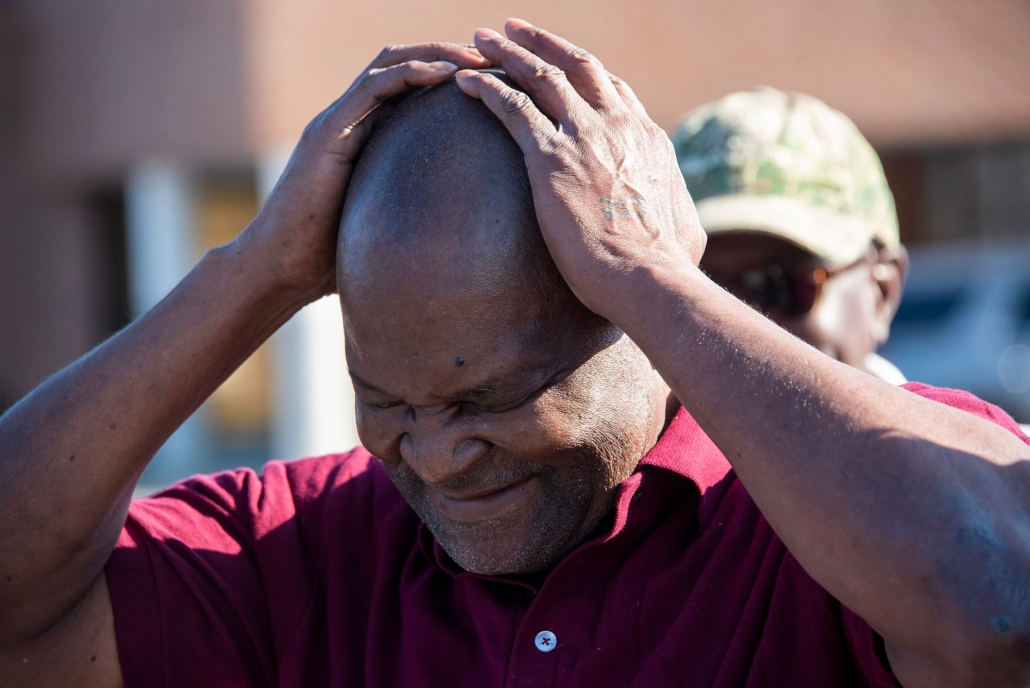
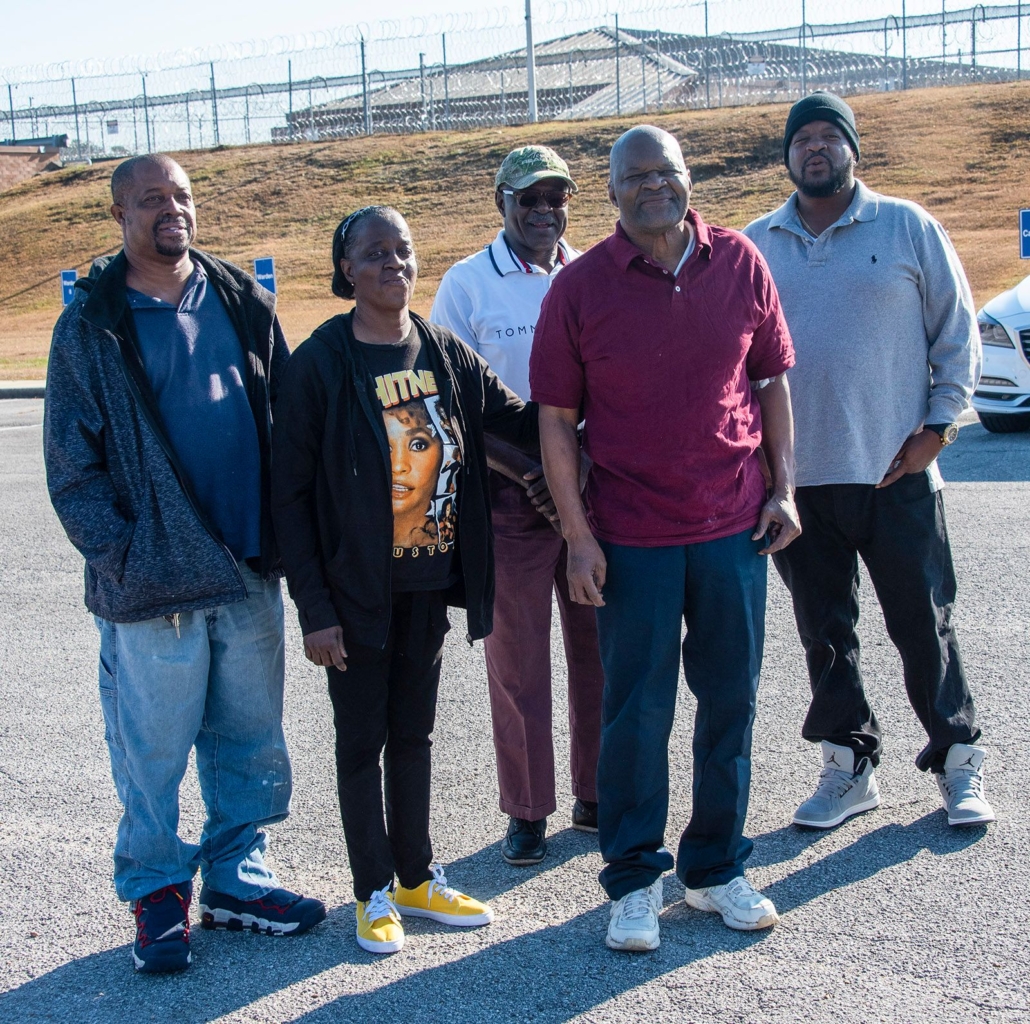
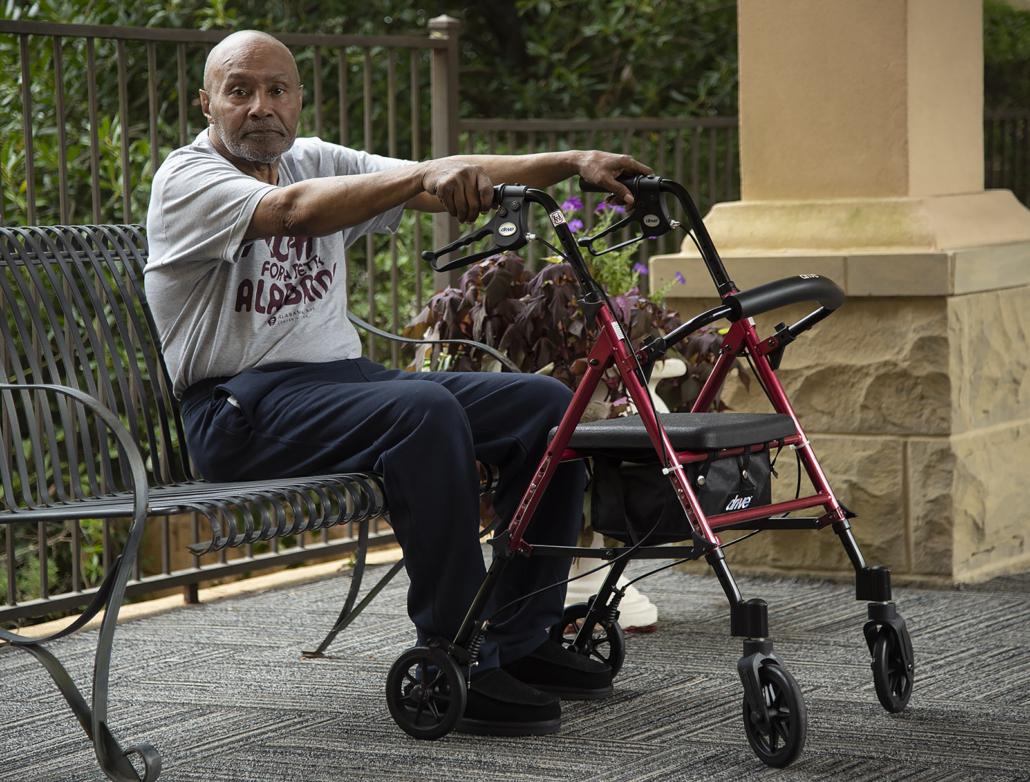
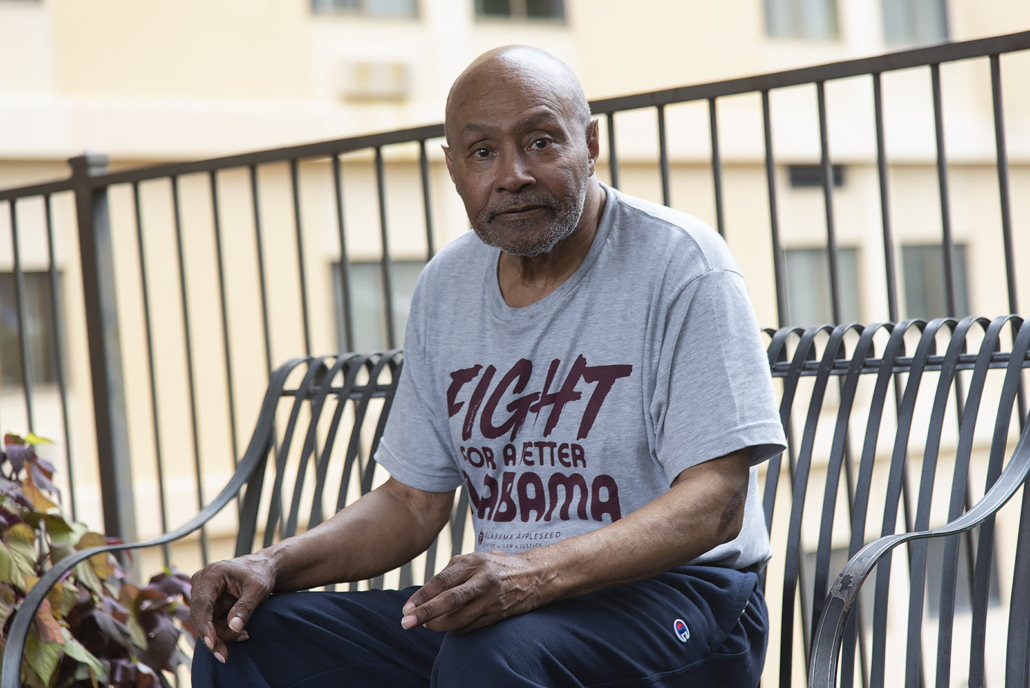
Willie Ingram on his release day. Photo by Bernard Troncale

Willie Ingram, who served 39 years in prison after being convicted of a $20 robbery while armed with a pocketknife, celebrated his first Christmas and New Year’s Day as a free man. 

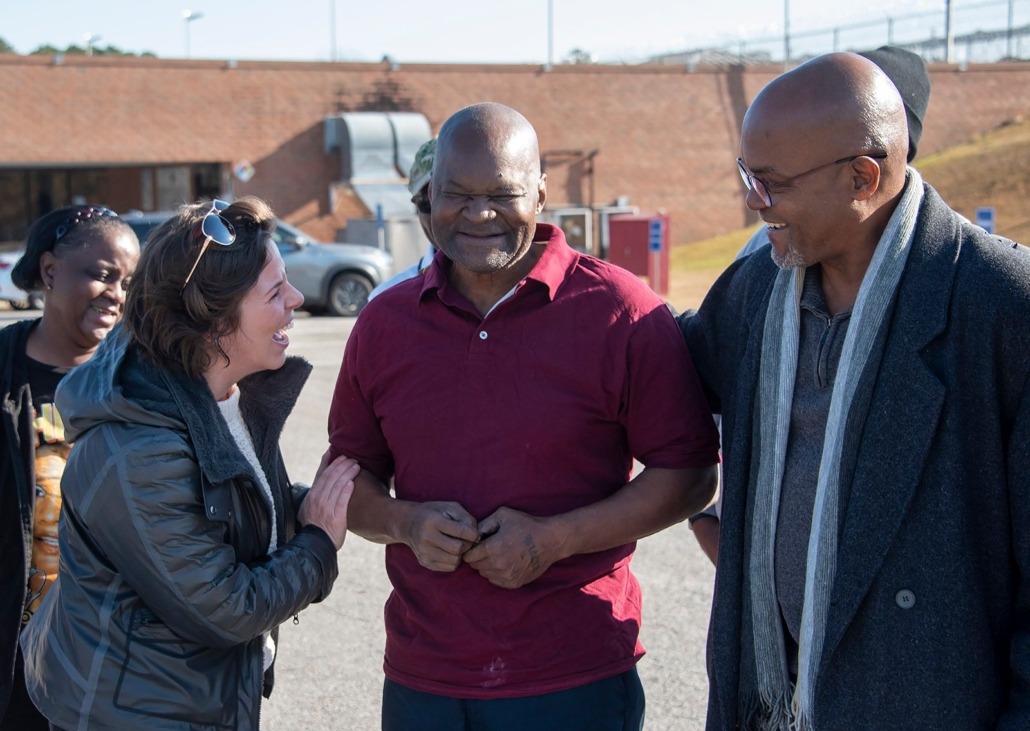
Mr. Ingram was originally sentenced to life imprisonment without parole under Alabama’s Habitual Felony Offender Act; his priors were all nonviolent property offenses from the 1970s. Appleseed took his case and with assistance from attorneys Mark White and Hope Marshall at White Arnold and Dowd, won his freedom. Mr. Ingram was resentenced to time served in November and walked out of St. Clair Correctional Facility to be welcomed by his two sons, sister, and a brother. 

On his release day, Mr. Ingram was understandably overwhelmed. “I didn’t know what to think, I was so happy. I thought I was going to be in prison for the rest of my life, but God made a way for me.”

Mr. Ingram is now 70 years old, having spent more than half his life behind bars.

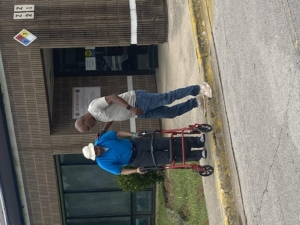
Mr. Ingram with Appleseed Staff Attorney Alex LaGanke & Re-entry Coordinator Ronald McKeithen. Photo by Bernard Troncale

His prison record makes clear that years ago he turned away from the alcohol use that led to his convictions. For five years, he worked in the chemical plant at St. Clair prison. At the time of his release, he was serving as a runner for his dorm and a dorm cleaner. Throughout his incarceration, he actively resisted the gangs, drugs, and violence that permeate the prison system, attending Bible classes instead and accumulating an excellent disciplinary record. 

Despite the fact the State of Alabama condemned him to die in prison for a drunken confrontation that occurred nearly four decades ago, Mr. Ingram found purpose and created a life of rehabilitation and service within the most degraded of environments. 

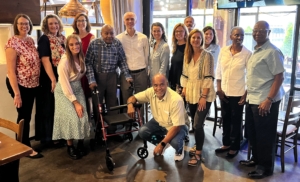
“I didn’t know what to think, I was so happy. I thought I was going to be in prison for the rest of my life, but God made a way for me.” Mr. Ingram with his family outside of St. Clair Correctional Facility on his release day. Photo by Bernard Troncale

Appleseed began representing Mr. Ingram in early 2022. With pro bono assistance from Mr. White and Ms. Marshall, a commitment was secured from the Russell County District Attorney’s office not to oppose resentencing efforts. Russell County Circuit Judge Michael Bellamy granted the unopposed petition in November. 

Mr. Ingram is one of hundreds of older, incarcerated Alabamians serving sentences of life or life without parole for offenses with no physical injury that occurred decades ago.  The state’s “three strikes” law, the Habitual Felony Offender Act (HFOA), mandated these lengthy sentences for a single Class A felony (even a robbery, burglary, or drug trafficking offense where no victim was physically harmed) if an individual had three prior felony offenses, no matter how minor. Drug possession, forgery, and theft of a small amount of property count as priors toward a death in prison sentence. The three underlying offenses that contributed to Mr. Ingram’s sentence were two burglaries in the second degree and grand larceny for a $50 purse-snatching, all property crimes.

Our research into dozens of cases from the 1970s, 1980s, and 1990s shows that many prosecutors were eager to seek life without parole sentences in these kinds of cases. Black defendants, like Mr. Ingram, were especially vulnerable, as 75% of people serving life without parole for robbery convictions under the HFOA are Black, in a state with a Black population of 26%.

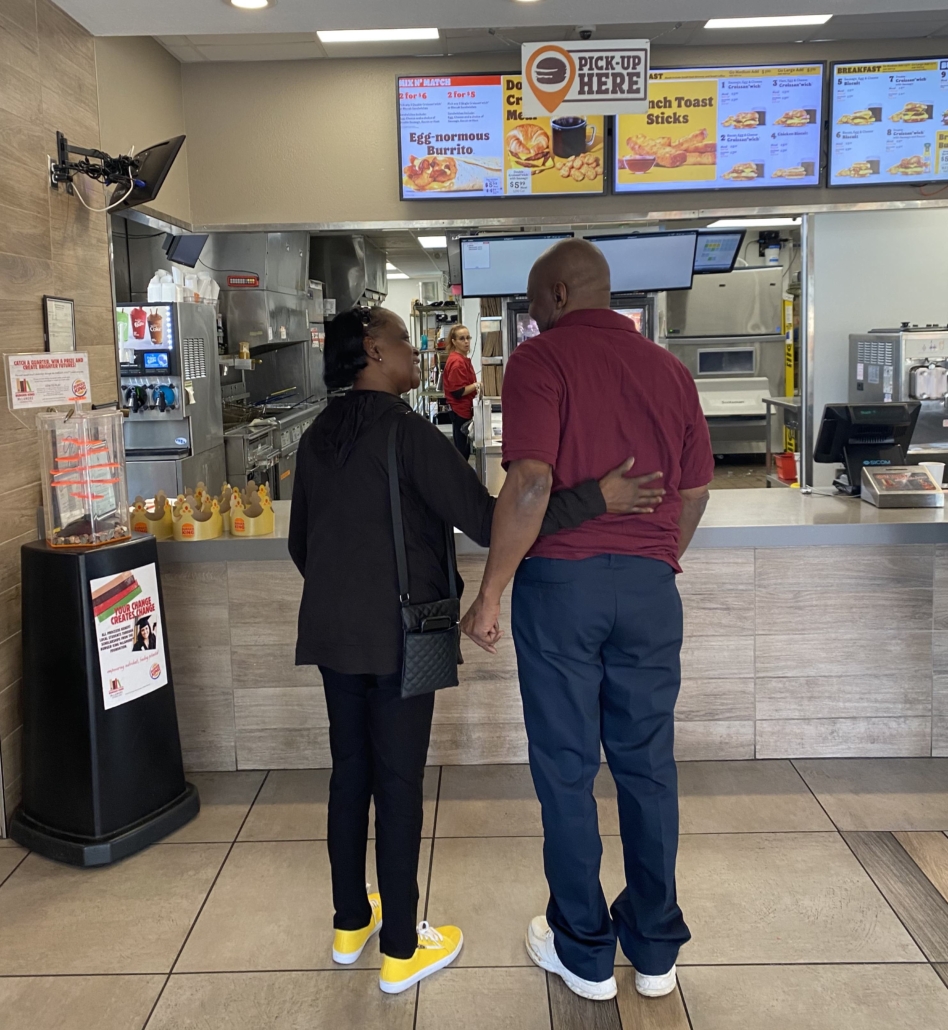
Mr. Ingram and his sister grabbing breakfast after his release. Photo by Libby Rau.

Mr. Ingram was sentenced to permanent incarceration, separated from his sons, and denied the ability to earn a living for himself.  Most of his sentence was served at St. Clair Correctional Facility. During his time there, incarcerated people rioted over prison conditions, a class action lawsuit was filed when St. Clair became the most violent prison in the country, and the United States Department of Justice sued the State of Alabama over unconstitutional conditions across the entire state prison system for men. 

Mr. Ingram is now enjoying the peace and comparative comfort of a reentry center and looking forward to moving closer to his family once he completes the reentry program. He shared that the best experience since his release has been spending time with his grandchildren, many of whom he had never met before. “It was a wonderful thing to see them and talk to them, to hold them and love them.”

By Eddie Burkhalter and Leah Nelson


Public outcry over the arrest of an 82-year-old Valley woman for $77 in unpaid garbage bills was swift, but records show the city has for decades arrested people over unpaid trash bills.  

Martha Menefield’s arrest three days after Thanksgiving, made international headlines. The charge against her was dropped after Menefield, on Dec. 5, paid the $77 and an additional $35 in court costs, records show. But an investigation by Alabama Appleseed and other outlets indicates that Menefield was but one of many victims of Valley’s trash police. 

This pattern of deploying police officers as bill collectors, particularly where the impacted residents are elderly, impoverished or both, does nothing to improve public safety and tarnishes the reputations of the small towns involved.  

Under a 2012 Valley municipal ordinance, nonpayment of garbage fees is a misdemeanor punishable by fine. Appleseed reviewed 26 arrests of Valley residents charged with failing to pay solid waste fees, 11 of which took place this year. Of 26 cases reviewed, 11 people had been arrested more than once over unpaid trash bills. 

Among those who were arrested on trash warrants by Valley police was 77-year-old Dee Kent, who was pulled over and arrested in November of 2021 while on her way to an appointment with her oncologist, CBS 42 first reported. 

Kent, now 79, told the news station she’d received no warning from the city prior to her arrest for failure to pay $141 in trash bills. She described her arrest to Appleseed by phone Thursday as “embarrassing.” 

“It was rough going to jail. Especially when everyone knows you. When you’ve grown up here,” Kent said. 

Nortasha Jackson, 49, was arrested Nov. 26 at her Valley home for $88 in unpaid trash bills, court records show. Her charge is listed as “Failure to Pay Solid Waste Fees” in those records. 

Jackson said she was arrested by two officers, one white and one Black, and described the younger Black officer as “gung ho.” 

“I came here to do my job. You’re going to be arrested,” the younger officer told her, Jackson said. 

Once at the Valley Police Department, she was given 20 minutes to arrange her bail or else be taken to the county jail. Panicked, Jackson said she got help from her adult son who was able to transfer a payment to help secure the bond before she was to be moved.

Jackson’s three children are grown and all have moved on. She receives partial disability benefits and works full time as a cashier, but her health problems prevented her from working during the months of October and November, Jackson said, meaning she had to stretch what little income she had even further. 

“It’s really hard,” she said. “My health is more important.” 

How a law becomes an arrest

With a few exceptions, participation in Valley’s garbage service program is mandatory. Residents are required to pay $18.10 per month for the service, or $15.60 if they are 65 or older and apply for an exemption. People who rely exclusively on Social Security benefits for income can also apply for full exemption.

Penalties for nonpayment include late fees, suspension of services, and civil actions. And pursuant to an ordinance adopted in 2012, people who violate any element of the city’s solid waste code “shall be guilty of a misdemeanor, and upon conviction, shall be fined not less than $50.00 nor more than $200.00.” The ordinance spells out that those fines can be compounded, with each day of noncompliance constituting a separate offense.

Valley has clarified that Menefield was arrested for failure to appear, not strictly for failure to pay her trash bill. But in Valley – along with at least 47 other Alabama cities – failure to pay trash bills alone is technically enough to trigger criminal charges. 

How does enforcement transpire? Every town operates differently, but to get a sense of how cities go about enforcing criminal codes where the offense in question is not something that would result in a call to 911 or a police stop, Alabama Appleseed spoke with two former city clerks who worked for small rural towns in Alabama.

The former clerks, who between them have decades of experience in municipal governance, explained that it is common for cities to contract with outside companies to collect their trash, as Valley does with a company called Amwaste. The cities pay the bill for that service, and city councils have discretion to pass those costs on to residents by passing a local ordinance. Fees collected pursuant to such ordinances have to be used for trash-related purposes and cannot be disbursed to the general fund. 

Generally, the clerks said, cities have an entity – a water or utilities board in some, a solid waste department in others – that oversees garbage collection services and collects fees from residents. In order to keep track of payments, that entity maintains a list of delinquencies, which in a city with an ordinance permitting criminal consequences it could turn over to a magistrate on a periodic basis. Based on that list, the magistrate would issue warrants which police would be tasked with executing. 

“I imagine they don’t even think about it, it’s just automatic. I think it probably stems from a policy set by the council or a directive from the mayor, but the magistrate is just doing what they do,” said Herman Lehman, former city clerk and treasurer for the city of Montevallo who now works as a consultant.

Lehman said that every single step of that process involves discretion. Like Valley, Montevallo contracts with an outside company to collect trash. The city pays the bill each month and collects fees from residents, who are required to participate in the service but can obtain exemptions if they can show they are unable to pay. As in Valley, Montevallo city code makes nonpayment of trash fees a misdemeanor. 

Lehman said he is unaware of the city ever having enforced that provision of its code. Instead, when Montevallo found a resident was struggling to pay, it sought to connect them with assistance through local churches, community-based organizations, or a Shelby County fund that is available to people with certain types of financial difficulties. Montevallo also made sure that eligible individuals knew they could apply for exemptions from the mandatory fee. When people habitually failed to pay or act on their bills, Montevallo used civil and administrative measures to sanction them and attempt to recover the money. 

“The idea that police were there to protect and serve, we sort of felt that serve was the operative word,” Lehman said of Montevallo’s reluctance to deploy police as debt collectors. “It just doesn’t make sense when you’re living in a community, particularly in a small community, to always play the bad guy, particularly in a situation where people may need help.”

Alabama law does not require custodial arrests for all misdemeanor charges. Among myriad unserved warrants for a wide variety of offenses dating back to 2003, Appleseed identified 22 for unpaid trash bills throughout Chambers County, along with one unserved warrant for the offense of “pants below waist.”

It is possible that the city of Valley issues summons initially, telling people who are delinquent on trash fees to come to court on a particular day for a hearing before a judge. What seems to have happened with Menefield is that she missed her initial court date. Typically, failure to appear at a court date prompts the issue of a second warrant, this time for failure to appear. That is the type of warrant that led to  Menefield’s November arrest.

But even failure to appear warrants are subject to discretion, retired Birmingham Police Captain Jerry Wiley explained to Alabama Appleseed. Wiley said that police in Alabama are required to take people into custody for certain misdemeanor charges such as driving under the influence. But alternatives to arrest, including warnings and admonitions to resolve the problem that prompted the warrant, are available for many misdemeanors. In a small town like Valley, Wiley said, expectations about how police should proceed in cases like Menefield’s are set by the police chief, who answers to the mayor and/or city council. Though individual officers legally have the discretion not to arrest for certain offenses, Wiley said that in a small town, they would have little authority to defy such policies without risking their jobs. 

But using police to punish nonpayment comes with a price for public safety. Research shows that when residents perceive police as debt collectors with badges, violent crimes are solved at a lower rate. 

“If the only thing you’re interacting with your police department is for is arbitrary arrests and silly things like that, it becomes an adversarial relationship,” Wiley said. “If the police are out doing this, they’re not fighting the crime they should be fighting.”

The Costs of Debt

 Making failure to pay trash fees a criminal offense doesn’t only make police officers debt collectors. It also results in many of those residents owing much more than their original fees.

Court records show that the average cost of unpaid garbage fees in those cases was $138.79. But as the cases progressed through the court, the average cost of all fees and additional court costs levied ballooned to an average of $402. 

The racial breakdown of the arrests mirrored Valley’s racial demographics fairly closely: 42 percent of the people arrested in the 26 cases reviewed by Appleseed were Black, and the town’s population is about 38 percent Black. 

These arrests could be stopped in a number of ways, but doing so would require action from Valley Mayor Leonard Riley and the seven-member Valley City Council, which could vote to change the language in the ordinance that makes nonpayment a misdemeanor. City officials could also simply stop the process that leads to the referral of those who are behind on payments for prosecution, and instead handle those debts as civil matters. 

Several attempts to reach Valley city officials and its police chief this week were unsuccessful. The only public statement from city officials was from Valley Police Chief Mike Reynolds, who in a press release stated that while officers can use discretion in certain matters “the enforcement of an arrest warrant issued by the court and signed by a magistrate, is not one of them.” 

“City of Valley Code Enforcement Officers issued Menefield a citation in August of 2022 for non-payment for trash services for the months of June, July, and August,” the statement reads. “Prior to issuing the citation, Code Enforcement tried to call Menefield several times and attempted to contact her in person at her residence. When contact could not be made, a door hanger was left at her residence. The hanger contained information on the reason for the visit and a name and contact phone number for her to call. The citation advised Menefield that she was to appear in court on September 7, 2022, in reference to this case. A warrant for Failure to Pay-Trash was issued when she did not appear in court.”

Jackson, the Valley woman arrested at home on Nov. 26, said the city needs to change how it handles unpaid garbage debt. She said that using police officers to collect such small amounts is “really stupid” and is not the sort of work taxpayers want from police departments. 

“It needs to be done better. It stigmatizes people,” she said.


Centuria Olds (left) and Deaundra Leshawn Johnson, Jefferson County jail booking


An Alabama Department of Corrections captain and former ADOC lieutenant each face multiple criminal charges related to smuggling contraband into Alabama prisons, but the small number of prison staff arrests is vastly outpaced by the deaths and violence caused by contraband pouring into Alabama prisons.

There were at least eight likely overdose deaths in five separate Alabama prisons between Nov. 22 and Nov. 27, according to a response from ADOC and sources in several of those prisons, who say that fentanyl overdoses are responsible for the record numbers of deaths across state prisons. 

The victims ranged in age from 20 to 67, with some of the men serving short sentences for nonviolent offenses. Over the Thanksgiving holidays, men died at Staton, Elmore, St. Clair, Bibb, and Ventress correctional facilities. These frequent, preventable deaths impact living conditions across the prisons as dorms are overrun by drug use and rehabilitative opportunities dwindle. Incarcerated people are overdosing in honor dorms, in drug treatment dorms, and in segregation cells. Additionally, ADOC’s unmitigated staffing crisis has led prison officials to close off many of the prisons to positive, educational classes and religious programming, according to multiple reports. 

Meanwhile, law enforcement obtained a search warrant for an apartment shared by two ADOC supervisors, a captain and a lieutenant, an ADOC spokesperson said in a response to inquiries from Appleseed.

Captain Deaundra Johnson at the Childersburg Community Work Center and former ADOC lieutenant Centauria Olds were arrested Monday, each charged with four counts of bribery and using their official position for personal gain, according to Jefferson County Jail records and a response from ADOC. 

Johnson previously worked at Donaldson Correctional Facility, where a record eight men have died by homicide this year, deaths that are often related to the free-flowing contraband.

In 2018, she was recognized by ADOC for “leading by the department’s core values of Professionalism, Integrity and Accountability” according to a tweet by the department that shows Johnson receiving an award from former ADOC Commissioner Jeff Dunn, a tweet that was shared Monday by investigative reporter Beth Shelburne. 

Olds was first arrested on Jan. 25, 2021, on charges of failure of duty or violation of law by a guard and use of position for personal gain, according to court records. Those older charges accuse Olds of engaging in a video message via cell phone with an incarcerated man and accepting money from the man in exchange for bringing in contraband. Those charges were to go before a Bibb County grand jury, according to court records. 

“Additional charges are pending further investigation. Johnson has been placed on Mandatory Leave pending the outcome of the investigation,” the response reads. 

 While there have been a few arrests of ADOC correctional officers charged in connection with smuggling contraband, the arrests this week of two supervising officers, one of whom holds the rank of captain, are rare. 

The Thanksgiving Week deaths have been identified as the following Alabamians:

  • Justin Wade Hopkins, 39, on Nov. 22 was found unresponsive in his dorm at Elmore Correctional Facility and was pronounced dead at a local hospital, ADOC confirmed.
  • Willie McCall, 67, on Nov 23 was discovered unresponsive on the dorm floor at St. Clair Correctional Facility and was pronounced dead.
  • Cameron Holifield, 22, was pronounced dead on Thanksgiving Day, Nov. 24 after being found unresponsive in his dorm at Staton Correctional Facility. He was serving a 2-year sentence for theft.
  • That same day Grady Anthony Lee, 44, was discovered unresponsive in his dorm at Bibb Correctional and was pronounced dead. He was serving a 15-year sentence for a drug conviction.

November 25 was an especially deadly day, when at least three men died. 

  • Barry Christopher Culver, 25, on Nov. 25 was found unresponsive on his bed at St. Clair Correctional Facility and was pronounced dead.
  • That same day Jason Hopkins, 36, was found unresponsive on his bed at Elmore Correctional Facility, where he was pronounced dead.
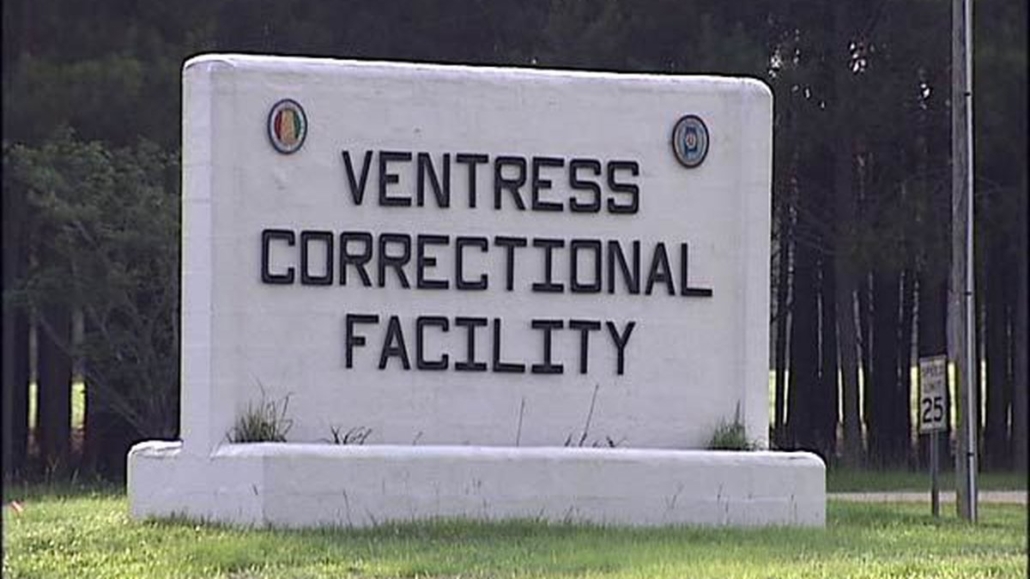
  • Albert Jackson Sorrells, 57, on Nov. 25 was also found unresponsive in his dorm at Ventress Correctional Facility and was pronounced dead.
  • Joseph Edward Nichols, 46, on Nov. 27  was found unresponsive in his dorm at Ventress Correctional Facility and was pronounced dead.
  • One man, twenty-year-old Eddie Richmond, was found unresponsive at Fountain Correctional Facility and was taken to a local hospital for treatment. Richmond is recovering, ADOC said in the statement.

For years, the State has been on notice that deadly drugs and contraband enter prisons through state employees. The U.S. Department of Justice’s ongoing lawsuit against Alabama and ADOC that alleges unconstitutional violations of incarcerated men’s rights to protections from violence and death also accuses the prison system of failing to control contraband, which results in mounting overdose deaths, even during the many months of suspended visitations during the COVID-19 pandemic. 

“Although ADOC has not allowed visitors into Alabama’s Prisons for Men since March 2020 pursuant to COVID-19 restrictions, prisoners continue to have easy access to drugs and other illegal contraband,” the DOJ’s amended complaint reads.

In previously released reports, the Justice Department detailed systemic problems of abuse from guards, corruption, rampant drug use, violence, overcrowding and understaffing in Alabama’s prisons. Even as a trial date approaches in the federal litigation, ADOC has failed to address the widespread, preventable deaths resulting from unconstitutional conditions identified in page after page of federal court filings.

Alabama Appleseed explores the conditions driving these kinds of preventable deaths in the recently published report, A Bitter Pill: Prisons Have Become the Deadly Epicenter of Alabama’s Addiction Crisis, Even as the State’s Response Begins to Show Signs of Success Elsewhere. How Do We Bridge the Gap?  

The report documents statewide progress against the scourge of opioids, with the exception of the criminal punishment system, and calls for investments in alternatives to incarceration. Our two-year investigation found that, “Alabama’s harshest response to substance use disorder – incarceration in a Department of Corrections prison facility – is not keeping Alabama safer. People are dying because prisons have failed at the basic task of preventing dangerous, illicit drugs from falling into the hands of desperate incarcerated people.”

When we published the report in September, there had been at least 72 suspected drug-related deaths since March 2020, when prisons were closed to visitors because of COVID. Now the death toll is well past 80.

By Kathleen Henderson


 My name is Kathleen J. Henderson, and I am so honored to be able to join Alabama Appleseed Center for Law and Justice as the new Re-entry Case Manager. 

I began my journey at Bevill State Community College. There,  I gained the understanding that education is a way out of poverty and/or crime for many. I found mostly very kind people there with helping spirits. I also found a job helping those students who are first-generation and/or low-income. Being in this population myself allowed me to better serve these students as they navigated the challenges of higher education.  

Because my time at Bevill State was so enriching, I looked for another small college. Athens State University was my next stop. Once again, my path was illuminated, and I found myself helping a professor teach Mindfulness at  Limestone Correctional Facility. It was there that my compassion for this population deepened. The stories of lives affected by poverty, substance abuse, psychological issues, familial ties, and many other factors put a fire in my heart. So, when a job at the Alabama Bureau of Pardons and Paroles came available, I applied. 

Working as a caseworker with special populations in Walker County for the Day Reporting Center Lite was an inspiring experience. Although many people see Walker County as a desert for resources, I found this untrue. With much determination and work, I found resources for most of the issues presented by my participants.  While there I also started back to school to finish my Master of Psychology degree. 

Returning citizens are a section of the population who are not always afforded grace, understanding, and human kindness.  I have witnessed this firsthand while working for the Alabama Bureau of Pardons and Paroles. However, a little kindness goes a long way. The one thing that I find so rewarding about working with returning citizens is when the light returns to their eyes; when they realize that they may again dream, that there is a future for them, and they get to write that future. It has been my fortune to be able to assist and guide them in their new journeys as they dream as big as their minds will allow. 

In addition, I have found in my time as a caseworker that re-entry work requires compassion as well as hard work. If everyone who made a law, enforced one, or influenced one utilized the same compassion they use when dealing with their own family, things would be different for people in the criminal justice system. Often, psychological issues are treated only as crimes and exacerbated by prison sentences. People with the misfortune of having been incarcerated often wear a scarlet letter, as well as the mental and physical scars that come with imprisonment. These things cause roadblocks and pitfalls that must be carefully maneuvered. The impact of incarceration touches every aspect of a person’s life. Shouldn’t then compassion be a prerequisite for all involved in those decisions? 

As I look back, I recognize how all of this led me to Alabama Appleseed and it is my honor and privilege to be among this hardworking group of people. I am humbled at the idea of working with this amazing organization that changes laws and lives, and I hope to be able to serve it well for a long time to come. So let us get busy and help someone dream about life beyond the prison walls!


By Eddie Burkhalter, Appleseed Researcher

Alabamians are faced with competing narratives regarding crime and punishment. On one hand, Alabama’s prison system is brutal, broken, and fails to rehabilitate. On the other hand, some believe crime is on the rise and long prison sentences are the only answer. 

Because Appleseed believes that policy decisions must be based on evidence and data, that government must be transparent and accountable, we examined actual crime data from various Alabama cities in order to begin to separate truth from myth.

The Federal Bureau of Investigation earlier this month released its annual crime stats, but changes in how that data are reported, and the large number of law enforcement agencies that failed to report data, make it difficult to draw meaningful conclusions from the numbers. 

Just 52 percent of law enforcement agencies reported their full data to the FBI’s National Incident-Based Reporting System for 2021, which the bureau had used alongside the older Uniform Crime Reporting Program until changing fully over to the new system last year. 

While the FBI has always used the data to make estimates about crime trends, the lack of complete data in this latest report makes those estimates much less useful this year, experts warn

Even so, the FBI estimates that the overall violent crime volume for the nation decreased 1 percent from 2020 to 2021, while murders increased by 4.3 percent, but that’s within the margin of error, so according to the bureau’s estimation murders could be down by seven percent or up by as high as 17 percent. 

Looking elsewhere, the crime data analysis firm AH Datalytics tracked homicides in 200 major U.S. and found a 5.2 percent decline in homicides from 2021 to 2022, year to date. 

The robbery rate nationwide decreased 8.9 percent, according to the FBI’s estimate in the report, which “heavily contributed to the decrease in overall violent crime despite increases in murder and rape rates at the national level.” The national property crime rate decreased by 4.5 percent as well, according to those estimates. 

Trying to glean anything about crime in Alabama by looking at the FBI’s report is difficult. Across the state’s 436 law enforcement agencies, only 44 percent reported a full year’s worth of crime data to the FBI for 2021, and 81 percent of agencies reported partial data to the FBI. 

Even among some large agencies, reporting was scant. The Huntsville Police Department, the Montgomery Police Department and the Madison County Sheriff’s Office didn’t report data to the FBI last year, while the Birmingham Police Department reported 11 months worth of crime data, as did the Jefferson County Sheriff’s Office. 

Because of such low reporting from Alabama, the FBI declined to make comparisons between the state’s 2020 and 2021 crime data. However, a look at longer term trends across multiple years tells an encouraging story. The state’s rate of violent crime offenses by population fell by 14.8 percent in 2020 from a spike in 2016, according to the FBI’s data

Additionally, some law enforcement agencies statewide have published 2021 crime data  and those numbers show a decline across many types of crimes. 

In Anniston, violent crime – homicides, sexual assaults, robberies, and aggravated assaults – decreased by 12.10 percent from 2020 to 2021, according to the Anniston Police Department’s 2021 annual report

Violent crime in the city reached an historic low in 2019,  when 334 violent offenses were reported, the department noted in the report, citing the FBI’s Crime Data Explorer, which stores crime statistics back to 1985. There were 414 violent offenses reported in Anniston 2021, which was the second lowest number recorded since 1985. 

Property crimes, which include burglary, larceny-theft, and motor vehicle theft,  remained relatively flat in Anniston between 2020 and 2021, increasing by 2 percent. 

The Huntsville Police Department’s 2021 crime report shows 25 homicides in 21, down from 29 in 2018. 

In Mobile, total crime in 2021 was down 6.6 percent from 2020, but the department’s annual report notes that violent crime increased by 18.7 percent. There were 51 homicides citywide last year, up by five from 2020. 

Again, looking at longer term trends is encouraging. Mobile’s total crime between 2011 and 2021 declined by 35.7 percent, according to the department’s report. 

The Tuscaloosa Police Department’s annual reports show that across the five crimes the department tracks and publishes data on – vehicle break-ins, burglaries, vehicle theft, robbery and homicides, those crimes in total declined by 32.4 percent between 2019 and 2021. Robberies alone fell by 46.5 percent and burglaries by 43 percent. 

Birmingham has also experienced declines in crime. Total violent crimes, which also include rape, robbery and aggravated assaults, were down 19 percent. Property crimes were down by just less than one percent, according to the Birmingham Police Department’s statistics as of Oct. 13.

The anomaly is homicides. The often-sensational nature of homicides means they dominate local, breaking news coverage, creating fear and outrage. That onslaught of news reports generally lacks context or any meaningful explanation of contributing factors or trends.

By mid-October, there had been 113 homicides in the city this year, up 37 percent. 

Speaking about the tragic rise in homicides this year, Birmingham Police Chief Scott Thurmond told AL.com, that even considering several cases of innocent victims caught in the crossfire, the reality of crime in the city is better than the perception.

“You don’t have a parent going to get gallon of milk or a pack of diapers at 9 p.m. getting murdered,’’ Thurmond told the news outlet. “You do have people, places and behaviors. If you engage with people doing illegal things in places where you shouldn’t be with people who are known for violence or other issues, the likelihood of something happening to you is very high.”

One of the most comprehensive resources to track Alabama crime trends can be found at crime.alabama.gov. This collaboration between the Alabama Law Enforcement Agency (ALEA) and the Culverhouse College of Business Institute of Data and Analytics, provides county-by-county as well as state-level data dating back to 2005. Tools such as these – not sensational headlines or political ads – are critical to making informed decisions about criminal justice policy.

My name is Erin Nicole Smith and I am humbled to work at Alabama Appleseed as a Policy Extern. I am currently a 2L at The University of Alabama School of Law and am seeking opportunities to embrace social justice activism. I have a bachelor’s degree in Spanish and minored in Political Science from Oakwood University, where I learned to embrace our motto: “Enter to Learn, Depart to Serve.” I plan to do just that as an aspiring attorney and it starts with community. 

My interest in criminal justice reform was piqued after choosing to do a research paper on mass incarceration my junior year of high school. I had never encountered that term before, so I explored avenues to learn more about the topic. Through my research, I was exposed to 13th, a documentary produced by Ava Duvernay. I was shocked to learn about the conditions of U.S. prisons and how African Americans are disproportionately funneled into the prison system. Also, I learned how in the U.S. a new form of slavery has been invented by depriving those who are incarcerated of their basic human rights. Michelle Alexander’s book, “The New Jim Crow: Mass Incarceration in the Age of Colorblindness,” sheds light on the various tools used to oppress minorities. These tools included the rhetoric of ‘law and order’, declaring the War on Drugs, and projecting an abundance of stereotypical images of minorities in the media. 

During my time at Oakwood University, I was able to encounter experiences that confirmed my desire to become an attorney. When I studied abroad in Sagunto, Spain, I developed a deeper level of empathy for how immigrants feel when placed in a new environment while having a language barrier. The experience allowed me to be more aware of the struggles that minority communities face inside the U.S. Upon my return, I took classes that further informed me of issues present in America. These classes included U.S. Constitutional Law, Public Policy, Special Topics in Law, State and Local Government, and American Diplomacy. One of my favorite classes was Social Justice Advocacy because we discussed how race affects the law. 

In law school, my passion to do public interest work has stemmed from my interest in the intersectionality between race and the law. After working as a legislative intern my junior year of college, I developed a love for policy because it opened my eyes to a new way of implementing far-reaching change. My goal is to combine both the fields of law and policy into my career. Alabama Appleseed gives me the avenue to explore these facets. 

I learned about Alabama Appleseed after attending an admitted student session with The University of Alabama School of Law. I was connected to Akiesha Anderson, an alum of the law school and the former Policy Director of Alabama Appleseed. Because my interest in policy was new, I had never heard of anyone else starting their law school journey with the knowledge that policy was their end goal. It was really amazing to talk to another Black woman about our passions and interests to help others through policy. Fast forward to now, I am honored to be a part of this organization and further the mission “to achieve justice and equality for all Alabamians.”

By Carla Crowder, Executive Director 


Leaning on his walker, Robert Cheeks shuffled out of Donaldson Correctional Facility and took his first breaths as a free man in 37 years. He was 79 years old.

The state of Alabama meant for him to die in prison. In 1985, Mr. Cheeks received a mandatory sentence of life without parole after being convicted of robbery. He never pulled out a gun, a knife, or a fist. 

No one was physically harmed. In fact, the victim’s response was to chase Mr. Cheeks down the street. His priors – non-violent offenses including 3 forgeries that occurred in 1969 – meant the judge had no choice but to impose a death-in-prison sentence pursuant to Alabama’s Habitual Felony Offender Act, one of the harshest “three strikes” laws in the nation.

He spent the better part of three decades reporting for work in the kitchen before prostate cancer and rheumatoid arthritis sidelined him. No longer useful in the kitchen, he was left to die in the infirmary at Donaldson Correctional Facility, alongside younger men recovering from stab wounds and assaults from pervasive violence in the chaotic prison.

“I would tell myself, ‘don’t give up, don’t give in, and don’t give out under any circumstances.’ That was my motto,” he said. But “I never thought I would get out. I thought I would be deceased at Donaldson, but the Lord spared me and here I am.”

“I used to program myself to be without bitterness”

Mr. Cheeks is finally free, and turning 80 years old. As Appleseed celebrates his birthday with him this week, our joy comes with the knowledge that this gentle, hardworking man should not have been trapped in prison nearly four decades.

He spent his last two years of incarceration housed in Donaldson Correctional Facility’s infirmary. Too old and frail to be safely housed in the general population, he was largely confined to the grim, cramped infirmary away from sunlight or fresh air. He so rarely moved about that he did not have proper shoes when he finally walked, ever so slowly, out of Donaldson’s gates on July 22. 

Appleseed’s Re-entry Coordinator Ronald McKeithen assists Mr. Cheeks as he exits Donaldson prison.

Despite sharp pain throughout his body, the worst in his hands, he has been charming everyone he meets with his gentlemanly manners and constant attempts to stay upbeat. “I attribute that to the way I used to program myself to be without bitterness,” he said.

Mr. Cheeks acknowledges the role drugs and alcohol played in his crimes. His father was sent to prison when he was a young boy. Raised by an impoverished, single mother, he fell into alcoholism and drug use and stole to support his addiction. 

Once incarcerated, even with no hope for release, Mr. Cheeks set about a course of self-improvement. He chose to expand his education by earning his GED. He took classes in accounting, typing, and automotive repair. He realized he loved poetry and devoured the writings of Walt Whitman, Robert Frost, and Emily Dickinson. 

For 30 years, he worked – without pay – in Donaldson’s kitchen. He served as the cook for diabetic meals, a sandwich maker, and worked on the serving line.  “I was up at the crack of dawn almost every day,” he said. “And I would volunteer to stay in there and clean up to stay away from what was happening in the dorms.”

Mr. Cheeks stopped working in the kitchen only due to deteriorating health. In June 2020, he was diagnosed with cancer and underwent surgery. His struggles with prostate cancer caused him to be hospitalized at Brookwood Baptist hospital for three months. That same year, Mr. Cheeks was diagnosed with debilitating joint and skeletal pain and inflammation which confines him to the walker and forces him to walk with a slow, unsteady gait.  His condition prevents him from stretching his fingers and causes shooting pain throughout his body and feelings of electrical shock in his mid-section. He is unable to stand without aid. Twice while housed in the general prison population, he fell in the shower. 

Once situated in the prison infirmary, he became a favorite of medical staff, an affable gentleman known for imploring the young men surrounding him be courteous to one another, to stop all the fussing that so quickly escalates into violent conflicts.

Elderly people like Mr. Cheeks are the fastest growing group of prisoners

Mr. Cheeks’ case exemplifies the unintended consequences of Alabama’s overreliance on life imprisonment. Alabama has the nation’s fourth highest number of individuals sentenced to life and life without parole. The costs are enormous, draining state resources and impacting the ability of the Alabama Department of Corrections to effectively manage prisons.

Mr. Cheeks at his new residence.

The sheer increase in the numbers of older, incarcerated people is stunning: In 1972, there were 181 individuals over the age of 50 in Alabama’s prisons. That number now exceeds 6,750. Since 2000, the population of prisoners aged 60 and above grew from 85 to 2,393. Older prisoners have quickly shifted from a small group on the fringes to nearly a quarter of Alabama’s entire prison population. Entire prison dorms have been turned into crowded, often dilapidated nursing facilities, and infirmaries have been converted into long-term housing for the most frail, people like Robert Cheeks, in order to protect them from rampant violence in the general population.

The prison infirmary was no place for Mr. Cheeks. Alabama’s prisons aren’t safe for anyone, let alone a frail, elderly man. Mindful of the danger he faced on a daily basis, in July, Appleseed lawyers filed an unopposed petition for post-conviction relief in Jefferson County, where District Attorney Danny Carr recognized the excessiveness of this sentence and joined our efforts to right a wrong. Circuit Judge Shanta Owens immediately granted the motion and ordered the release to be expedited.

Appleseed attorneys determined that under current Alabama law, he would have been eligible for parole in 1994. Given this fact, along with his age and medical condition, we were successful in getting him re-sentenced to time served and released. 

Prison staff cheered as Mr. Cheeks departed their custody. As we whisked him away, a corrections officer yelled at us from the guard tower, shouting a name – someone else serving life without parole who does not need to be there. 

Starting over at age 79

Appleseed staff and friends celebrate his 80th birthday.

Appleseed learned about Mr. Cheeks in 2020 from investigative journalist Beth Shelburne, who has developed a database of people serving life without parole under the HFOA. “In one of his first letters to me, he told me his mother and his pen pal of 30 years had both died earlier that year, and it broke my heart. I couldn’t imagine experiencing that kind of grief in prison, alone,” she said. “He was always so positive and hopeful. The only place that can come from is incredible grace.”

A prolific letter writer, Mr. Cheeks sent Appleseed occasional cards and letters. We knew he deserved his freedom, but given his medical needs, we were not sure where he could safely live.  

Appleseed lawyers visited Mr. Cheeks at Donaldson this Spring. They reviewed his medical records, realized he was mentally sharp and eager to help us plan for his life after incarceration. And they measured his feet for shoes, after learning that he had been getting around with only shower slides for 3 years.

Brenita Softly, former Appleseed intern. She currently works at the Capital Appeals Project in New Orleans, LA.

“When I met Mr. Cheeks, my initial thought was that this man looks nothing like how people who are sentenced to life without parole are perceived. He came into the prison visiting room tiptoeing on a walker, and when he spoke you could feel the warmth in his personality,” said Brenita Softly, an Appleseed Legal Intern and then a third-year law student at the University of Alabama School of Law. “He reminded me of my grandfather since they both speak with a chuckle in their voice that instantly causes you to smile.”

Brenita is using her experience gained in Alabama to represent incarcerated individuals in Louisiana.
“When I heard that Mr. Cheeks was getting released, I immediately fell to the floor thanking God. This man went from being condemned to die in prison to finding out that he gets to spend his 80th birthday as a free man,” she said.

Appleseed Social Worker Catherine Alexander-Wright researched how to secure Social Security and Medicaid as quickly as possible, should Mr. Cheeks get released. A quirk in the law prevents advocates from filing those applications while a client is incarcerated, which means we could not line up skilled nursing care in advance of his release. But once we had that court order, Catherine hit the phones and applications began flying.

Release Day

On Release Day, Appleseed Attorney Alex LaGanke, along with Legal Intern McKenzie Driskell and Reentry Coordinator Ronald McKeithen, who served decades in Donaldson alongside Mr. Cheeks, picked the newly freed septuagenarian from the prison, which has been experiencing record homicides and drug overdose deaths. We couldn’t get him out of there fast enough. 

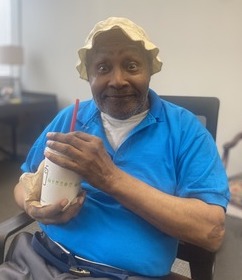
Mr. Cheeks celebrates his release day with a milkshake!

We welcomed Mr. Cheeks into his new life of freedom with cheeseburgers and milkshakes. His longtime friends, Ruth and Van Johnson – who faithfully visited him at Donaldson once they realized he had no biological family – drove up from Montgomery to join the celebration.

Thankfully, Shepherd’s Fold reentry ministry agreed to temporarily provide housing to Mr. Cheeks, while we awaited Medicaid approval. Appleseed client Alonzo Hurth, then a resident at Shepherd’s Fold, helped out, sharing a room with Mr. Cheeks and making sure he got his meals and got around safely. Within a few weeks, the Appleseed team was able to find a skilled nursing facility for Mr. Cheeks, where he currently resides.

Over the last few weeks, we have tried to provide some of what was lost during his excessive incarceration: comfortable clothes, encouraging conversations, assurances that he is free and cared for.  “It’s the least we can do for someone who has suffered so much,” said Appleseed attorney Scott Fuqua, who’s tracked down everything from poetry books to an electric razor to a recliner for our elderly client.

It is a learning experience for the Appleseed team to figure out what he needs to make the rest of his life better, to help him feel truly free.

But we know what he did not need – to die an old man, alone and in pain, in America’s most violent and dangerous prisons.

Family members of incarcerated people struggle for answers as violence and death escalate in ADOC prisons

By Eddie Burkhalter, Appleseed Researcher


It was five days after Jason Freeman was found lying in the yard at Ventress Correctional Facility in August – two stab wounds  piercing his heart  – before his mother received a call from a prison official letting her know her son was in the hospital.
His open-heart surgery would take place in a matter of hours, a prison captain told her, and there wasn’t enough time for her to make arrangements to get to the Montgomery hospital from her home in Dalton, Georgia. 

“Even if I couldn’t have visited him while he was in the hospital, I’d have been there,” Freeman’s mother, Teresa Self said. Lack of information from the Alabama Department of Corrections about loved ones injured or killed in Alabama prisons is common. That same lack of transparency around violence is underscored in the U.S. Department of Justice litigation against the state and the Alabama Department of Corrections.

The 2020 lawsuit, which documents unconstitutional treatment of men in Alabama prisons, is ongoing, yet the death toll in those prisons continues to rise. Families of incarcerated Alabamians face constant worry over their loved ones’ safety and are rarely provided sufficient or accurate information from prison officials. 

 “He could have died. I would have been there,” Self said of the lack of knowledge that her son had received life-threatening wounds until hours before the surgery. 

Self said she got a call from a captain at the prison on Aug. 18 telling her about the pending surgery, but providing no explanation how her son suffered life-threatening injuries while incarcerated for a minor felony. 

An Alabama Department of Corrections spokeswoman in a statement said Freeman, who is serving a four-year sentence for drug possession, was found injured in the prison yard on Aug. 13 and was taken by helicopter to a Montgomery hospital.  

Self said she tried unsuccessfully for five days to reach the prison’s warden by phone to learn what happened to her son. She didn’t learn he’d been stabbed until a doctor from the hospital called the day of the surgery.  She worries for his safety now that he’s back at Ventress. When she finally was able to speak to the warden on August 24, he only told her several other incarcerated men were involved in her son’s attack.

Freeman has since returned to Ventress prison and placed in the prison’s health care unit. “I just hope he gets the right care,” his mother said. “I need to get him moved because if he goes back there they’ll kill him, because they almost did.” 

Self is one of many family members who struggle to get the most basic answers from ADOC at a time of near daily reports of homicides, suicides, and drug overdoses within the state’s chaotic prisons and frequent lockdowns due to insufficient staffing.  Investigative journalist Beth Shelburne, who tracks ADOC deaths, has documented 55 deaths, likely due to violence, drugs, or suicide thus far in 2022. Last year, there were 42 such deaths.

The family of a man serving at Limestone prison couldn’t get a response from the department about injuries the man sustained in an Aug. 7 attack. They had to learn the extent of his life-threatening injuries, which included a skull fracture, collapsed lung and loss of sight in one eye, by working through family friends, WAAY 31 news station reported. 

It wasn’t until after the news station contacted ADOC asking about the attack that the prison’s warden called the family with information, the station reported. WAAY 31 didn’t identify the inmate “due to fears of more targeted violence.”  

Carla Underwood Lewis in 2020 found out her 22-year-old son, Marquell Underwood, died at Easterling Correctional Facility from other incarcerated men, and despite attempts to learn how he died from prison officials, she only learned it was a suspected suicide after reading a news article. 

Underwood was found unresponsive in his cell on Feb. 23, 2020, but the family received no information from the prison about how he died. 

An ADOC spokeswoman told a reporter that it was a suspected suicide, and later said the department “was not made aware that, in this case, the apparent cause of death was not communicated to Marquell Underwood’s mother when the facility’s chaplain contacted her to share this unfortunate news on Sunday evening.” 

The U.S. Department of Justice in the federal government’s 2020 lawsuit over Alabama’s prisons for men wrote that the violence and death inside prisons is spurred by overpopulation and a “dangerously low level of security staffing” and ADOC isn’t transparent about that violence and death. 

“Defendants, through their acts and omissions, have engaged in a pattern of practice that obscures the level of harm from violence in Alabama’s prisons for men,” the complaint reads. 

Meanwhile, ADOC is hemorrhaging security staff. The agency’s most recent quarterly report listed 1879 security officers, less than half of the 3862 required to safely staff the mandatory and essential posts.

(Once you read this, you’ll see why.)

By Libby Rau


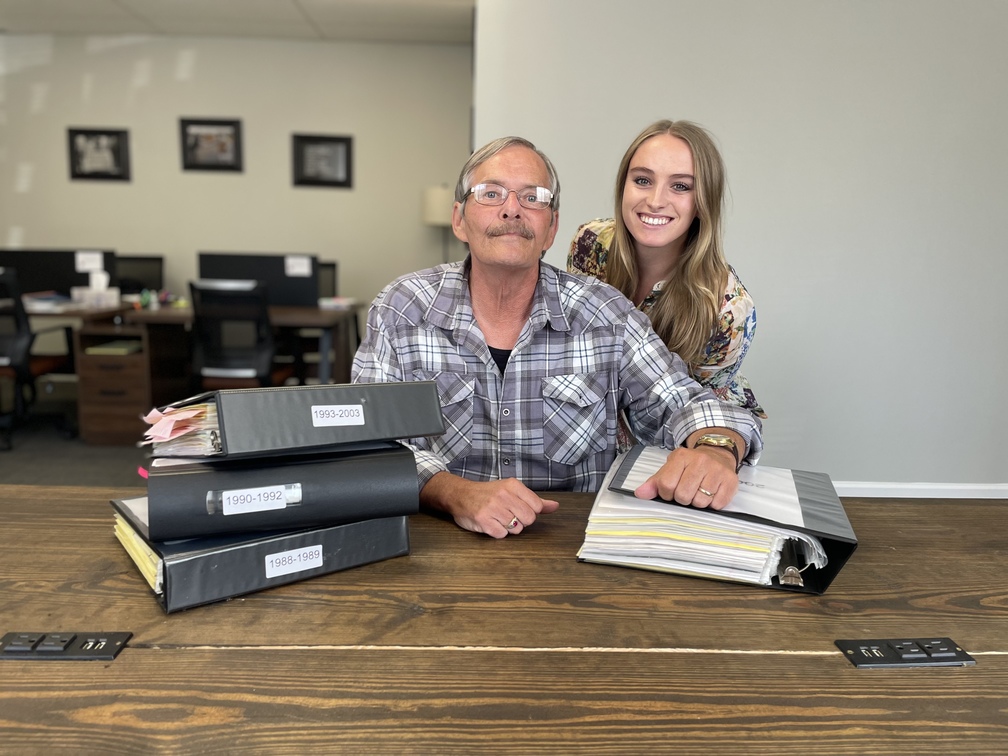
Libby with Michael and his binders full of letters

“Tonight the severity of my sentence has finally started to sink in. …I looked at the law books on my floor and this thought came to me: ‘I’m only pacifying myself.’ I truly don’t know if I can take any more negative encounters with the courts. I keep asking myself, ‘Why me?’ I’m 28 years old. …I know I have to be punished by the law, but it’s inhumane never to be released from prison, especially when no one was hurt….”

In early September of last year, I found myself plopped down at a desk in Appleseed’s Birmingham office, reading these words off yellowed paper. It was the first day of my internship, four giant binders were stacked in front of me, and I’d just been given my first task: begin to read through 36 years’ worth of letter correspondence between Appleseed client Michael Schumacher and his Texan pen-pal, Gene.

Of the thousand-plus letters I would read over the next seven months, these words from a letter that first day would remain some of the most impactful, desperation drenching their every syllable. Michael had written them while in solitary confinement for defending himself against sexual advances by another incarcerated person. He was five years into a life sentence.

I won’t go into the details of Michael’s story because he’s already written about it here, but the short version is that in 1984, at only 24 years old, he was sentenced to life without parole for his role in a robbery under Alabama’s three strikes law. Despite never physically harming anyone, he was deemed by law and by society to be unworthy of any chance to show he had changed—of any chance to be free. But against all odds, Michael chose redemption for himself and, with Appleseed’s help, was resentenced to time served in 2021 and released after almost four decades in prison.

In his book Just Mercy, Bryan Stevenson talks about the importance of proximity, saying that it was visiting incarcerated individuals in prison that made him realize what career he wanted to have as an attorney. What legal textbooks and analyses could not reveal to him, an incarcerated man singing an old hymn in a prison visiting room did.

While any account–however abbreviated–of Michael’s story is compelling, the details found in the “long version” that I read allowed me a rare proximity to his life in prison that taught me more about Alabama’s legal and prison system than anything else could. I may have known that in 2020 the Department of Justice declared Alabama’s entire prison system for men unconstitutional, in part due to guard-on-prisoner violence, but Michael’s January 5, 1989 letter described to me how a guard broke a nightstick over an incarcerated man’s head, beating him long after he fell unconscious. I may have known that prison is dehumanizing and degrading, but Michael’s experience on March 21, 1990 when he was falsely accused of holding drugs and handcuffed for over 24 hours until he could defecate in a can in front of female guards showed me just how much. I may have known that high security prisons offer the individuals within almost no contact with the natural world, but I didn’t realize the extent of this deprivation until I read in Michael’s October 13, 1999 letter that he touched a leaf for the first time in 15 and a half years. I may have known that life has to somehow go on after being sentenced to die in prison, but I didn’t know the joy that being the prison Scrabble champion and winning “a six-pack of Cokes and bragging rights” could bring until I read Michael’s July 23, 2017 letter.

The point is, proximity like what Michael’s letters gave me changed the way I think about the issues our state faces because they humanized them on a much deeper level. But the power of proximity isn’t just found in words on pages. It’s encountered in everyday, unassuming conversations or observations, and it’s these little (and not so little) interactions that provide the fuel to keep fighting for a better Alabama even when a brighter future seems distant.

Here are a few of these interactions that stand out from my time as an intern: When Michael was talking about North Carolina’s Grandfather Mountain and was calling it “granddaddy mountain.” The fact that we both have German backgrounds, and comments like “I’m still stuck on the fact that I have family now. That’s just so awesome to me.” The little bag of dried flowers we threw in celebration at his wedding that I kept as a memento and have sitting on my desk. When another Appleseed client, Ron McKeithen, told me about the first time in 37 years he heard the crinkle of fall leaves under his feet. Ron’s contagious smile, and the little note on the index card he wrote me in his beautiful, unique handwriting. How, for a while after his release, he had to remind himself he didn’t have to walk sideways down the stairs anymore–that if he left his back exposed he wouldn’t be stabbed. Our client, Alonzo Hurth’s expression of pure excitement when he walked out of the DMV after passing his driver’s permit test, and the contented smile on his face as he ate his favorite salmon sandwich from a 4th Avenue restaurant where he used to work before his incarceration. The look of disbelief and joy on Joe Bennett’s face as he walked free from Donaldson Prison after 24 years.

And it wasn’t just spending time with clients, it was observing the level of care Appleseed staff put into their work and into those around them, too. It was Carla bringing a fresh apple or other piece of fruit when we would go to a prison to pick up a newly-freed client because she knew that they likely had not had one in years, if not decades. It was Alex planning and setting up Michael and Kathlyn’s wedding on top of already devoting every waking minute of her life to our clients. It was how Callie, our Community Navigator who has her own background of poverty, addiction, loss, and incarceration, sang a hymn as a way of an introduction before giving a talk about her life.

When you are proximate to people and the details of their personalities and stories, you are reminded just how much you have in common–you are reminded of your shared humanity. This is such a simple truth, yet it’s one that is wholly lacking from our systems of prisons and punishment. People are thrown away, out of sight and out of mind, and society is allowed to forget they are human, and they are never really allowed a chance to truly repair the harm done, because punishment is one dimensional and restoration is three dimensional.

I recently had a brief conversation with an Alabama state legislator who expressed the view that empathy and “heart” watered down the “facts” of policy and policy proposals. As if the compassion spurred by others’ suffering is somehow not to be trusted when making laws. As if the more humanized issues were, the less factual they became.

All I know is that my time as an Appleseed intern allowed me to understand the facts and facets of these issues better than I ever had precisely because I was closer to the people. I learned that to get to the heart of the matter is to get to the heart of people–to their stories, to their details. And most of all, I learned that liberation is never only one-way.

I can not thank Appleseed enough for these lessons and experiences. I’m humbled to be able to continue working as a Legal Assistant with an organization founded on centering the people most harmed by Alabama’s unjust and inequitable systems and thereby affirming their humanity in everything they do. Thank you, Appleseed. The work continues.

A Record Number of Violent, Preventable Deaths in Alabama Prisons, but the Same Responses from the Alabama Department of Corrections

By Eddie Burkhalter


The rising death count inside Alabama’s prisons continues to claim the lives of young Alabamians and devastate families left behind. Last month alone, an estimated 15 incarcerated people died from homicide, suicide, or drug overdose, preventable deaths that federal authorities lift up as evidence of unconstitutionally dangerous conditions across state prisons. 

Sarah Burch knew her son, Chadrick Wade, was having a mental health crisis and she tried to get help for him at Fountain Correctional Facility. But no one took him seriously. On July 4, Chadrick was found unresponsive in his cell and pronounced dead. He was 30 years old and serving time for property offenses.

“They should have treated his mental illness. They should have treated his drug addiction. These things should not have been ignored,” said Burch, who lives in the small Mobile County community of Wilmer, told Appleseed. His death compounds her grief, as last year she lost another son to COVID. 

Adding to the suffering of families left behind is the lack of communication and lack of transparency at the Alabama Department of Corrections. ADOC doesn’t typically publicly release information on a death at the time of the death, and the agency’s reports do not identify the names of those who’ve died. It’s up to journalists and others to receive tips on deaths, speak with other incarcerated people and families and seek confirmation from the department.  

Investigative journalist Beth Shelburne began tracking ADOC deaths in 2018. She reported this week that the total number of deaths due to violence, suicide and drugs from 2018 to now is 151: 61 deaths after assaults, 32 suicides and 58 overdoses or other drug-related deaths. At least 40 of those occurred this year, according to Shelburne’s research.

Among all the deaths so far this year, at least 40 were likely suicides, homicides or drug-related deaths, according to Shelburne. 

The circumstances surrounding the death of Chadrick Wade show that the ADOC is unwilling, or unable to take the necessary steps to save lives. 

Sarah Burch said her son hadn’t been diagnosed with a mental health condition, but that he was showing signs of having a mental health crisis prior to his death, and had asked correctional officers for help.  

While in prison Wade also expressed a desire to kill himself, according to both his mother and another incarcerated man at Fountain, whose cell was near Wade’s cell. That other man showed videos taken by cell phone which he said shows a fire Wade had set just outside his cell in the days prior to his death.  

In another video taken by the man, two officers can be seen standing outside Wade’s cell, then walking away without providing aid to Wade. Wade’s mother said her son told her he’d been asking officers for help, but never got it.  

The other incarcerated man believes Wade may have intentionally overdosed on fentanyl, which he said Wade had been asking for prior to his death and indicating he wished to die by overdose. It’s not yet clear if Wade’s autopsy results have been completed. Attempts to reach the Escambia County coroner were unsuccessful.  

“He said that they didn’t take him seriously. He just said they didn’t do anything,” Burch said her son told her about the officers’ responses to him pleading for help. 

Wade had overdosed inside Fountain prison several times in the eight weeks he was there prior to his death, Burch said, but the family wasn’t notified by prison staff of those overdoses.  

The Alabama Department of Corrections declined to answer questions about Wade’s death, including whether he’d asked officers for help and threatened suicide.  

“ADOC can’t comment on ongoing investigations,” the department said in a response.  

Overcrowding in Alabama’s prisons, coupled with woefully inadequate staffing, is resulting in increased deaths, according to the U.S. Department of Justice’s 2020 lawsuit that alleges unconstitutional conditions in the state’s prisons for men.   

Less than half of Alabama’s correctional officer positions were filled in early 2021, according to the suit. And ADOC has reported a net decrease of 258 officers so far in fiscal 2022, according to the latest quarterly report.  

Fountain prison was at 149 percent capacity in June, the latest month for which ADOC has released a monthly report.  Wade is one of at least four people who have died there since April.

The federal government’s lawsuit followed DOJ reports released in April and July of 2019 that detailed systemic use of excessive force within Alabama’s prisons, and that Alabama’s prisons for men were likely violating inmates’ rights to protection from sexual abuse and physical harm.  

ADOC also hasn’t been able to control contraband, which is resulting in mounting overdose deaths, according to the complaint.  

 ADOC also fails to accurately report overdose deaths as such, sometimes referring to them as “natural causes” in reports, according to the federal government’s lawsuit. The drugs also continued entering prisons despite ADOC’s ban on visitations amid the COVID-19 pandemic.  

ADOC’s latest quarterly report lists the “incident type” as “Accidental/Overdose” of a June 15, 2021 death at Donaldson prison  with the final autopsy result as being “Fentanyl Toxicity” but lists the incident type of an Oct. 12, 2021, death as “Natural Death” yet the final autopsy result being “Fentanyl.”  

Two additional deaths at Staton Correctional Facility in September and November of last year list the incident types as “Natural Death” yet have autopsy reports that indicate drugs were the cause, according to ADOC’s report.  

ADOC’s inability to stem the flow of drugs, rampant violence, death and corruption come even while the department’s budget continues to grow. From 2010 to 2020, the Department of Corrections’ budget nearly doubled. For fiscal year 2022, it is $610 million, nearly a quarter of the State General Fund.   

Despite the systemic problems as described in the DOJ’s lawsuit and increased spending on Alabama’s prisons, the state is moving ahead with a plan to build two new prisons, calling the buildings necessary to address the federal government’s concerns. The new prisons won’t relieve overcrowding, however, as those plans also call for the closure of several existing prisons.  

The DOJ also makes clear in the federal government’s lawsuit that new buildings alone won’t solve Alabama’s prison crisis.