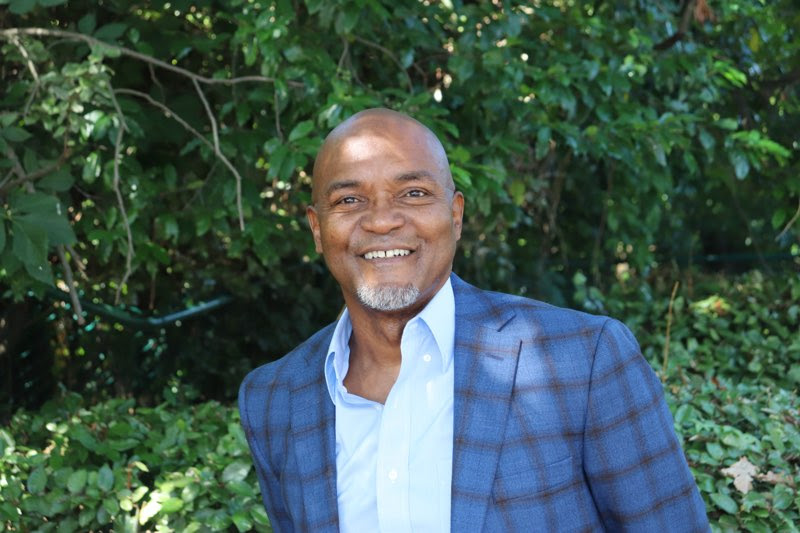
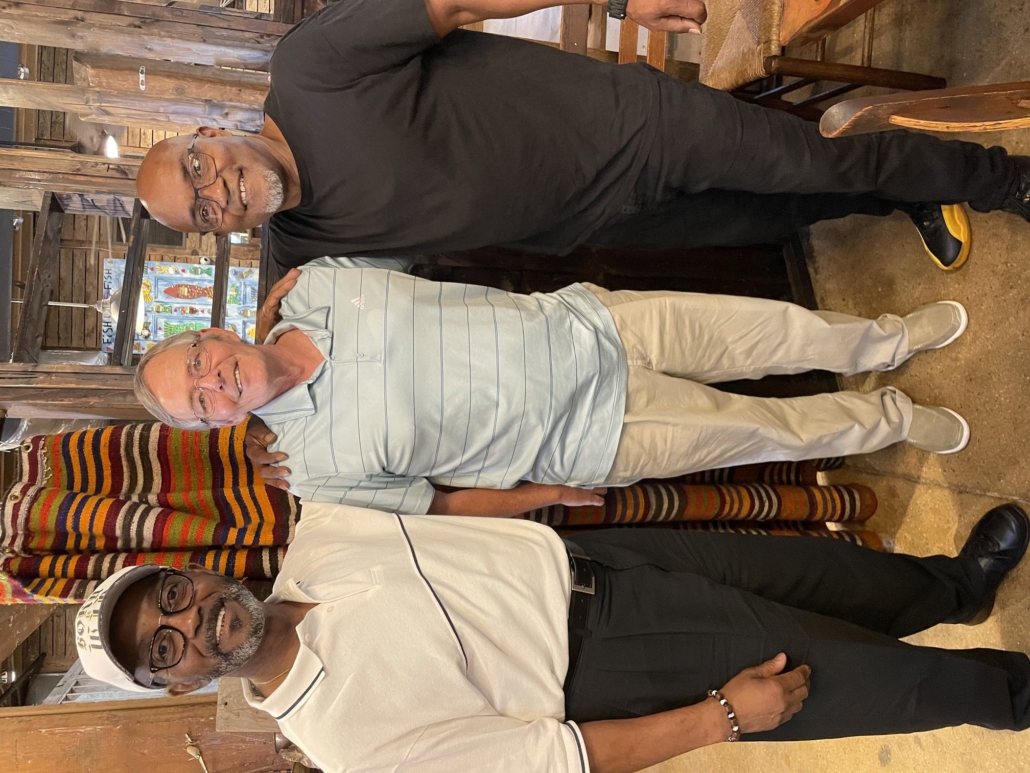
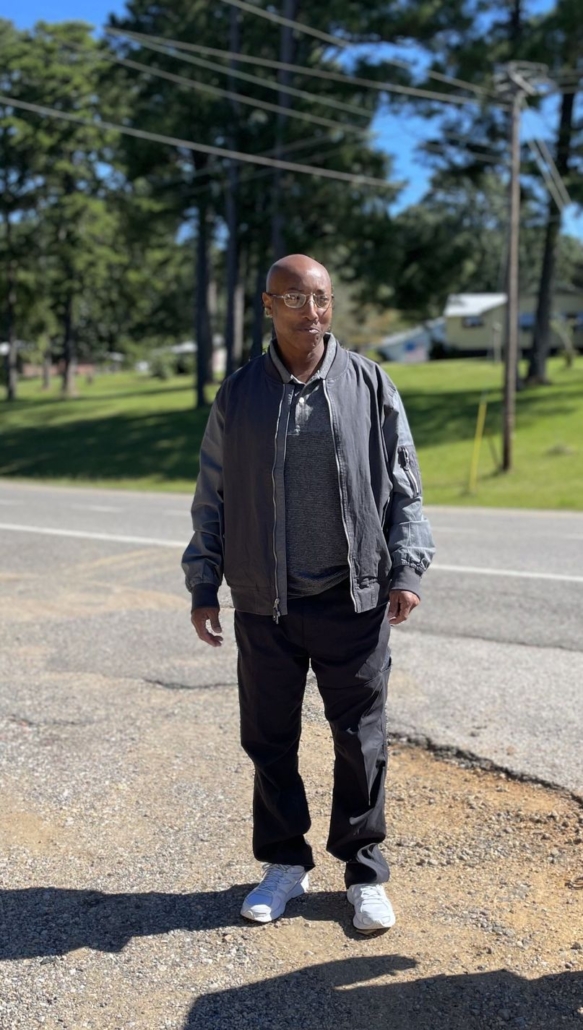
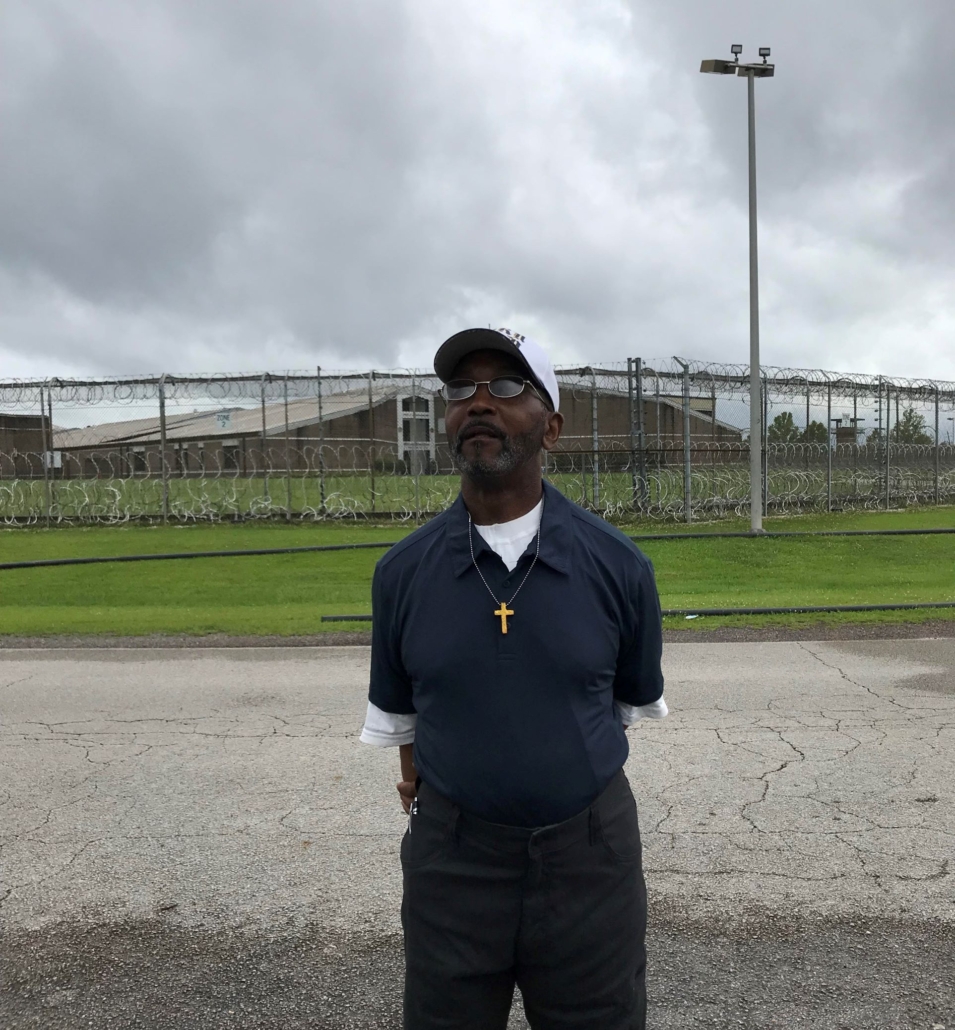
My name is Ronald McKeithen, and I am overwhelmed with joy and gratitude to be joining the staff of Alabama Appleseed as a Re-entry Coordinator and Advocate. Alabama Appleseed has added a new component to their mission: to save the lives of people who’ve been incarcerated for decades under the Habitual Offender Act are serving a slow, agonizing death sentence of life without the possibility of parole. My contribution to Appleseed’s mission is to make our clients’ transition back into society as graceful as the whole staff at Appleseed has made mine.

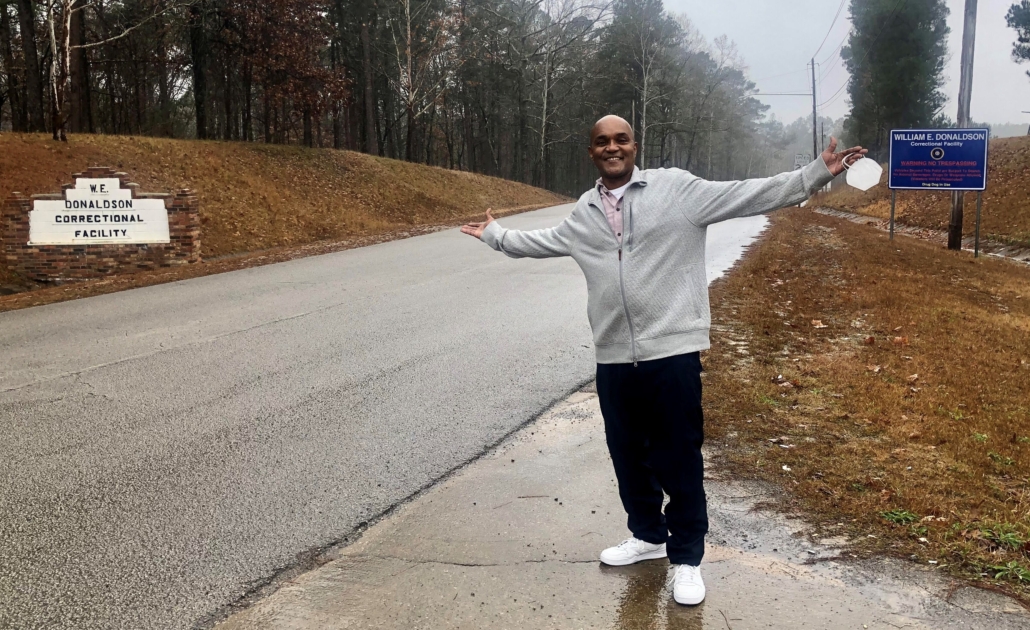
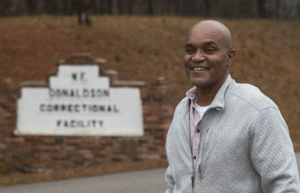
One year ago today, I walked out of Donaldson prison after being locked away for 37 years for a conviction received when I was a teenager. I was given a mandatory life without parole sentence in 1984. The criminal justice system in Alabama decided I was not worthy of ever living outside the prison walls. The system got it wrong, and every day I am living proof of that fact. 

My background is different from most people who go to work for a legal nonprofit. I grew up with three siblings in Titusville, one of many impoverished communities in Birmingham, where thoughts of college careers were not seriously entertained over a dinner conversation. We were poor. We always lived in dilapidated housing. Sometimes I was hungry. The welfare checks and food stamps were never enough for a house of five. But like most young kids, I wasn’t aware of our struggles. Not fully, anyway. 

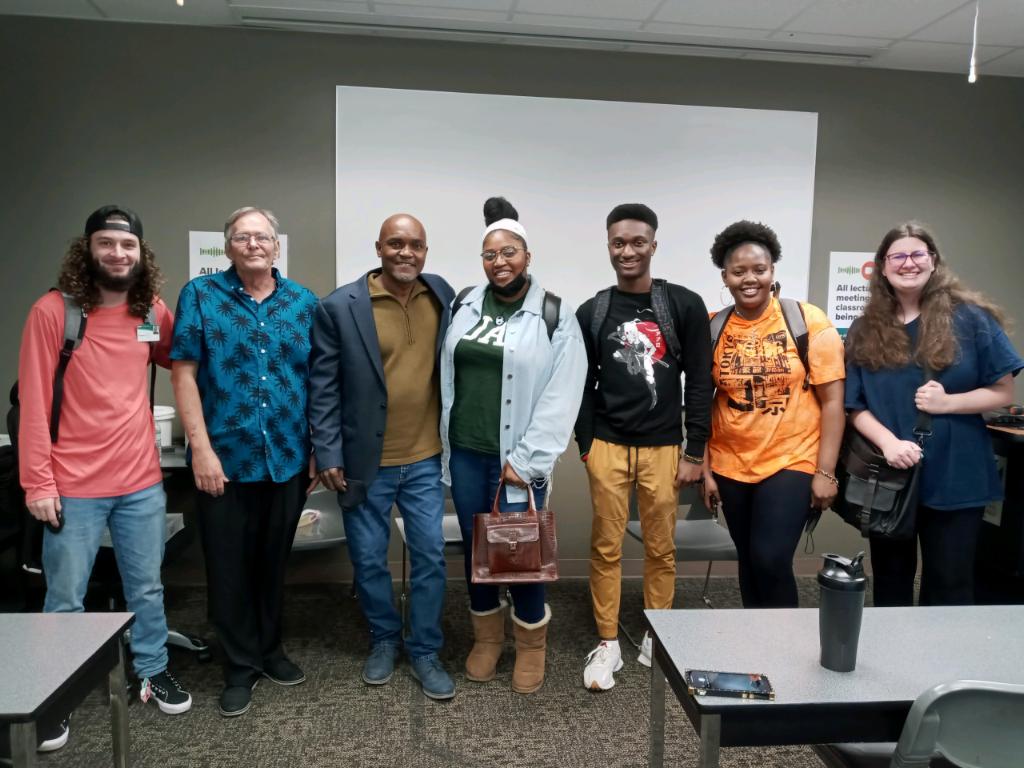
Despite a childhood in poverty, with an alcoholic mother and an absent father, I always loved to learn. I loved school. I dreamed of being a UAB student. As a child living on the southside of Birmingham, I watched as the university grew around us until we had to move. This is why I receive such a thrill these days when I’m asked to speak to a UAB class full of students or on a panel at AEIVA (Abroms-Engel Institute for the Visual Arts) or be a witness in a mock trial. I’ve also had the extreme pleasure of speaking at Samford University twice, as well as Homewood High School. I’ve met amazing kids who will no doubt change the world. 

I have always been curious about people, about life. As a child, my curiosity had me wandering all over Birmingham, roaming areas a Black child did not belong. But as an explorer, the risks were worth it. I will never forget the time I came across a hidden paradise that was right down the street. There were large crabs and crawfish, frogs with legs so large, sand that was too white to be in my ‘hood, and seashells that I’d only seen on Gilligan’s Island. To anyone else, it was a ditch. But to a seven-year-old me, it was a sanctuary. My beach. My coast. Wine bottles and all. And the most amazing thing that I learned about that ditch was how a heavy rain would create a flood of water that clears out the old and leaves new treasures. 

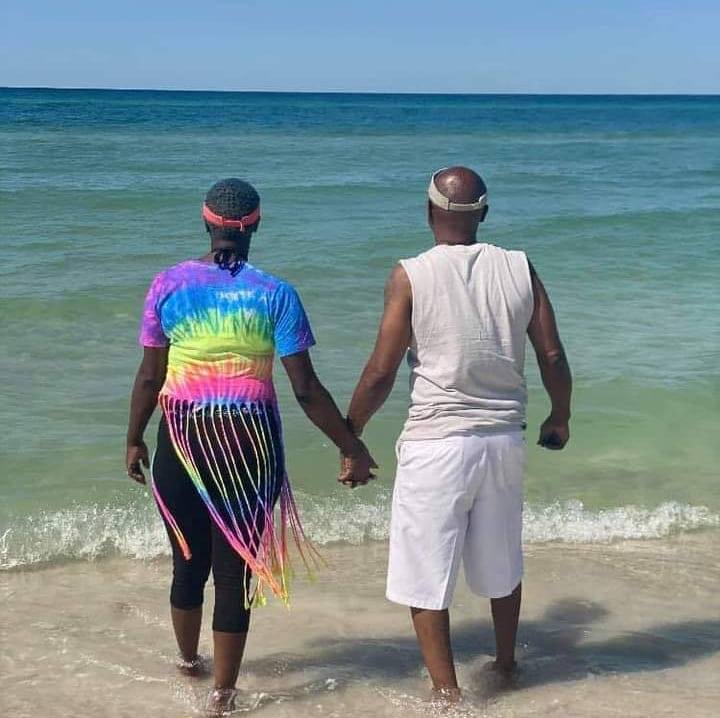
I was reminded of that ditch during a visit to Panama City Beach a few months ago. My first time ever seeing the ocean. I had never dug my toes into sand so deep, nor seen a body of water so vast. So blue. I felt as if I were standing before God. As a kid, playing in the ditch, my imagination could never have prepared me for such a sight. For such a marvelous wonder. For the real thing. Nor could 37 years of preparation, of planning, of imagining my freedom, of how it would feel, look or taste, come close to what my eyes have seen. 

I have been standing before that vast ocean in a daze since I stepped through those prison gates. I am in awe of the changes, the advancements. Birmingham has grown into a beautiful city. The opportunities before me seem endless. 

This is why I love my job at Alabama Appleseed. It is my responsibility to reveal these endless opportunities to our clients – men who have been denied the simple pleasures of life for decades, pleasures that so many take for granted. This new world can be frightening to some and very confusing for others. Operating a cell phone or an ATM could feel like disarming a time bomb. The mental and emotional adjustment from living in a cell for decades to all of a sudden witnessing a universe of wonder and so much change can be very overwhelming. Believe me. I know. Which is what makes this job so ideal and rewarding.

Prison convinced me that I didn’t have the luxury of being unproductive. That I couldn’t just sit around and wait for the laws to change. Nor allow the lawmakers in Montgomery to continuously build up my hopes with bills that never pass. So I paved my own way, educated myself, and tried the best I could to prepare myself for a life in a new, foreign world, just in case I ever got a second chance. Incredibly, I got that second chance. 

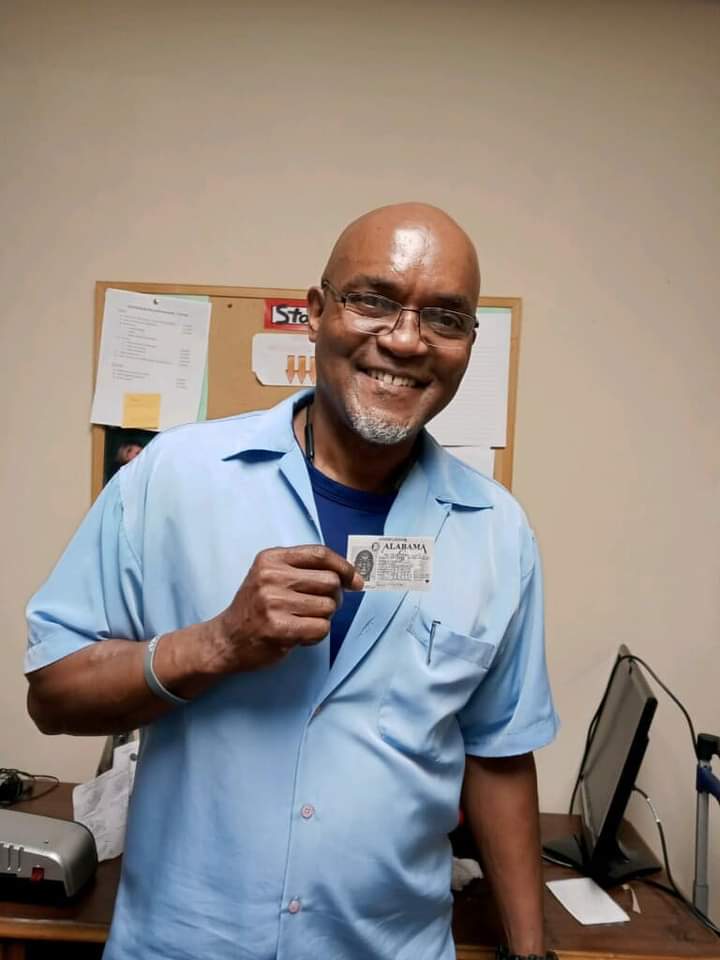
Despite the belief that an ex-convict who has lived in prison longer than in the free world could never make it as a free man, here I am one year later, thriving. No tickets. No criminal activity. Just a lot of making up for lost time, trying to remember what freedom was like from when I was 19-years-old. So much of everyday living has seemed like a first to me, from experiencing the sensation of rustling leaves to having my own bedroom, bathroom and TV. There also have been a lot of true firsts: I got a driver’s license, worked three jobs, paid rent, operated computers, caught the bus, bought a car, pumped gas (eventually got the hang of it); I was featured in art galleries, and I was the featured artist in art shows. I’ve been on the news and radio; spoken before legislators; featured on criminal justice panels; spoken professionally to non-profits, various committees, universities, and church groups; have been filmed by the NFL; and currently spend two days a week with at-risk kids in alternative school, reminding them that they are more than the worst things they’ve ever done.

There are no words strong enough to thank the many people who have stood beside me from day one. They have been pivotal in my obtaining the most incredible job and an opportunity to work with the most compassionate people I’ve ever met. If everyone released from prison were blessed to have a support team as mine, recidivism would become a non-issue. I’m also grateful that the Community Foundation of Greater Birmingham believes in me enough to support my role at Appleseed.

I can only hope my actions speak louder than any conviction and sentence ever will.        

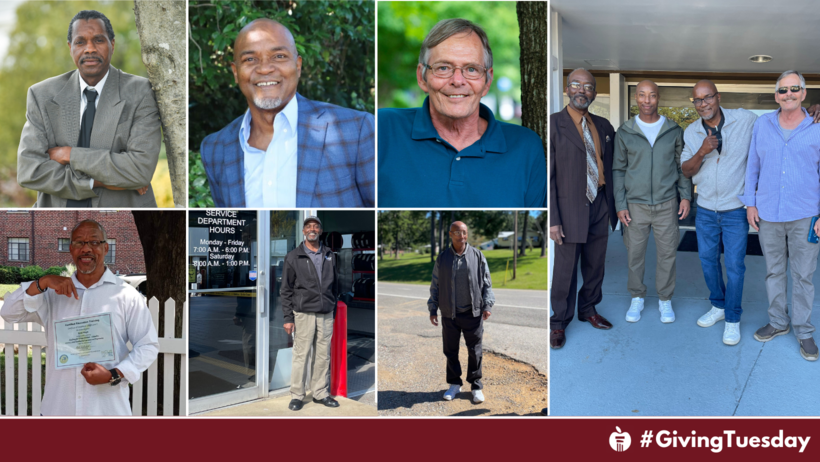
Appleseed joins the many (many!) outstanding nonprofits for the Giving Tuesday campaign on Tuesday, November 30, 2021. This global day of giving highlights the important work accomplished because of generous donors everywhere.

Appleseed humbly asks for your support this day (and beyond) specifically for our re-entry work. Our legal advocacy and support for older, formerly incarcerated men changes lives. Appleseed is proud to stand with people who have turned their lives around and are returning to Alabama communities after decades behind bars. These men leave prison with nothing and support is desperately needed. 

As our client Michael Schumacher explained in a recent presentation, the prison gave him $10 and a one-way ticket to the county of arrest, where he would not have a clue what to do, with his family gone and so many changes in the world. Because of supporters like you, Appleseed has provided his transportation, housing, and a warm embrace into a new life of hope. Michael, a gentle soul and former prison Scrabble champion, is starting over at age 61.

From securing social security cards, driver’s licenses, and bank accounts; to scheduling  medical appointments; to teaching our clients about cell phones, food safety, and more, Appleseed is with our clients every step of the way. Thank you for your generosity as we support justice-involved Alabamians as they transition to their newfound freedom and a second chance at life.

  • $21 covers the fee to secure a client’s birth certificate
  • $36.25 covers the fee for a driver’s license or ID
  • $50 covers a tank of gas for our Re-entry Coordinator to drive clients to their necessary appointments weekly
  • $100 covers a week of housing for one of our clients
  • $500 covers a post-release shopping trip for our clients for necessities and a wardrobe, including interview clothing

Please click here to donate! Thank you for your fabulous support.

We are thrilled to announce the release of another client, Joe Bennett, today – his first free world birthday in 24 years. Once sentenced to die in prison, Mr. Bennett walked out of Donaldson Correctional Facility on September 21, 2021, after a Jefferson County judge granted Appleseed’s motion for post-conviction relief and resentencing. 

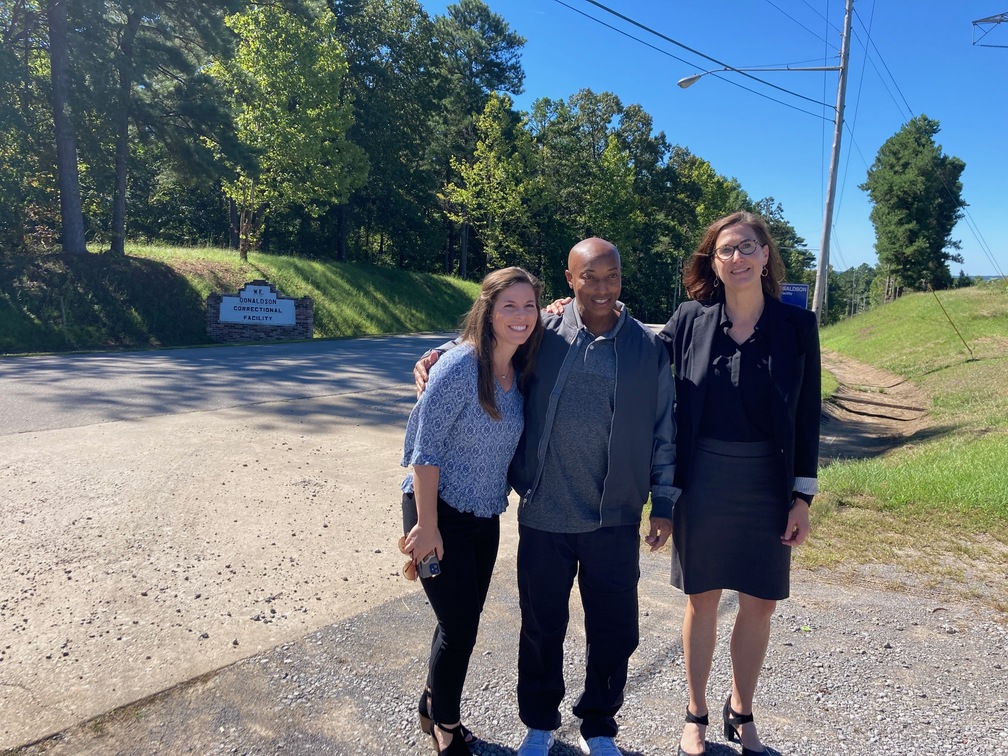
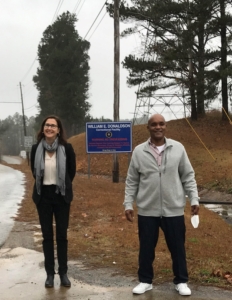
Staff Attorneys, Alex and Carla pose for a picture with the newly released Joe Bennett outside the entrance of Donaldson Correctional Facility.

Staff attorney Alex LaGanke and Re-entry Coordinator Ronald McKeithen have been working in tandem with Joe and have come together to share his story.

Alex will open the blog with background on Joe’s case. Ronald, former Appleseed client and inaugural Reentry Coordinator, will share his reflections aiding his first client through reentry. 

Two Years Versus a Lifetime
By Alex LaGanke

In 1997, Joe was given two life-without-parole (“LWOP”) sentences for two counts of robbery stemming from a single incident at a barbecue restaurant in Birmingham’s Eastlake neighborhood. Joe is one of the many people in Alabama who have been condemned to die in prison for an offense without physical injury, enhanced by minor prior offenses under the Alabama’s Habitual Felony Offender Act (HFOA).

Due to changes in that law in the 1990s and sentencing reforms in 2015, three of the four prior offenses used to enhance Joe’s sentence under the HFOA could not be used for enhancement purposes today. His prior offenses included low-level felonies that are now classified as misdemeanors, including two purse snatching cases, and possession of a controlled substance.  If sentenced today, Joe would be ineligible for a sentence of life imprisonment without parole; rather, he likely would receive a split sentence with two years prison time and seven years on probation: two years versus a lifetime. 

Jefferson County District Attorney Danny Carr recognized the unfairness of this sentence and did not oppose our post-conviction motion for resentencing, and Circuit Judge Shanta Owens signed the order granting immediate release.

Joe Bennett on the day of his release.

At 27-years-old, Joe’s LWOP sentence meant leaving behind two small children, who are now grown adults with children of their own; forfeiting the chance at a career; and missing over two decades of significant societal changes, making adjustment to today’s world increasingly challenging. But it is also true that Joe’s prison sentence provided discovery of a wide-ranging musical talent, cultivation of a lifelong support network, and even drug rehabilitation. Remarkably, Joe managed to avoid receiving a single disciplinary infraction during his 22 years in prison. If you know anything about Alabama Department of Corrections (“ADOC”), where you can get a write-up for having an extra pack of ketchup, you know this to be a miraculous feat. 

At Appleseed, we see our clients’ remarkable institutional records as a testament to the human capacity to evolve, mature, and realize unearthed potential. We have the highest regard for our clients – who are artists, Scrabble champions, ministers, musicians, and paralegals – because they corrected themselves in a corrections system that encourages anything but correction, improvement, or rehabilitation. To be clear, Joe Bennett did not just survive a corrections system that necessitates violence for protection, fuels drug trafficking, and maintains inhumane living conditions declared unconstitutional by the U.S. Department of Justice; he thrived. He was a leader, an honor dorm resident, and musician at the prison chapel.

In fact, Joe is so phenomenal that at 52-years-old (53 today!), he has been working day in and day out as a tree groundsman. But before I get too carried away with all the impressive things Joe has done since he’s been out, I’ll let Ronald take it from here to discuss, rather poetically, Joe’s reentry process.

“Who better to assist them than a person like me?”
By Ronald McKeithen

It’s difficult to describe the emotions that overwhelmed me as I waited for Joe to walk through those prison gates, the same gates I exited nine months prior after serving 37 years. Being back at Donaldson Correctional Facility that Friday in September, I found myself reliving that same burst of joy that exploded within me once I laid eyes on the people that saved my life and wondered if Joe will be able to restrain from dropping to his knees with tears of joy shamelessly flowing down his cheeks. 

As I stood there, I also couldn’t help but think about the difficulties he will face as he struggles to rebuild his life in a world he hasn’t seen in over two decades. You see, my reason for being at Donaldson wasn’t just to greet a friend on the happiest day of his life, but also to ensure that his transition has as few hurdles as possible. Which is why Alabama Appleseed hired me. 

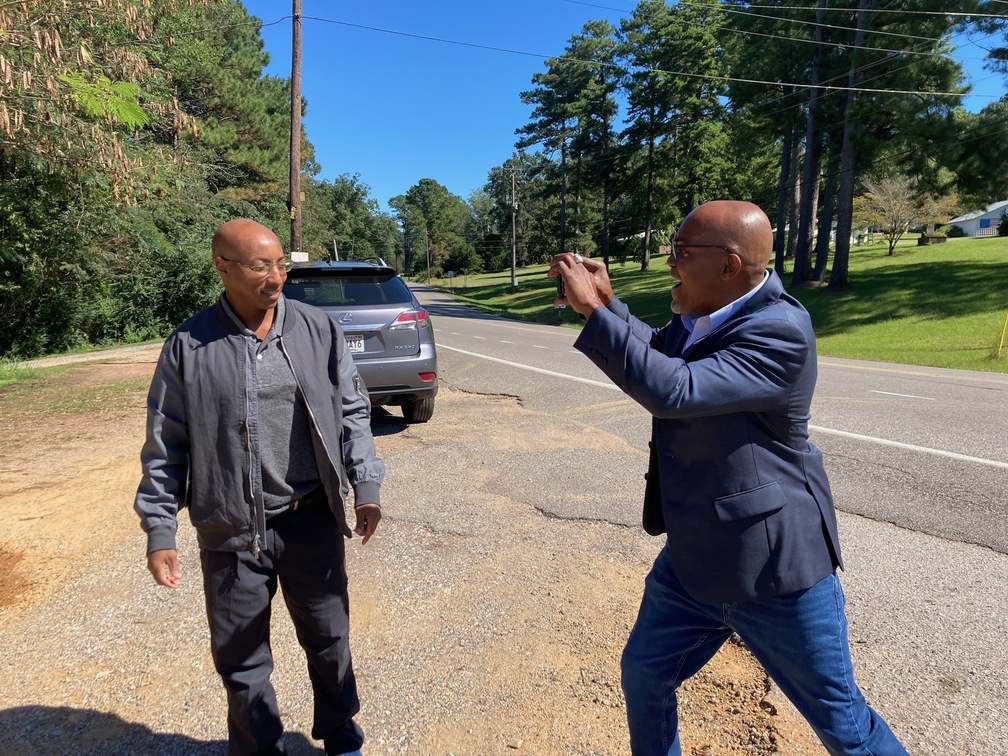
Here’s me super psyched about Joe’s release, taking an awkward pic on the side of the road at a convenient store after we got kicked off Donaldson prison campus for celebrating Joe’s release.

Freeing their clients is only the first step. Ensuring their clients’ success in becoming productive members of society has become a priority as well. And who better to assist them than a person like me who has endured the same pain and has faced the fear and uncertainty that this new world brings?

Not long ago, the State of Alabama believed that a person needed only $10 and a one-way bus ticket to start a new life after prison, regardless of how many years they served. The State has been so kind to increase it to $10 for every five years you’ve served, which is still not enough for a meal, room, and board. And for those of us who’ve served decades, we are unlikely to have the proper documents needed to get a job. Getting copies of birth certificates, social security cards, non-driver’s license, driver’s license, and medication, for starters, is a long process that will require resources, far more than the amount awarded upon release. 

Here at Appleseed, we lessen our returning clients’ fears by not only standing beside them as they maneuver through this reentry maze, but also assisting them, if needed, in paying the fees of each document, finding housing, taking them on an initial trip to the store for all the necessary things returning citizens’ don’t have. And that just scratches the surface. 

I have put in hundreds of miles, alongside my amazing mentor and fearless, all-knowing supervisor Alex (wow, Alex), to secure Joe a valid state ID, birth certificate, and bank account; taking him to and from a job-readiness course at Salvation Army to his tree cutting job at sites all across Birmingham; and sharing with him everything I’ve learned about this city and world that has changed so much since we were kids here. 

I asked Joe to share some words about his transition thus far, and this is what he had to say: “I’m enjoying life by God’s grace through the way of the wonderful organization of Alabama Appleseed – I thank you all so much. I’m just learning, experiencing. And just knowing that I’m being a productive citizen feels wonderful and great.  I’m just elated. I can’t thank Appleseed enough.”

I even had the opportunity to talk to a long-time supporter of Joe’s and current employer, Robert Reid of Greenbriar Tree Service, LLC, who has been instrumental in Joe’s release and reentry. Mr. Reed said this about Joe: “Joe has become one of my greatest employees at Greenbriar Tree Service. He is faithful, has integrity, and does anything you ask him to. He is learning so fast and has done such a great job.” Mr. Reid met Joe at Donaldson prison through a prison ministry years ago and continues to support him by providing this job and many other supports. 

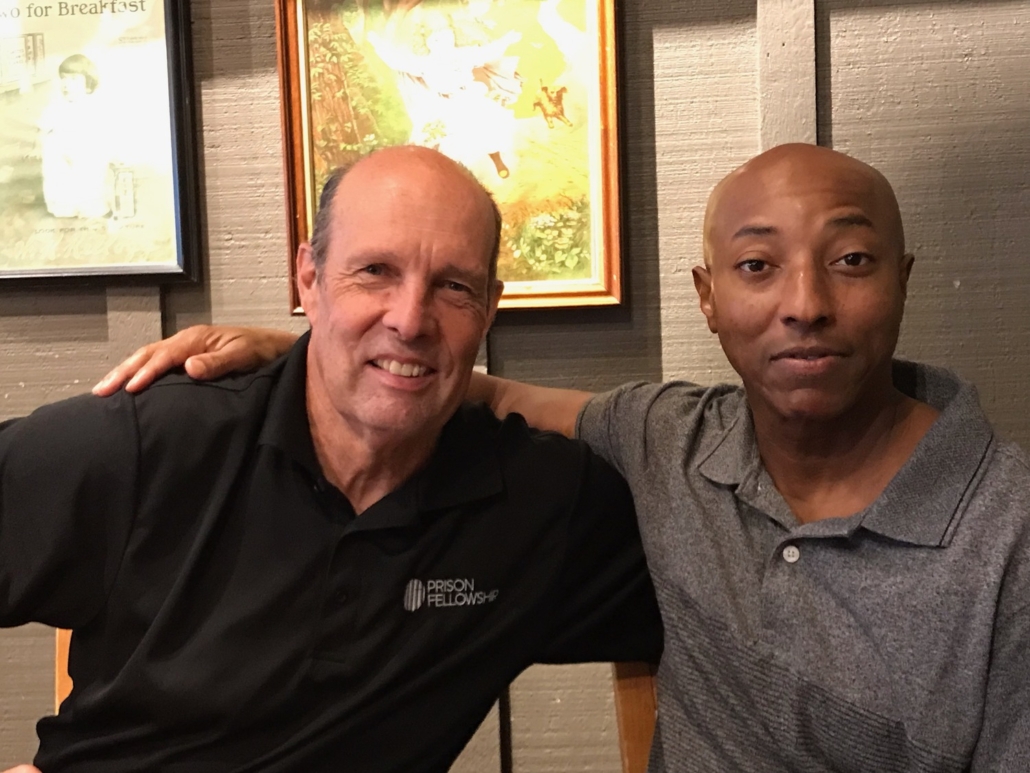
Joe and Robert pose for a picture at Cracker Barrel after Joe’s release. He wanted breakfast for his first free world meal!

I am so elated to have the opportunity and responsibility of assisting Joe Bennett as he takes necessary steps to building a life he could only dream of just a few short months ago. And I can’t wait to see what freedom has in store for him! 

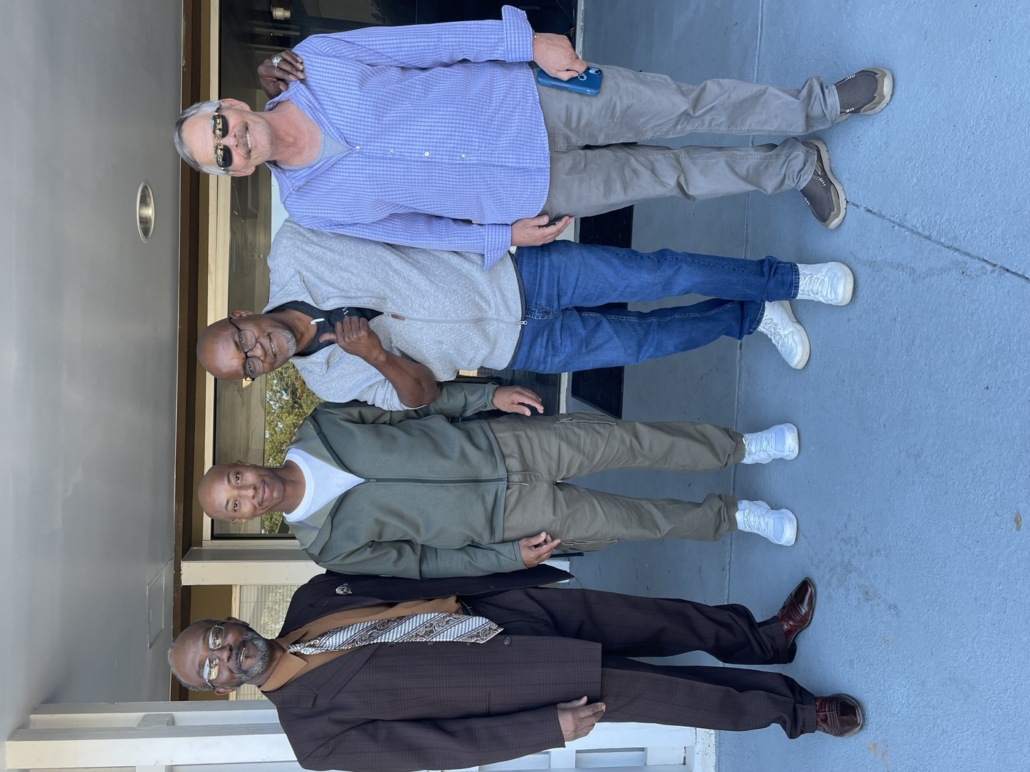
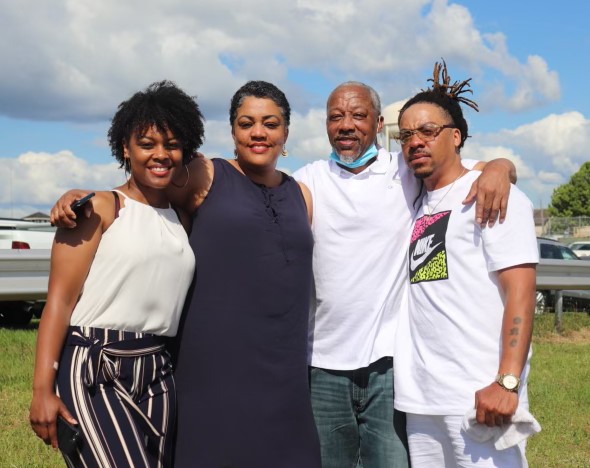
Appleseed’s local clients gather for a picture with Joe at Shepherd’s Fold the day after his release. L to R: Alonzo Hurth (70 y/o, 27 years in DOC); Joe Bennett (53 y/o, 22 years in DOC); Ronald McKeithen (59 y/o, 37 years in DOC); Michael Schumacher (61 y/o, 36 years in DOC).

We cannot do this work alone

Over the last year, Appleseed has worked with incredible partners – individuals and organizations who care deeply about returning citizens and help provide the necessary supports. We would be remiss in giving thanks where it is undoubtedly due, to our amazing community partners whose resources, services, and kindness to the most vulnerable make acclimation for our clients possible: 

  • Shepherd’s Fold
  • Christ Health Center
  • Greater Birmingham Ministries, Voting Restoration Program
  • Community on the Rise
  • Salvation Army, Ready to Work Program
  • UAB Eye Care 

Ronald and Alex are signing off, but stay tuned for more updates on Joe’s amazing progress and Ron’s job with Appleseed! 

By Alex LaGanke, Appleseed Staff Attorney

In 1994, Alonzo Hurth was sentenced to life without parole for a robbery conviction without physical injury. On June 21, 2021, Mr. Hurth walked out of Donaldson Correctional Facility a free man after a Jefferson County judge ordered him released on time served.

If sentenced today, Mr. Hurth would be eligible for a 13-year sentence with 3 to 5 years to serve in prison. Yet, he served 27 years of a death-in-prison sentence from which he tirelessly sought relief without legal representation until now. 

Forgery convictions were used to enhance Mr. Hurth’s sentence: a Georgia forgery and two Alabama check forgeries, the latter arising from a single incident. Due to changes in the law in both states, those priors would be too minor to use for sentence enhancement today. Put another way, if sentenced today, Mr. Hurth’s conviction would not be eligible for the Habitual Felony Offender Act.

Alonzo Hurth walked free from Donaldson Correctional Facility after 27 years of incarceration for robbery.


I began corresponding with Mr. Hurth and investigating his case in the summer of 2020. We featured his case in our Condemned report highlighting the wrongs of Alabama’s merciless Habitual Felony Offender Act.

At Appleseed, we receive a lot of letters from incarcerated Alabamians. His were distinctive and always opened with this line: “May we first acknowledge our Lord and Savior Jesus Christ in whom we move and breathe and have our being. (Amen.)” Like many of our clients, Mr. Hurth’s commitment to his faith unquestionably kept his hope alive despite his life without parole sentence. In fact, Mr. Hurth’s relationship to God was possibly the most meaningful relationship in his life when we met him at age 68. His adoptive parents had passed away, and relationships with his remaining friends and family had strained after 27 years of incarceration.  Still, Mr. Hurth displayed a gift we often observe in older, incarcerated clients, his ability to channel crippling isolation into something positive and productive in an environment rife with self-destructive coping mechanisms, like violence and substance abuse.

During the early 2000s, Mr. Hurth became a licensed minister after years of study and written assignments through an out-of-state mail-in certification program. Mr. Hurth spent most of his incarceration in the prison chapel. He would begin his days around 3 o’clock every morning. He’d open the day in prayer and study, share an “encouraging word” on a bulletin board in the honor dorm where he resided, and before retiring to the chapel, Mr. Hurth might draft a poem and add it to his book of poems. Even before learning that there was any hope of his release, he displayed profound optimism: “I believe that everything that happened to me has brought me closer to God. After more than 25 years, I see God working in my life. When we strive to sincerely follow Christ, great things happen!” 

Alonzo Hurth requested one thing for his first day of freedom: a salad.

To be clear, Mr. Hurth’s disposition toward his circumstances was not delusional. He was aware of the death trap  he lived in, witnessing traumatic events regularly.  Even after nearly 50 days in the free world, the stain of incarceration on Mr. Hurth’s life is palpable. But as an incredible testament to the human will, Mr. Hurth chose to make the most of the worst situation. Even at nearly 70 years of age and undergoing cancer treatment twice while in the Department of Corrections, Mr. Hurth chose to view every day, every moment rather, as a blessing and “testimony.” 

Tragically, violence and substance abuse were ubiquitous in Mr. Hurth’s life leading up to prison as well. As a child, Mr. Hurth suffered physical abuse and abandonment and was once sent to a foster home, where he and other black foster children were held back from school to pick cotton on a farm in Moulton. He battled substance abuse until his 40s, including the day he was charged with robbery after using crack cocaine. Mr. Hurth sat in jail for a year and a half awaiting trial, an eccentric trial at that, including  one truly golden nugget when the defense attorney called himself as a witness.

Mr. Hurth’s case obviously struck us at Alabama Appleseed. We were able to take on his case in part because a University of Alabama School of Law third-year student joined us for an internship, adding much-needed capacity to our small legal team. Allen Slater provided extraordinary legal research and writing skills. 

Appleseed Staff Attorney Alex LaGanke and Allen Slater, Appleseed’s Legal Extern and a third-year law student at University of Alabama School of Law, joined to draft Mr. Hurth’s petition. Here they are celebrating following the filing of the petition.

Jefferson County District Attorney Danny Carr, after close review of the case file, agreed not to oppose re-sentencing, noting in his response, “Due to changes in the law since he was convicted and sentenced, Mr. Hurth could not be sentenced to life without parole under any available sentencing scheme; he would be eligible for a much shorter sentence today.”  Jefferson County Circuit Court Judge Shanta Owens granted the petition.

One of the most important aspects of our direct representation work at Appleseed is ensuring that every client has the support for a successful transition back into society upon release. The reentry work required to undo decades of incarceration is extensive, and we are grateful to our partners who join us in this effort. One of those partners is Shepherd’s Fold, a re-entry center that opened its doors to Mr. Hurth. Shepherd’s Fold Executive Director Jack Hausen and Mr. Hurth became friends during Mr. Hurth’s stint in prison, and the pair were elated to be reunited again in the free world.   

Mr. Hurth prepares for his first church service outside of prison.

Already, Mr. Hurth is enrolled in a job readiness class at the Salvation Army. He jumped at the chance for employment just a few days following release. But we encouraged him to slow down, get some basic computer training, and secure identification before joining the workforce again. He turns 70 next month, but you wouldn’t know it! In his zest to recapture the years lost to prison, he keeps moving forward. And I can’t wait to see what he does next! 

By Carla Crowder, Appleseed Executive Director

Motis Wright, who was originally sentenced to die in prison under Alabama’s Habitual Felony Offender Act for a 1994 robbery conviction, was released on time served after being represented by Alabama Appleseed.

Mr. Wright walked free in May, greeted by his son, Chris Burton, whom he had not seen in 15 years. They climbed into Mr. Burton’s gleaming black pickup truck and traveled through the night to Columbus, Ohio, where Mr. Wright reunited with his extended family. He has begun a re-entry program run by the Columbus Urban League and, at age 58, is enrolled in robotics classes.

Greeted by his son, Motis Wright leaves Staton prison after 27 years of incarceration.

Mr. Wright’s case is yet another example of an older person in Alabama sentenced more harshly for offenses that would result in much shorter sentences today. Because a series of sentencing reforms passed by the Legislature are not retroactive, Alabama punishes our elders with extreme sentences; the state’s unconstitutional prisons are crowded with men in their 50s, 60s, and 70s.  Many, like Motis Wright, live in honor dorms and have long aged out of criminality.

During his 27 years of incarceration, Mr. Wright developed an exceptional record of service and leadership. He aided in the establishment of the first honor dorm offered through the Alabama Department of Corrections and was instrumental in bringing the nationally recognized Long Distance Dads prison program to the state of Alabama.  Hundreds of incarcerated people have access to productive and rehabilitative programming because of Mr. Wright’s leadership.  Teachers, chaplains, and correctional officers all recommended Mr. Wright for release.

Mr. Wright’s sentence of life imprisonment without parole was originally reduced to life with parole in March of 2019. In his order, Fifth Judicial Circuit Judge Ray Martin concluded that Mr. Wright “has taken advantage of his time as best he can, has accepted the consequences of his actions, and returned to the Court as a humble, changed man.”

With a life sentence, Mr. Wright became eligible for parole last year. Investigative journalist Beth Shelburne alerted Appleseed about the case.

Appleseed lawyers submitted a comprehensive parole packet including character references from ADOC staff, documentation of Mr. Wright’s participation in numerous classes and programs, a re-entry plan at a certified re-entry facility, support from 17 family members, and the 2019 court order declaring that Mr. Wright deserved another chance.  There was no victim opposition to his release.

Motis Wright emerged from Staton Correctional Facility and was greeted by his sister, niece, and son, who are just a few members of his large extended family.

Nevertheless, the Alabama Board of Pardons and Parole denied parole and set off his next consideration date five years, the longest possible set off. It appeared that Mr. Wright’s well-earned opportunity for a new life with his family would have to wait, at least until he was 63.

Beginning in fiscal year 2019, the Parole Board reduced the number of parole hearings to a 30-year low. That same year, then-Director of the Bureau of Pardons and Paroles Charlie Graddick indicated that individuals with violent convictions would not be granted parole because of the nature of their convictions, despite parole eligibility for such offenses per Alabama law. “Just because they’re eligible doesn’t mean they’re going to get out,” the Director stated, adding “[W]e don’t have people there anymore that really qualify. [We] just don’t.”

Fortunately, the Parole Board did not have the last word.

Alabama Appleseed lawyers filed a post-conviction petition on behalf of Mr. Wright, arguing that for the Court’s 2019 order “to have meaningful impact and for Mr. Wright to be able to secure employment and support himself before old age becomes an impediment, resentencing to time-served is appropriate.”

Judge Martin agreed, noting in his order: “The Court is well aware of the accomplishments of the Petitioner during his years of incarceration. The Court is also aware that his sentence would have been much different under the current Sentencing Guidelines.”

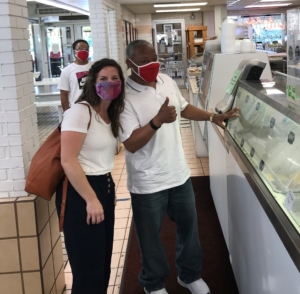
Motis Wright and Appleseed Staff Attorney Alex LaGanke stop for ice cream at Peach Park following his release from Staton.

Mr. Wright now lives with his 82-year-old mother and one of his sisters in Columbus, Ohio. He is eager to obtain employment, to use his agile mind and positive energy to contribute to society, and has been slowed only by the obstacles that formerly incarcerated people face in obtaining identification. “The biggest thing I noticed that I had to get used to was not having somebody watching me, or having to ask permission to ask or move. It was hard to get used to that,” he told us. “I had to get used to that feeling of being at home.”

This 58-year-old father and grandfather can now spend unlimited time with his sons and grandchildren.

He helped start the prison system’s “Long Distance Dad” program. He stayed connected with his sons during 27 grueling years in Alabama’s prison system. And now he’s creating a bond with his granddaughters. The first time they met, he recalled, they wanted to tell him all of their talents and what they like to do. One of his granddaughters even played the piano for him.


By: Akiesha Anderson, Policy Director

This legislative session, Alabama Appleseed had four main legislative priorities: (1) Repeal or reform the Habitual Felony Offender Act; (2) Stop Civil Asset Forfeiture; (3) End Needless Driver’s License Suspensions; and (4) Create a Diversion Program Study Commission. Below is a summary of these priority issues that were deliberated by the 2021 Legislature. 

The Habitual Felony Offender Act

Report: Condemned
Bills we supported: HB 107, HB 24 
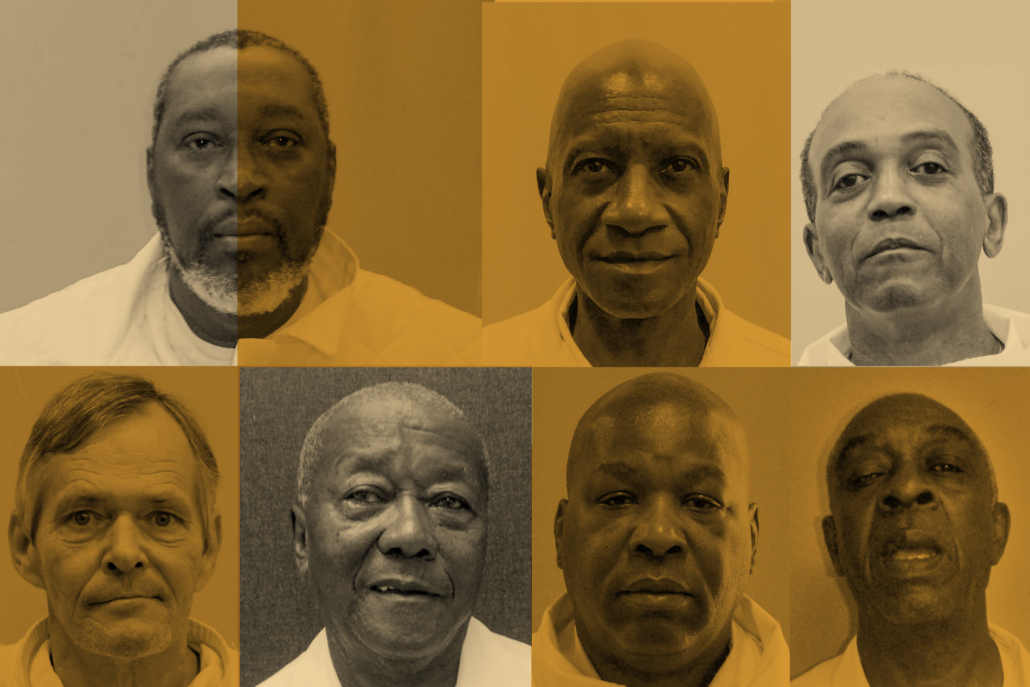
Legislation to repeal Alabama’s draconian Habitual Felony Offender Act (“HFOA”) is desperately needed. The HFOA currently ensnares hundreds of older people with life or life without parole sentences for offenses that would result in much shorter sentences under today’s laws. That is why we supported HB 107, sponsored by Rep. Chris England, designed to repeal the HFOA. This bill successfully made it out of the House Judiciary Committee with strong bi-partisan support, though it never reached the full chamber of the House of Origin for a vote. Appleseed thanks the 150+ Alabama judges, law professors, former prosecutors, and lawyers who signed on in support of a Dear Lawmaker letter and the countless constituents that sent emails or made phone calls urging legislators to support this important piece of legislation.  

In addition to supporting a full repeal of the HFOA, Appleseed supported HB 24, a bill sponsored by Rep. Jim Hill, that was designed to reform the HFOA. If passed, this legislation would have allowed people who were sentenced under the HFOA for committing nonviolent offenses to petition the court for a review of their case and potentially be resentenced under current sentencing guidelines. We also supported an amendment to HB 24 that was offered by Sen. Arthur Orr that was designed to expand the class of people eligible for relief to include people who had “strikes” that led to an enhanced sentence arising from offenses that are now considered Class D felonies yet were Class C felonies at the time of initial sentencing. Although HB 24 came very close to passing out of both chambers, on the last day of session it failed to make it to the Senate floor for a full chamber vote. 

Civil Asset Forfeiture

Report: Forfeiting Your Rights: How Alabama’s Profit-Driven Civil Asset Forfeiture Scheme Undercuts Due Process and Property Rights
Bills we supported: SB 210 (passed), HB 394
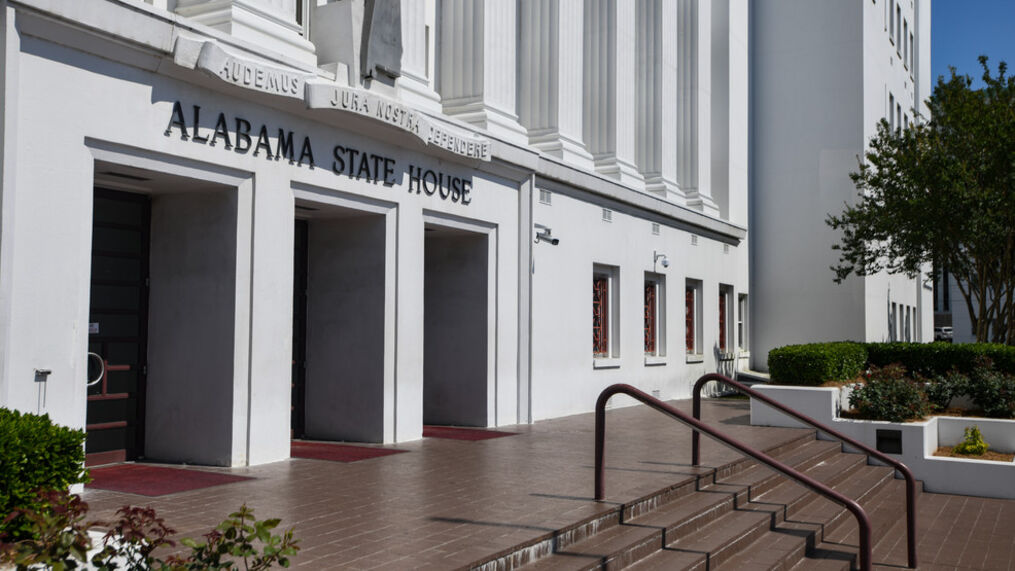
For too long, civil asset forfeiture has been improperly used as a revenue generator for law enforcement entities throughout the state. As currently structured, civil asset forfeiture empowers police to seize cash or other assets based on probable cause that they are connected in some way to certain criminal activity, even if no one is ever charged with a crime. We believe that this violates a host of due process rights and that civil asset forfeiture ought to be replaced with a system that ensures due process protections. 

That is why, this session Alabama Appleseed supported SB 210 and HB 394, companion bills by Sen. Arthur Orr and Rep. Andrew Sorrell, that were designed to replace civil asset forfeiture with criminal asset forfeiture. We believe that as originally written, these bills would have been good for the State of Alabama due to them: (1) requiring transparency in the criminal asset forfeiture process; and (2) prohibiting Alabama law enforcement from receiving proceeds from individuals who have not been convicted of a crime. 

Although SB 210 did ultimately pass, the substitute version that made it out of the State House was significantly diluted in comparison to the original version of the bill. While the bill that passed adds some minimal due process protections to existing civil asset forfeiture laws, Appleseed hopes that in the future, civil asset forfeiture is replaced altogether with criminal asset forfeiture. 

Driver’s License Suspensions

Report: Stalled: How Alabama’s Destructive Practice of Suspending Drivers Licenses for Unpaid Traffic Debt Hurts People and Slows Economic Progress
Bills we supported: HJR 31 (passed), HB 129
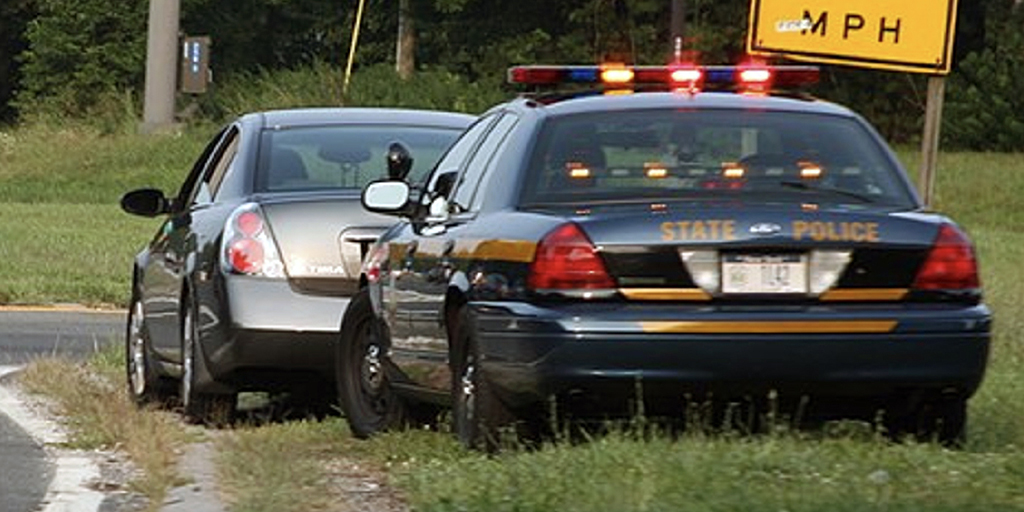
At the beginning of this year, nearly 100,000 Alabamians had a suspended license for things unrelated to unsafe driving – namely failure to appear in court, failure to pay a traffic ticket, or an alcohol or drug offense (excluding DUIs). Suspending driver’s licenses for things unrelated to road safety hurts families by making breadwinners forego necessities; slows the economy by keeping people out of work; and leads people to commit crimes to pay off their tickets. That is why Alabama Appleseed worked closely on HJR 31 and HB 129, legislation sponsored by Rep. Chris Pringle and designed to end the practice of suspending driver’s licenses for frivolous reasons. Although HB 129 ultimately did not come up for a vote to pass out of the House Judiciary committee this session, HJR 31 which provides the mechanism for the State to opt out of requiring license suspensions for petty drug offenses successfully made it out of the Legislature and to the Governor’s desk.

Diversion Programs

Report: In Trouble: How the Promise of Diversion Clashes with the Reality of Poverty, Addiction, and Structural Racism in Alabama’s Justice System
Bills we supported: HB 71, HB 73
A goal of Alabama Appleseed is to increase access to alternatives to incarceration, and beyond-the-prison-walls public safety solutions. It is no secret that Alabama’s men’s prison system is currently in crisis. Our history of tough on crime laws have led to us having one of the highest incarceration rates in the world, the highest prison homicide rate in the nation, and a men’s prison system that is dangerously overcrowded. We are also in the process of being sued by the U.S. Department of Justice, as a lawsuit that was filed under the Trump Administration has argued that our prisons violate the constitutional rights of all men housed in them. Appleseed believes that it is time for State leaders to seriously invest in alternatives to incarceration such as pre-trial diversion and Community Corrections programs, as one of many solutions to the human rights crisis in state prisons.

Although diversion programs currently exist throughout most of the state, not all Alabamians have access to them. That is why we supported HB 73, sponsored by Rep. Jim Hill, that would have required every judicial circuit to establish a Community Corrections program. Although this bill made it out of the House of Origin and Senate Judiciary committee, it never made it to the Senate floor for a full chamber vote.  

Despite the existence of diversion programs and drug courts throughout most of the State, they are all participant-funded. This means that the budget to run and operate these programs is derived from the pockets of the people who utilize the programs. So this year we also supported HB 71, sponsored by Rep. Jim Hill, because we believe in establishing universal eligibility and completion requirements to safeguard against the existing practice of the completion of diversion programs being determined by whether all fees have been paid. If passed, HB 71 would have created an Accountability Court Commission tasked with overseeing, studying, and creating uniformity amongst all existing diversion programs. Although this bill made it out of both the House Judiciary Committee and House Ways and Means Committee, it never made it to the floor of the House of Origin for a full chamber vote. 

Other Legislation 

In addition to the aforementioned central areas of focus, we also monitored, worked on, or supported several other key pieces of criminal justice reform legislation this session. Below is a summary of some of those other key pieces of legislation.

Criminal Justice – Prison Reform

Report: Death Traps
Bills we supported: HB 92, HB 106 (passed), HB 361

This session we also supported several pieces of legislation that we believed could have provided meaningful relief to Alabama’s current prison crisis. We were strongly in favor of bills such as HB 92, by Rep. Jim Hill, designed to create a second parole board; HB 106, by Rep. Chris England, designed to require the Alabama Department of Corrections (ADOC) submit to more legislative oversight; and HB 361, by Rep. David Faulkner, designed to require ADOC to assist people with getting a non-driver’s license identification card prior to release from prison. 

While HB 92 made it out of the House Judiciary committee, it stalled when re-assigned to the House Ways and Means committee. Similarly, although HB 361 made it out of the House of Origin, it never made it on the agenda in the Senate Finance and Taxation General Fund committee. In contrast, HB 106 successfully made it out of both chambers and was sent to the Governor’s office for her signature. 

Fines & Fees

Report: Under Pressure
Bills we supported: HB 499, SB 177

Stopping the State’s overreliance on court costs, fines, and fees was another area of legislative interest this session. That is why we supported companion bills HB 499, sponsored by Rep. Chris England and SB 177, sponsored by Sen. Roger Smitherman. If passed, these bills would have created an Alabama Court Cost Commission designed to review existing court costs to determine if they are reasonably related to the cost of running a court system. Unfortunately, although both bills made it out of the Judiciary committee in their respective House of Origin, neither of these bills received a vote by their full chamber. Thus, neither bill passed this session.

Criminal Justice – Drug Policy

Report: Alabama’s War on Marijuana
Bills we supported: SB 59 (passed), SB 149

It is time for Alabama to pass smart alternatives to criminalizing marijuana possession and use. That is why this session we supported SB 59, by Sen. Tim Melson that was designed to legalize medical marijuana. We also supported SB 149, by Sen. Bobby Singleton that was designed to decriminalize marijuana use and possession. Ultimately, SB 59 passed out of both chambers and was sent the Governor; and SB 149 passed out of the Senate Judiciary committee yet never made it to the floor of the House of Origin for a full chamber vote. 

State Transparency

Bills we supported: HB 392 (passed), SB 165, SB 290 

Alabama Appleseed strongly supports bills designed to strengthen government transparency in all regards. That is why this session we closely watched HB 392, sponsored by Rep. Mike Jones; SB 165, sponsored by Sen. Arthur Orr; and SB 290, sponsored by Sen. Greg Albritton. SB 165 was designed to strengthen Alabama’s existing open records law and both HB 392 and SB 290 were designed to increase checks-and-balance between the legislative and executive branch by requiring the executive branch to run multi-million dollar contracts and agreements past the legislature for legislative approval before such contracts could be finalized. 

This session, SB 165 and SB 290 made it out of the Senate committees they were assigned to yet not to the floor of the House of Origin for a full chamber vote. In contrast, HB 392 made it out of both the House and Senate to the Governor’s desk. Unfortunately, however, the final version of HB 392 was significantly watered down before leaving the State House. The version of this bill sent to the Governor does not require legislative approval for the state to enter into large multi-million dollar contracts (as was the initial intent); rather, it simply requires legislative review of large contracts. 

Juvenile Justice

Report: Hall Monitors with Handcuffs
Bills we supported: SB 203

Alabama’s public K-12 school children deserve due-process rights and protections against suspensions and expulsions. That is why we strongly supported SB 203, sponsored by Sen. Roger Smitherman and designed to create such due process protections. Although this bill made it out of the Senate Education committee and House or Origin, it failed to pass out of the House Education committee. 

Hello! I’m Megan Cheek, and I’m beyond thrilled to be joining Alabama Appleseed as the Communications and Development Associate. I’ve long admired Appleseed’s commitment to justice and equity, and I jumped at the opportunity to join such an amazing team striving to move the needle in our state.

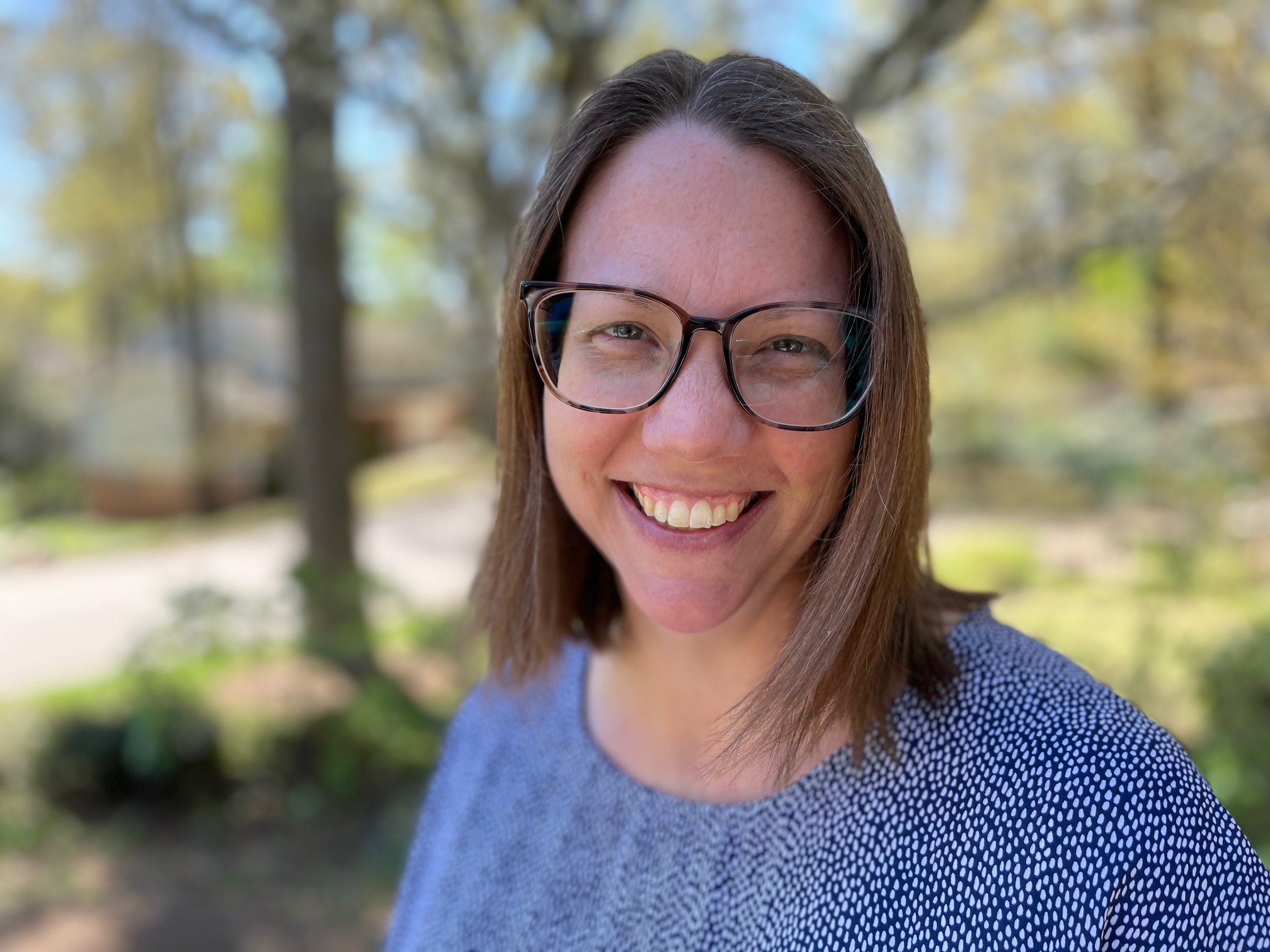
Appleseed’s Communication and Development Associate Megan Cheek

To tell my story, I need to introduce you to my late Aunt Sheila. She lived in South Carolina where she fought tirelessly for a better South. For more years than not, she served as president of the state’s teachers union, was heavily involved in statewide politics (ran for office twice!), and was a constant presence at the South Carolina State House. She joined hands with those who did not think, look, or act like her to make progress for her neighbors. Aunt Sheila’s strength and determination were something to behold, and she believed in fighting for change even in the face of (repeated!) defeat.


Aunt Sheila was a force and inspired me to work in the nonprofit sector with organizations striving to build opportunities for improvement. After graduating from the University of Georgia and working on campus, I moved to Washington, D.C., where I lived for 13 years. While in D.C., I had the honor of working for the Capitol Hill Arts Workshop—a community art school—in various roles including Program Director and Deputy Director for Marketing and Communications. (I’ve continued to work for the Arts Workshop for the better part of 18 years, most recently as a marketing consultant.) I also served as the Executive Director for the Washington Youth Choir, an organization that utilizes arts education and music as a vehicle to impart core values and promote higher education for D.C. youth. These experiences underlined the importance to me of investing in our communities to bring about positive and lifelong change.


Our decision to move to Alabama in 2014 to be closer to family was a catalyst for even more personal growth. Alabama’s dismal position at the bottom of almost every quality of life metric motivated me to work towards creating a more equitable state where I am raising my children. Because of this desire, I co-founded H.IV.E. Alabama in early 2017, an organization focused on educating our community on elections, candidates, and pertinent issues to our state including environmental, educational, human rights, and more. I also began consulting with local organizations in marketing, policies, procedures, and fundraising. And I became involved in Alabama politics, assisting candidates and supporting platforms that advocate for all citizens.


Progress happens when engaged citizens work together to push for the policy changes that our state so desperately needs. With all of our state’s considerable challenges, I am continuously inspired by the dedicated people committed to making it better and have hope in a brighter future. Alabama Appleseed is at the forefront of addressing critical issues and promoting systemic solutions to make a better Alabama. I’m so excited to be a part of this team and look forward to working towards equity and justice for all of our neighbors.


By Ronald McKeithen, Appleseed guest blogger

Birmingham, AL — Doubts of ever leaving prison had been embedded deep within me. I couldn’t shake them. At least not completely. Even after everything that I’d prayed for and dreamed of for decades had finally been granted: a dedicated legal team and a mountain of supporters that had worked tirelessly to bring my plight to the attention of the world. Yet that fearful, nasty taste of doubt still lingered in the back of my throat. Even after being told that I might leave the following morning.

And what’s more disturbing, I wasn’t ready to leave. There was too much I had to complete, guys to give that last encouraging talk to, and so much to distribute to guys that didn’t have much. I needed more time. At least two more days. Which is the most crazy thing that’s entered my mind since the day I refused the 15 year plea deal the District Attorney offered me in a robbery case. Especially after having served 37 years on a Life Without the Possibility of Parole sentence. I should have been running towards the front entrance as shameless tears fell from my eyes. But I’d been shackled down too long in the insane asylum that is Alabama prison that it shouldn’t surprise anyone if I’d gone a little mad myself.

Regardless of the doubt, hope wouldn’t allow me sleep. I found myself rushing to complete greeting cards I’d started for friends, while contemplating the possibility of actually leaving this place in a matter of hours. Then exhaustion won. I couldn’t stay awake any longer. And if I dreamed of freedom, I wasn’t given a chance to recall it. Because I was awakened from a deep sleep by an officer yelling my name. Telling me to pack my belongings. That I had five minutes. I was confused, disoriented, not fully understanding where I was or what those words actually meant. Wondering why I was hearing applause. I realized that nearly the whole dorm was on their feet, smiling and clapping. Then it hit me. I was going home. If I were alone, I would’ve cried like a baby, but my masculinity wouldn’t allow it.

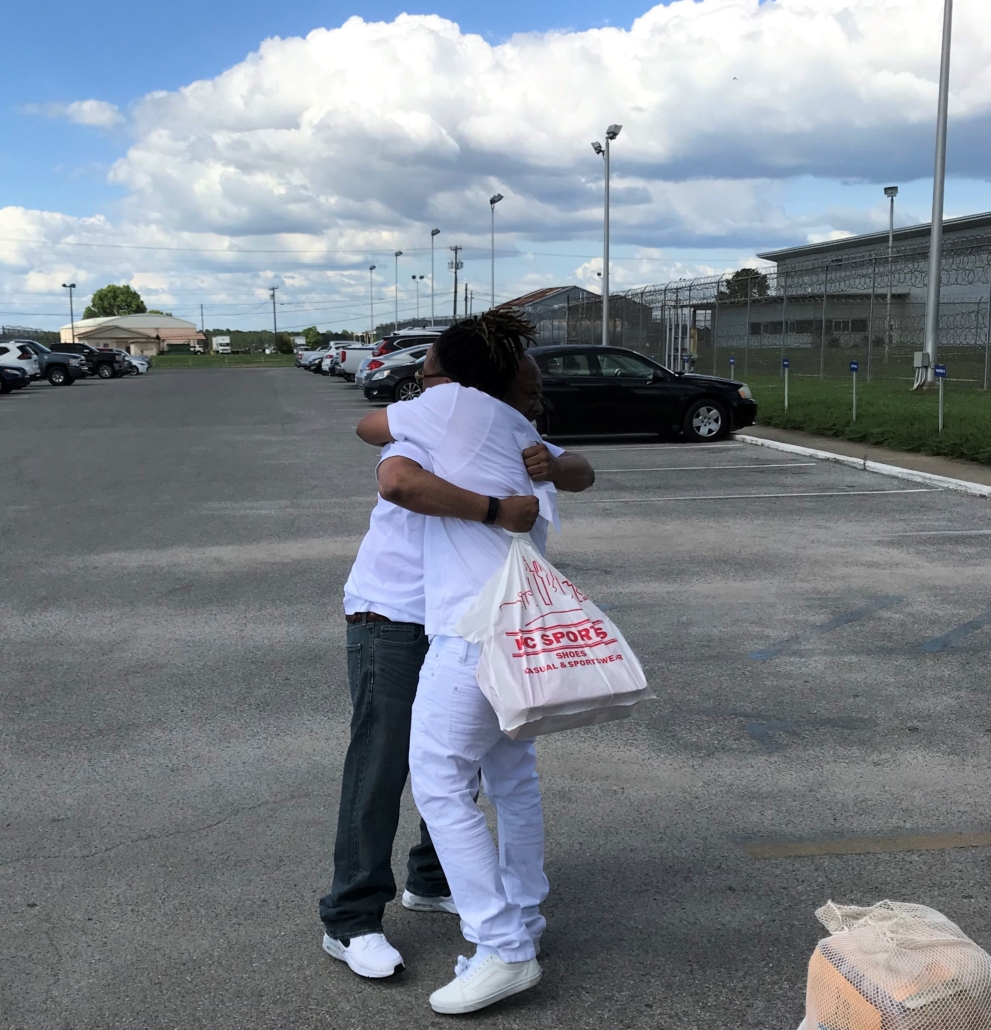
No hugs in the time of Covid, as Carla Crowder greets Ronald McKeithen on his first day of freedom.

By Gus Troncale

It was just a few weeks ago that I found myself fighting back tears while sitting in that very spot. After numerous conversations with my lawyers and mailing every document that I possessed that would reveal my activities since my incarceration, and why I’ve spent nearly 40 years of my life in prison, the petition that would be filed to the court had finally arrived. It was the most astounding document I’d ever laid my eyes upon. It may as well have been the Holy Grail. I had made several attempts to the courts pleading my case. Copying other guy’s petitions then rearranging them to fit my case, not fully knowing what I was doing, but knowing I had to do something. Feeling like a mute that didn’t know sign language, straining my throat to be understood, and having to endure the hurt of knowing that they clearly understood yet choose to ignore me. But this petition. It was the first one I’d seen in decades with my name and wasn’t done by me or some jailhouse lawyer. I had to look away several times before reading half of it. And I had to practically run away from it twice to keep my bunkie from seeing tears hanging from my eyelids.

The morning of my release, as the applause died down, I became even more confused. I didn’t have any idea of what to do next. What to pack, what to leave, or where to go. I’ve been ordered to gather all my belongings hundreds of times, to move from one cell, block, dorm or one prison to another prison. But never this. Freedom. And as guys began to surround my bed, each trying to shake my hand or pat my back to congratulate me, I realized that gathering things I should take was useless. That I needed to get out of there. Men began asking me to leave them something, which is expected in such circumstances. So I gave everything away.

Each time I had previously imagined walking out that gate; I either kissed the ground, stepped into a waiting limousine, or turned around and gave whoever was in the tower a finger from both hands. But the only thing that was on my mind was seeing my lawyer and friends. It hurt not being able to hug any of them. Covid wouldn’t allow it. But the hugs may have been too much to bear, since it’s something I’ve long to do to each of them but never could. I’ve never in my life seen so many people so happy to see me. And it touched me to the core. Their smiles felt like rays from the sun as raindrops fell from a gray sky onto my bald head. I’d given all my caps away. But those raindrops felt so good.

By Bernard Troncale

They were all wearing masks, yet the first person I recognized was Beth Shelburne, the woman that started my path to freedom. Through some kind of luck, I was chosen to be interviewed by her for a Fox 6 news story called “Prison Professors” about the UAB Lecture Series that I’d participated in for several years. Retired UAB Professor Connie Kohler was also there. I recognized her from the amount of time I’d spent in our Body & Health class, creating podcasts and newsletters. And there was Pat Vander Meer, the instructor of my book club, who also oversaw the prisons newsletters. I was overjoyed to see her. And there was this tall, elegant lady that I had never seen, yet appeared to be more pleased to see me than the others. She was Carla Crowder of Alabama Appleseed, my attorney, whom I’d only spoken with by phone. God knows how badly I wanted to hug her. There was also Connie’s husband, John. As well as Cedric, who I later learned is the brother of Dena Dickerson, the director of the Offender Alumni Association, who was prepared to help with my re-entry.

I didn’t know what to say. What can you say to people who have saved your life? “Thank you,” or “I owe you one?” None of these responses came close to describing the gratitude that was screaming within. There was so much I needed to say but couldn’t begin to express. To be incarcerated at the age 21, too young and naive to comprehend how willingly I was destroying my life, viewing every arrest as an occupational hazard, whether it be juvenile detention, the city or county jail, or prison. And having to endure decades before the realization that I will die in prison hit home, regardless of how many work reports, classes I complete or certificates I earned, that my life will fade away behind these walls as thousands of others have. And then a miracle happened. Someone noticed me. Then others. And the next thing I knew, people were supporting me. And some of them were standing before me.

I’d never had a good experience with a District Attorney. The one at my trial said in his closing argument that he wished I was dead, as if I’d done something so despicable, so loathsome, that it required death. Another DA placed in his response to one of my petitions that I had a rape case, which wasn’t true. But this time God blessed me with a fair and just DA to review the post-conviction petition. Jefferson County District Attorney Danny Carr took the time to look at my case and realized that I didn’t deserve to die in prison.

I hadn’t seen the outside of Donaldson Correctional Facility in over 16 years. The sky even looked different. During the drive from the prison, I wanted to ask Cedric to slow down, especially on the curves. I’ve never been on a roller coaster, but this must be how it felt. The constant swerving made me nauseous, and the pictures flashing past my window were making me queasy, but it was the best ride of my life. So much has changed. Unlike the kid that kept repeating ” Are we there yet?” I kept repeating “Where are we?”

I’m still doing it. Birmingham has become a whole new world, and I’m finding everything fascinating and so new. I would notice a squirrel or a small sparrow and become amazed. I’m struggling to stay calm, trying my best to control the googly-eyed expression that just won’t go away. The City of Birmingham may as well have been New York. It was hard to believe that I was gone long enough for all of those buildings to be built. Yet my old neighborhood, Titusville, hadn’t changed, which was very disappointing. The houses that had not rotted away appeared to have nearly 40 years of dust covering them. Yet the Birmingham City Jail looks brand new. I can’t understand how such neglect could occur when so much growth surrounds it.

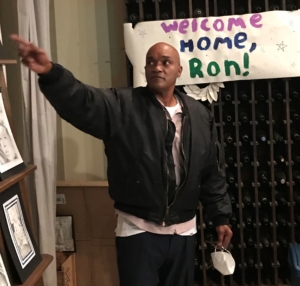
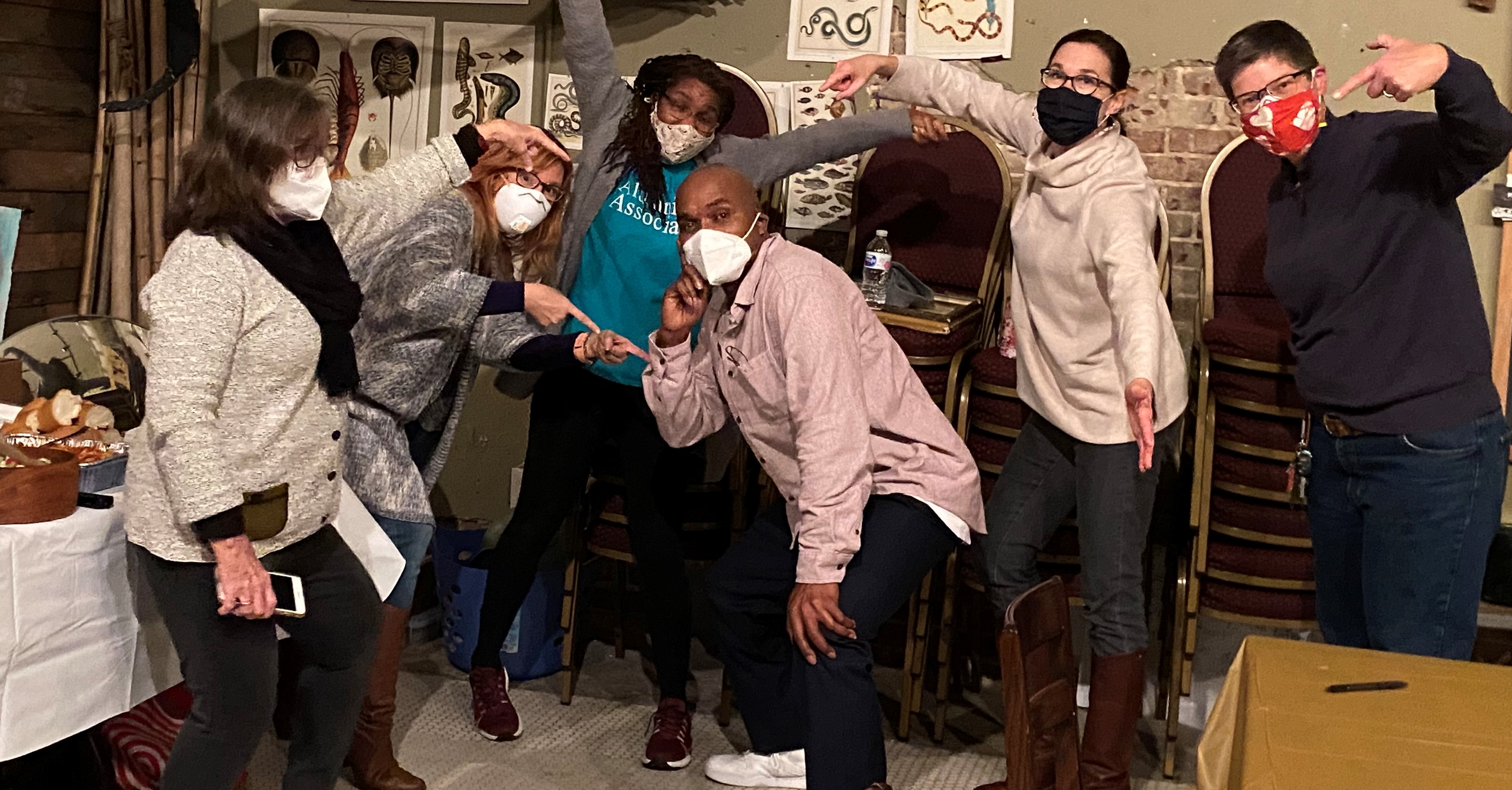
Friends gathered for a socially distanced dinner in Ron’s honor the night he was released.

My transition back into society would have been a struggle without my support team; I would have been lost. One of my biggest fans is James Sokol, a retired businessman who believes in me and expects great things from me. The two people that have also played a major role in life since being out is Dena Dickerson, of the Offenders Alumni Association (OAA), and Alex LaGanke, Appleseed’s legal fellow. Dena, a formerly incarcerated person herself, is well aware of what I had endured, and what I would face upon my release – things one can’t learn in a classroom. She and her organization have made my transition beautiful. And Alex has been so instrumental in getting my much-needed documents in order and helping me grasp technological advancements. She’s such a store of knowledge and a delight to be around. I become a student when I’m with either of them.

To say that I’ve settled in and found my balance after six weeks would be a lie, even though I feel that I have. But to be honest, I doubt if I ever will. I spent too much time there. Each day was a constant battle to not give in to that prison mentality and become just another lost soul that fades into nothing. If I hadn’t kept my mind active from classes, I might have lost my mind. I did not have the luxury of being unproductive in prison, nor do I have that luxury out here. I’m experiencing a rebirth, a second chance at life, and every day has been a blessing. I fall asleep in anticipation of the next.

By Allen Slater

My name is Allen Slater, and I am honored to join Alabama Appleseed as a full-time extern. I admire this organization’s mission, methodology, and compassion, and I am thrilled to contribute to the team. I am also eternally grateful to all of the kind, intelligent people who have supported and encouraged me along my journey to this position.

My path to Alabama Appleseed was a long, winding one that began in Kansas, where I started my career in law enforcement. Over the course of two years, I served as a corrections officer and a rural sheriff’s deputy in the northeastern part of the state. The next part of my career took me to a mid-sized city in Tennessee, where I served as a municipal police officer for nearly three years. My service as a police officer was rewarding, but not without difficulties. I saw the realities and trauma of violence and poverty collide with race and gender issues constantly, and at times, my job felt like using my fingers to plug holes in a dam that was on the verge of collapse. I saw many of the same people for the same issues on a regular basis; I felt less like a guardian of the community than a cog in a large, unyielding machine. That feeling made me question the way that we deployed law enforcement resources, the structure and purpose of some of our laws, and why some communities received different kinds and qualities of policing than others.

Appleseed’s 2021 legal extern Allen Slater

The questions I wrestled came to a head in 2014 with the deaths of Michael Brown in Ferguson, Missouri and Eric Garner in New York City. Those deaths and their aftermath shook me — I knew that we needed serious, systemic changes to make policing fairer, safer, and more transparent, but didn’t know what I could do to help. After some soul searching, I asked myself what I later discovered was a very old question: who guards the guards? In other words, who polices the police? I realized that the best way that I could have a positive impact — to continue helping, protecting, and serving others — would be attending law school and becoming an attorney. As a lawyer, I could to use my previous professional knowledge and experience to advocate for necessary change in the criminal justice system. Attending the University of Alabama School of Law has allowed me to pursue that goal and more.

During law school, I have been fortunate to work with a variety of brilliant attorneys on civil rights, police transparency, and criminal justice reform issues.  During my first summer, I worked as an intern with the Office of the Federal Defender for the Northern District of Florida. There, I fought for the constitutional rights of clients on death row by providing legal research and investigative support for the office’s Capital Habeas Unit. I also was privileged to work as an intern and Student Legal Fellow for The Policing Project at NYU School of Law. In that position, I researched pre-arrest diversion alternatives for a state government that was searching for opportunities to increase public safety while lowering its prison population. Additionally, I conducted extensive research into the use of biometric technologies by law enforcement, which culminated in a series of blog posts.  I was also able to work with the Alabama ACLU on a variety of civil rights issues, ranging from law enforcement misconduct to First Amendment legal questions. Law school also gave me the opportunity to work behind the scenes of the courtroom as an extern for a federal judge in the Northern District of Alabama. I also had the privilege of working for the conviction integrity unit of a district attorney’s office, investigating potential wrongful convictions and providing legal research for law enforcement misconduct prosecutions. Additionally, I was able to publish an academic article proposing a new standard for evaluating police shootings in the Berkeley Journal of African-American Law & Policy. These experiences have broadened and enriched my perspective, giving me deeper insights into the systemic issues plaguing our justice system.

I took those insights with me to the University of Alabama School of Law’s Criminal Defense Clinic at the beginning of my final year of law school. In that program, I, in partnership with a fellow law student, represented clients accused of crimes in Tuscaloosa County under the supervision of our professor. My partner and I also engaged in post-conviction advocacy for a terminally ill client, securing his release from the custody of the Alabama Department of Corrections. My experience fighting for my clients fueled my commitment to criminal justice reform as I realized that the system — and the racial, gender, and class disparities that it aggravates — must be reshaped in order to serve all of us properly. We need a criminal justice system that delivers accountability hand-in-hand with mercy and rehabilitation.

Part of what drew me to Alabama Appleseed was the organization’s approach to criminal justice reform. Appleseed has pursued data driven, effective policies to enhance public safety, build public trust, and respect the inherent value of every person involved in the justice system. Whether advocating for marijuana law reforms or ensuring that sheriffs cannot enrich themselves by starving prisoners and pocketing taxpayer dollars, Appleseed has fought to improve Alabama’s criminal justice system in concrete ways.

Alabama Appleseed’s work also does something less concrete, but equally important: each legal and policy success builds a criminal justice system worthy of public trust in Alabama. My experiences, both as a police officer and as a budding attorney, have shown me that all criminal justice systems are an institutions dependent on public trust. History has shown us that Alabama’s criminal justice system — its police, courts, and prisons — have sometimes squandered that trust in the name of racism, greed, or neglect. To restore that lost trust, Alabama’s victims and defendants need the criminal justice system to show them agency, compassion, and dignity. They need a system that is fair, legitimate, and free of bias; one that protects and respects their humanity and their rights as a priority, rather than an afterthought. Building a better criminal justice system in Alabama requires many people working together in pursuit of a better tomorrow, and I am excited to play my part through my role at Alabama Appleseed.